
Solar, battery and electrification — series intro
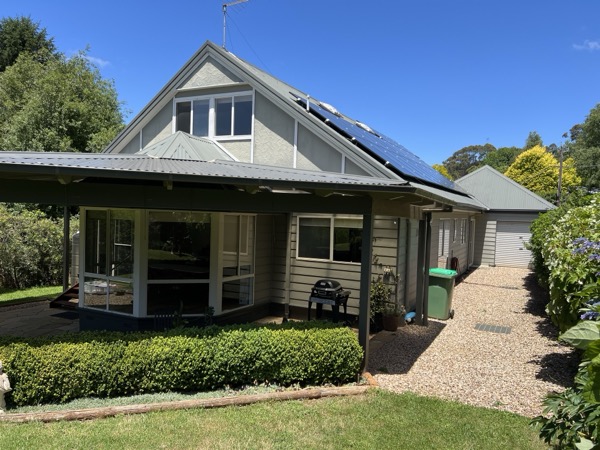
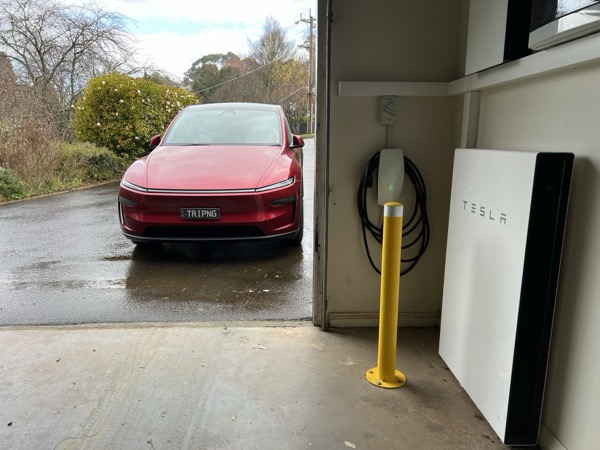
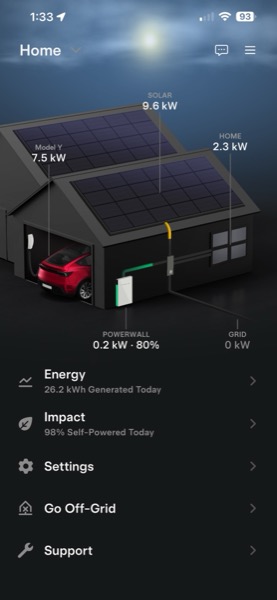
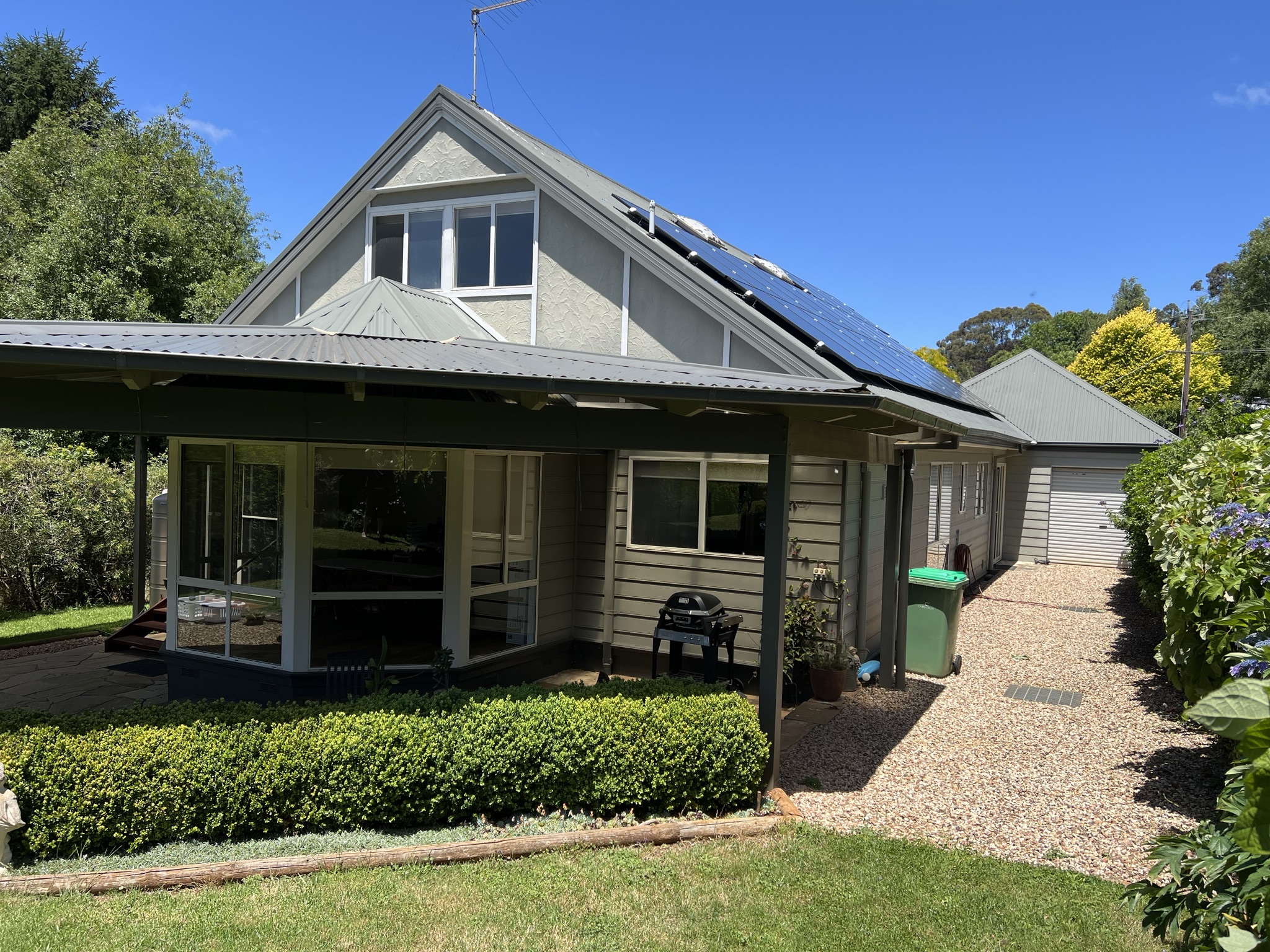
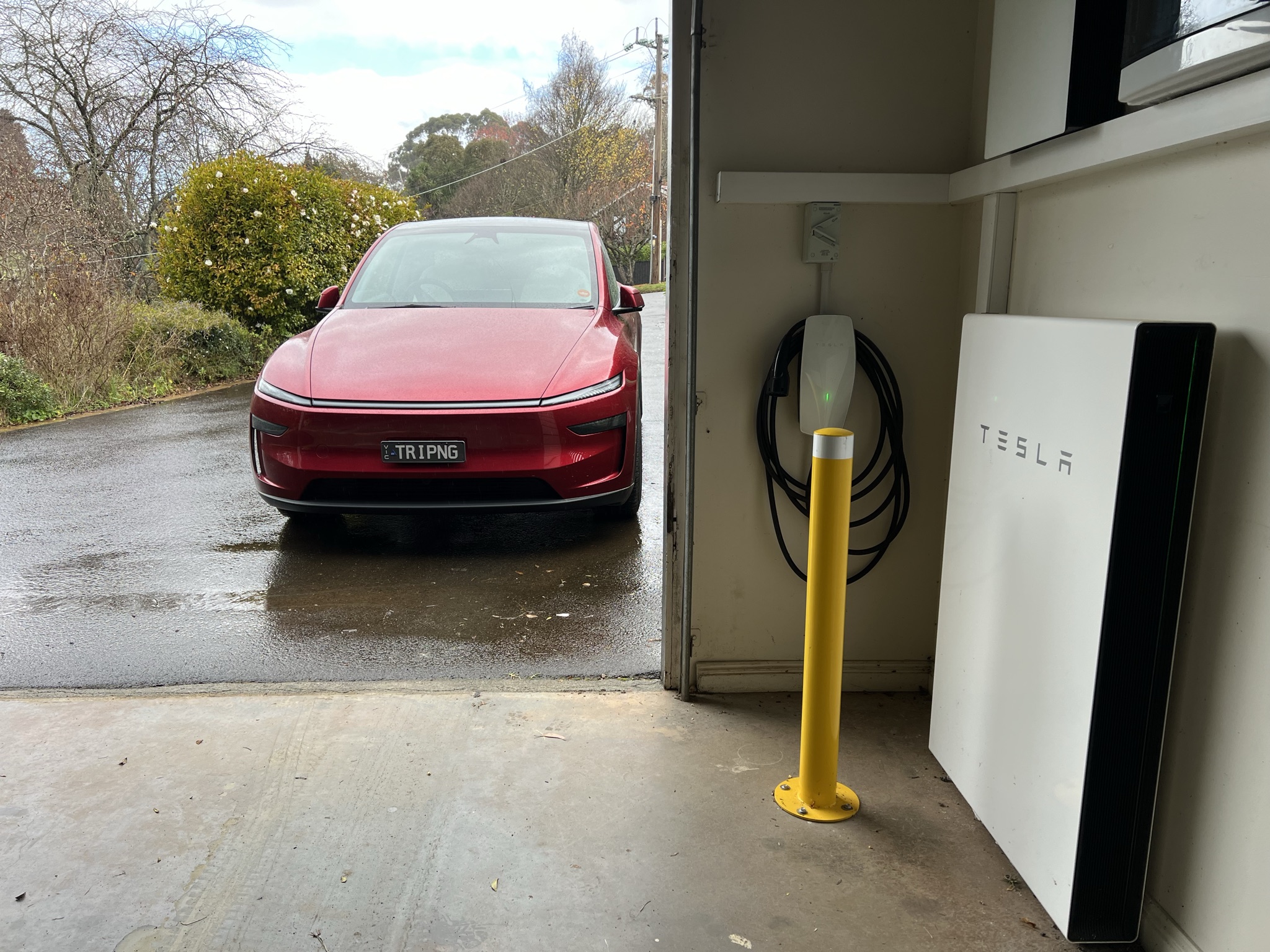
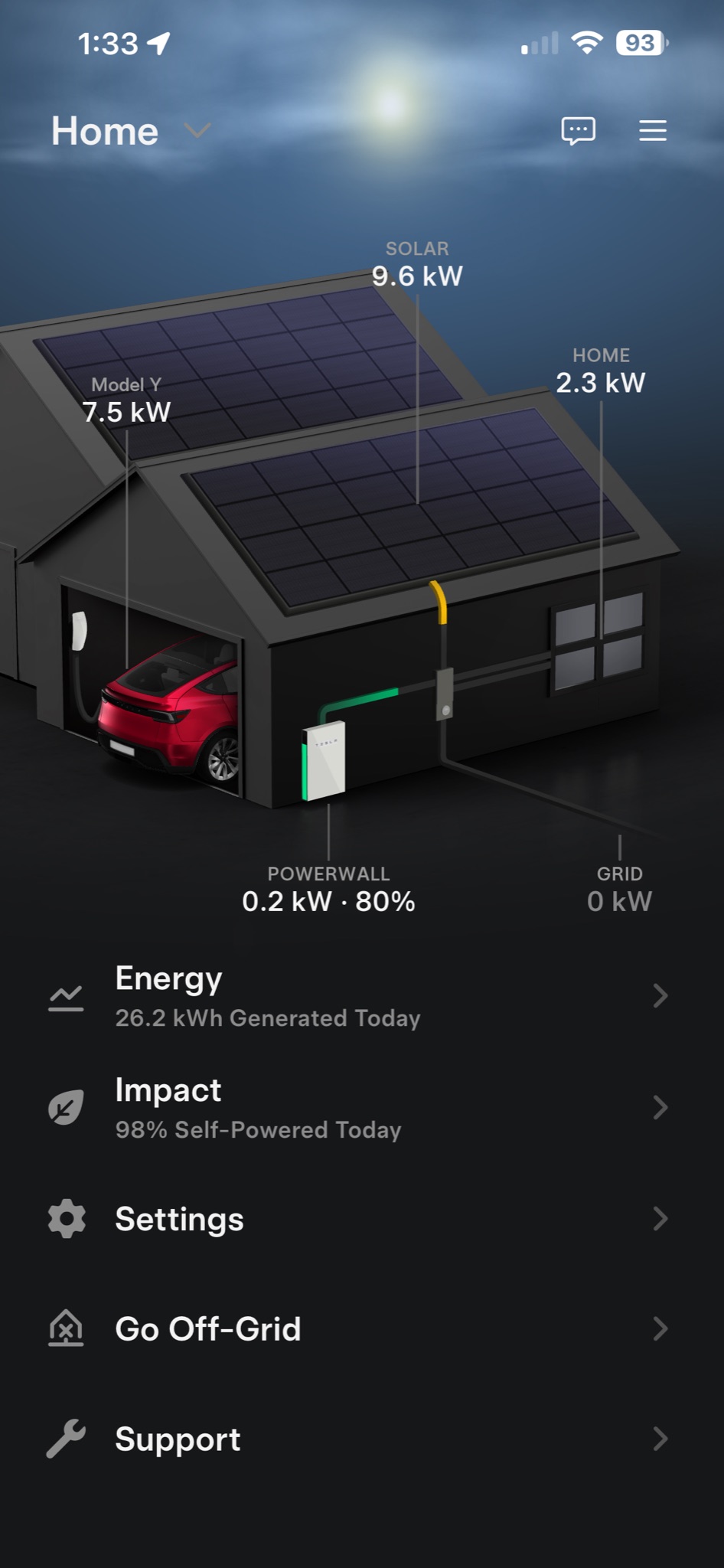
A few neighbours and friends have asked us lately for advice about solar panels, house battery, EVs etc. Here’s our real life experience, starting a series of posts on different topics.
We installed solar and battery when we moved into our house (Emerald, Victoria) about two years ago. We already had an EV (electric car). This week, we finally got around to replacing our gas hot water with an electric heat pump. Next month we’re replacing our gas ducted heating with a multi head split air conditioning system.
Overall, our solar and battery provide more electricity than we use. We’re also connected to the electricity grid so we can import when we need more, or export when we have a surplus.
We aim to produce all the power that we need. On the rare times that we import electricity from the grid, our retailer bills us. More often, we export our surplus electricity to the grid, for which they give us a credit. Overall, we have more credit than debits, so we don’t have to pay anything. All this depends on your electricity plan, which I’ll discuss in a separate post.
The distributor (such as AusNet or AusGrid) limits the solar system to 10kW, for a house with single phase connection (which is the usual). If you have a three phase connection, you can get more. They also limit the maximum power you can export to the grid. When we first connected, we were limited to 1.5kW, but that was later increased to 5kW.
We have a 10kW solar system, and a 13.5kWh battery. We power all our appliances, air conditioning, heat pump hot water, and our EV (electric car). Overall, we produce more electricity than we can use. Like most systems, our peak usage is usually in the evenings, but peak solar production is in the middle of the day. Having a battery to save the energy from the day to use in the evening avoids us having to pay for expensive electricity. Our car also typically charges whenever there is surplus solar, such as in the middle of the day.
Nowadays with the government battery 30% rebate, it’s worth getting a bigger battery, like 20 to 40kWh. Just make sure that the installer guarantees that it does all you want it to do (which I’ll list in a separate post).
Please ask any questions (here as comments)and we’ll try to answer. Or others wiser than us will answer.
Coming up
How do I compare quotes?
How do I minimise electricity costs? Can I make money?
What else would you like to know?
Related Posts
- What size solar system should I get? 4 Dec 2025
- Home battery introduction: Home battery introduction 5 Dec 2025
- What do all the electricity measurements mean? What do the kW and kWh measurements mean? 6 Dec 2025
- What to ask for in a battery installation: What to ask for in a battery installation 7 Dec 2025
- Planning our solar installation: Our planned solar installation 30 Nov 2023
- Installing the Powerwall and wall charger: Tesla battery and wall charger installation 19 Dec 2023
- When the Powerwall saved us in a 9-day grid outage: Powerwall hits zero during the grid outage 15 Feb 2024
- Our Powerwall — one of a million deployed: Our Powerwall — one of a million deployed 9 Sep 2025
- Heat pump installation 3 Dec 2025
- Goodbye gas — disconnecting the ducted heating: Goodbye gas — disconnecting the ducted heating 4 Feb 2026
- Multi-head air conditioning installation: Multi-head air conditioning installation, stage 1 4 Feb 2026
- Why we chose against ducted air con: Why ducted air conditioning is inefficient 1 Mar 2026
- Heat pump testing — how fast does it heat? Heat pump testing — how fast does it heat? 19 Mar 2026
- Adding a second battery: Adding a second battery — Tesla finally makes it possible 20 Mar 2026
- Battery chemistry — lithium ion vs lithium iron: Lithium ion, or lithium iron? 11 Jun 2026
- Two more split heads upstairs — and three compressors: Make way for more air con compressors 19 Feb 2026
- How the series ends — off the gas entirely Off the gas for good 30 Jul 2026
Report
Report
Report
Report
Report
Solar access rights are real.
If there are other roof spaces suitable for solar they must be used first.
I would argue you need 3x that array as 8kW panels will be lucky to make 12kWh a day two months of the year you need it most..
Good luck - expert in this is Matthew Wright at Pure Electric
Report
Report
$10k out of your mortgage is $1731 a year you need to be better off with it than beforehand.
Solar inverters do not last forever and technologies in better brands are there so that they do live longer - EG SIC MOSFETs instead of IGBTs lower the demands on the capacitors for smoothing and help them live longer.
Not all inverters have that tech and hence will be unlikely to survive the warranty period.
Report
Report
Report
We didn't even lose power the last time a cyclone was close and we got the tail end of it.
Funny story about the hot water system, it's getting installed on Monday (Aaron's birthday) hahaha can I pretend it's my gift to him.
Our gas hot water system died 3 weeks ago so we've been using a camp shower and heating up water on the oven top 🙄
We have a 315L Rinnai electric system getting installed, a couple of different plumbers actually didn't recommend heat pumps but regardless of that we are happy with what we are getting, the electrician is also coming on Monday as well, another birthday gift for Aaron 🤣
Report
Report
Report
Report
Report
Report
Report
Report
Report
Sometimes, such as during a series of low sun days, we do end up drawing from the grid. Then we envy a larger battery.
Since we use Amber Electric to export power during high grid prices, a larger battery would often help boost our earning capacity.
Report
Report
Report
Report
I’ve added a second post, hopefully helpful:
What size solar system should I get?:
What size solar system should I get?
More to come.
Report
Report
Report
Report
Report
Report
Report
Report
Report
That gas bill goes to $50 or less as most of the water heating fits in the three hours free window.
Vs $630 savings with battery and VPP or $290 savings battery only.
I do better at ~$800 however.....
My battery was $15k and thus needs to save me $2500 a year.
With battery rebate still $10k and would need to save $1730 a year.
Electricity industry on notice as more households invest in subsidised batteries and solar | ACCC https://share.google/97h19agrlJnR0yqaU
Your gas bill likely made up of $300 in service charges and $800 in gas
2/3 of that happens in winter as double the water heating required vs summer as cold water is 10 instead of 20 and you need to heat to 50 instead of 42 like summer.
I work for iStore
Report
Report
Report
Well worth a bigger battery if you are sending to grid
Just make sure you have full house blackout protection
In credit on power bills always
Report
Report
Haven’t used anything from the grid since even with charging my ev every couple of days.
House battery is usually full by lunch time so exporting to the grid for most of the arvo, wish we did get a bigger battery so I could charge the car more overnight.
Report
Solar,
Battery,
EV,
Home consumption through electric systems
AMBER is the best option.
Solar feed it tariff during the day is not sufficient to reduce your bill.
Report