
It wasn't the grid. It was me.

Show 0 more photos Show 8 more photos Hide additional photos

The Tesla app told me the grid was down. The Tesla app was wrong... kind of.
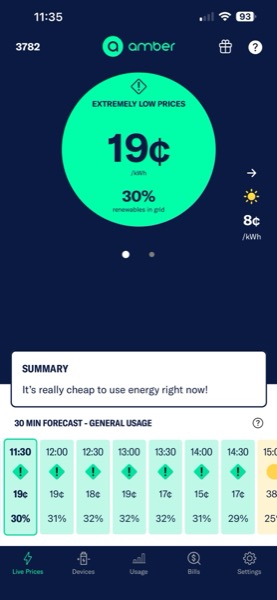
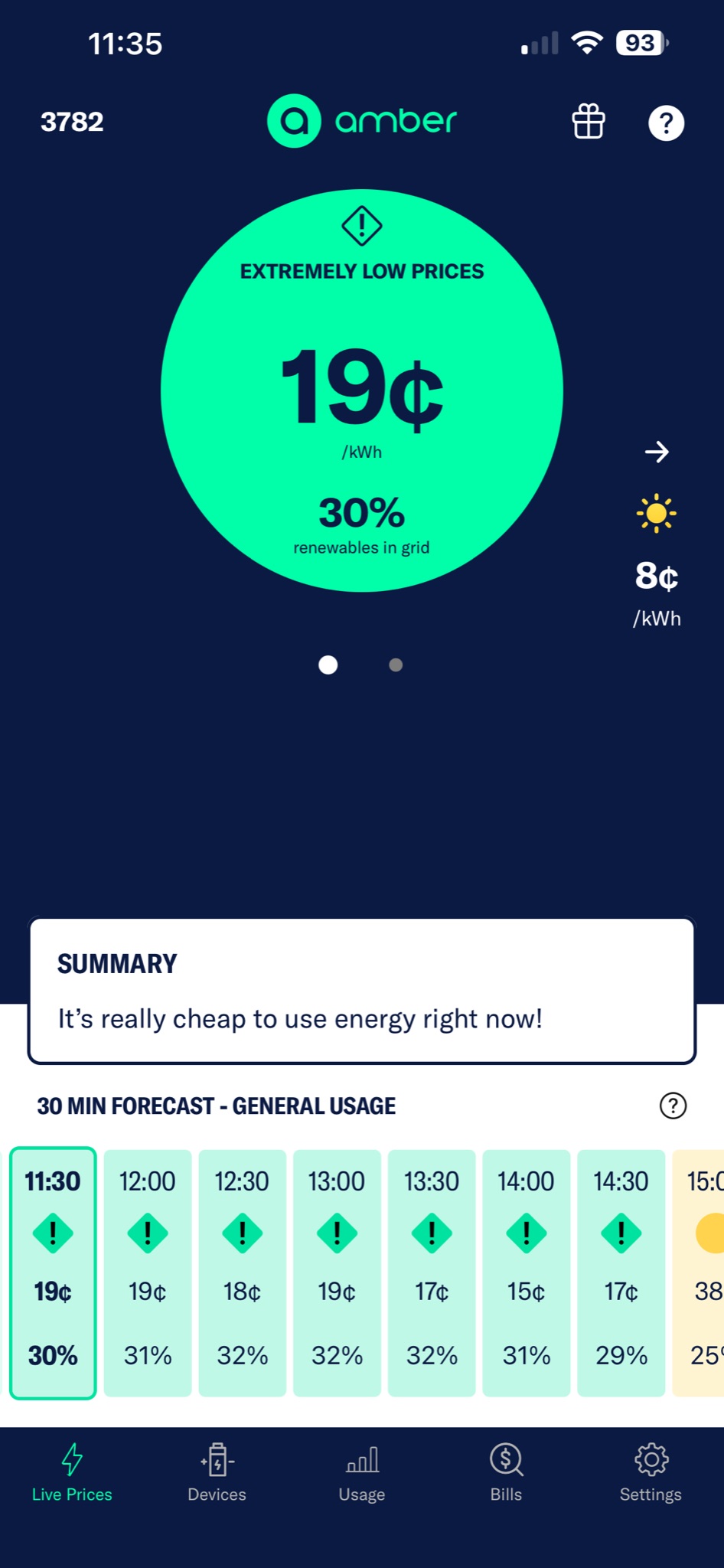
It was an overcast morning in a low-solar week, and our Amber Electric app was lit up green: 19¢/kWh, 30% renewables — "really cheap to use energy right now". So, I set the house battery and the Tesla EV to charge together, from grid power, while we waited for the sun.
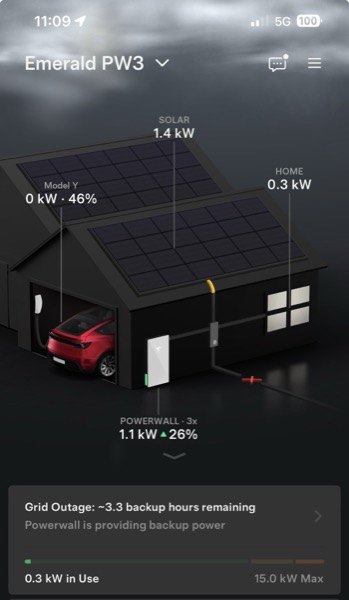
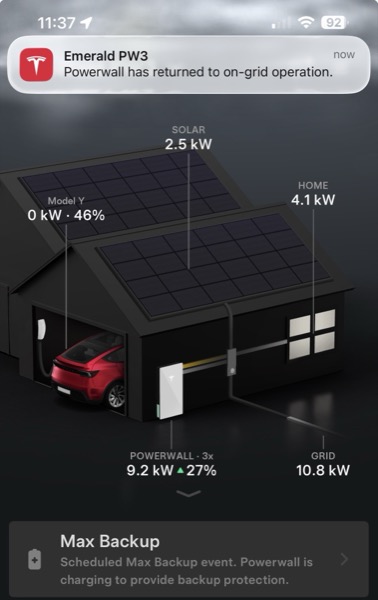
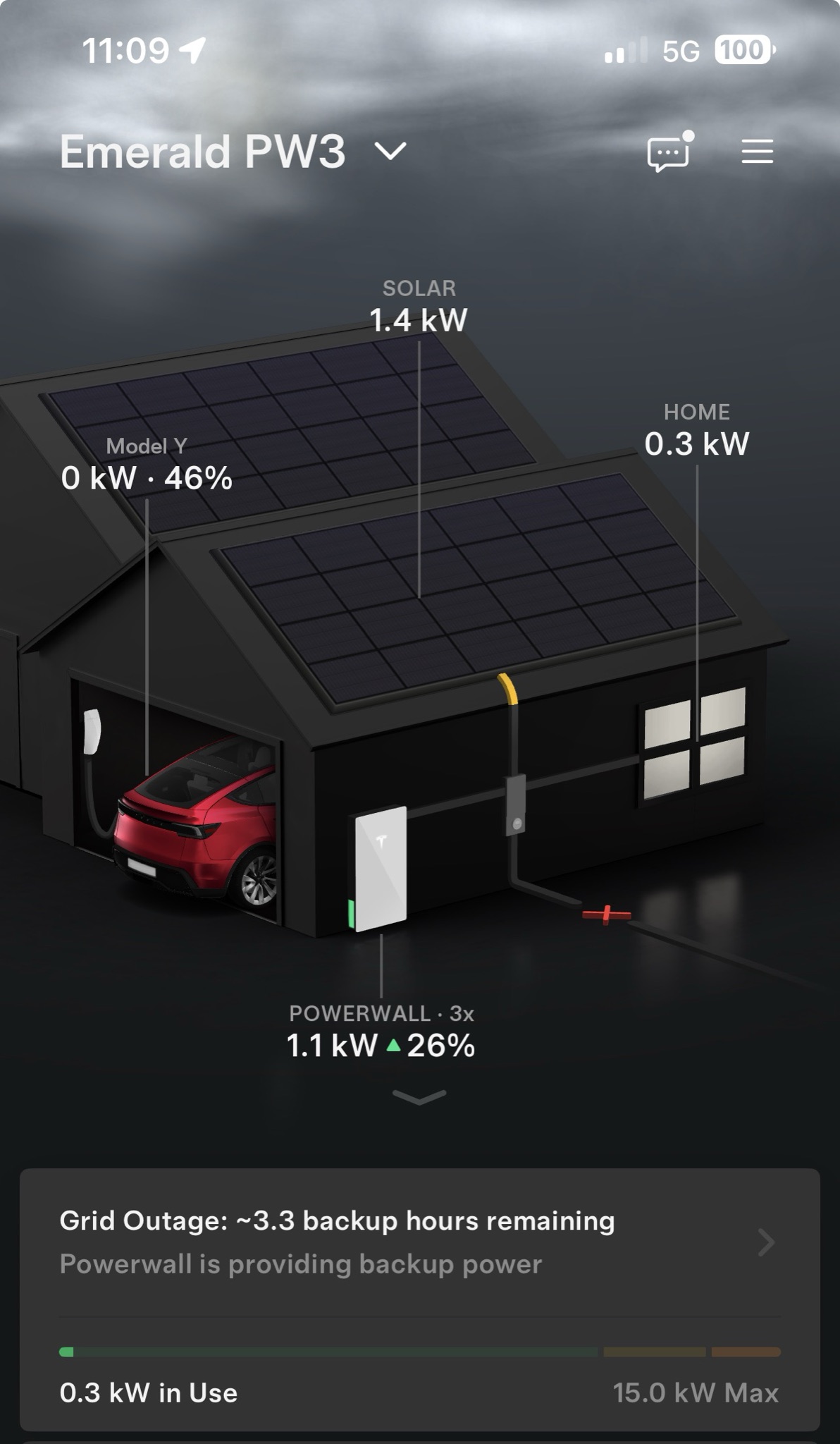
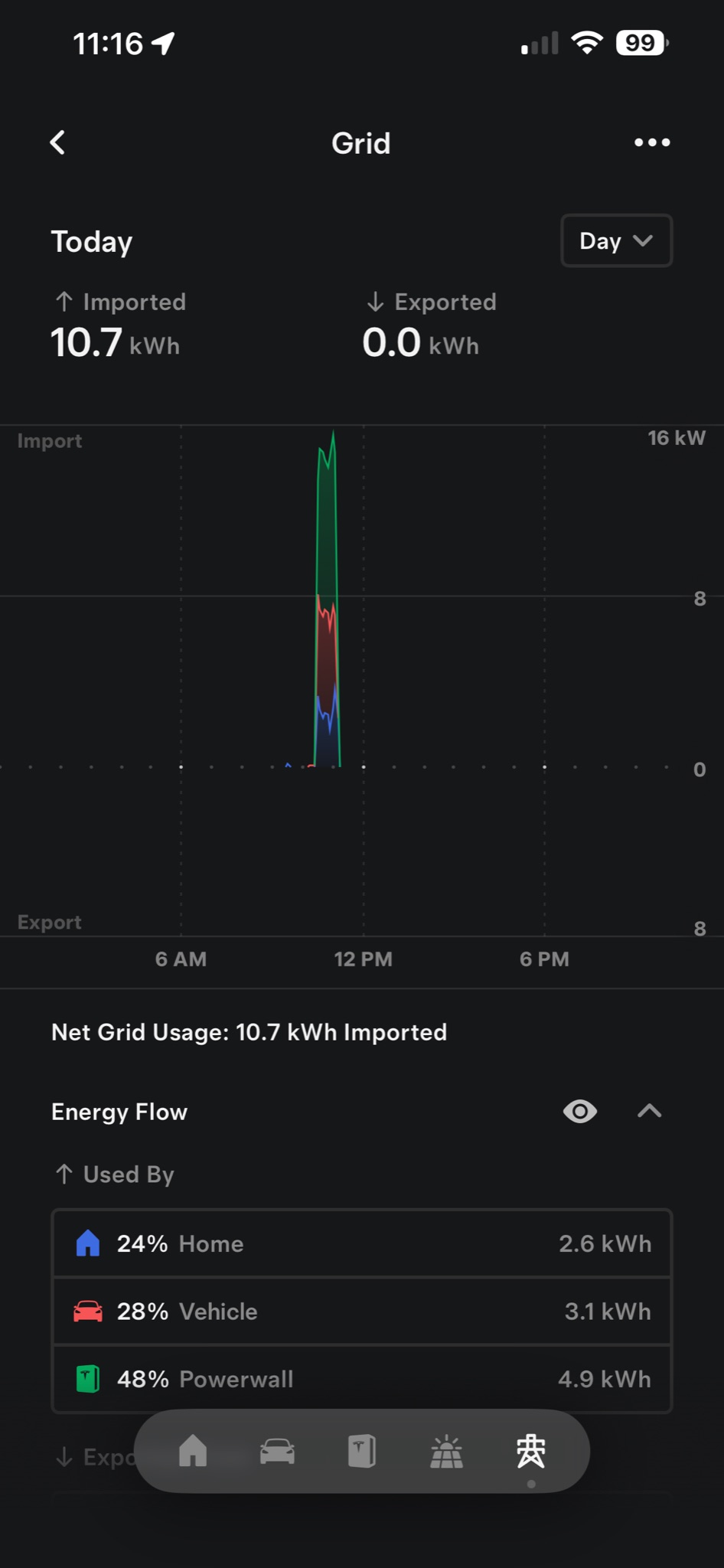
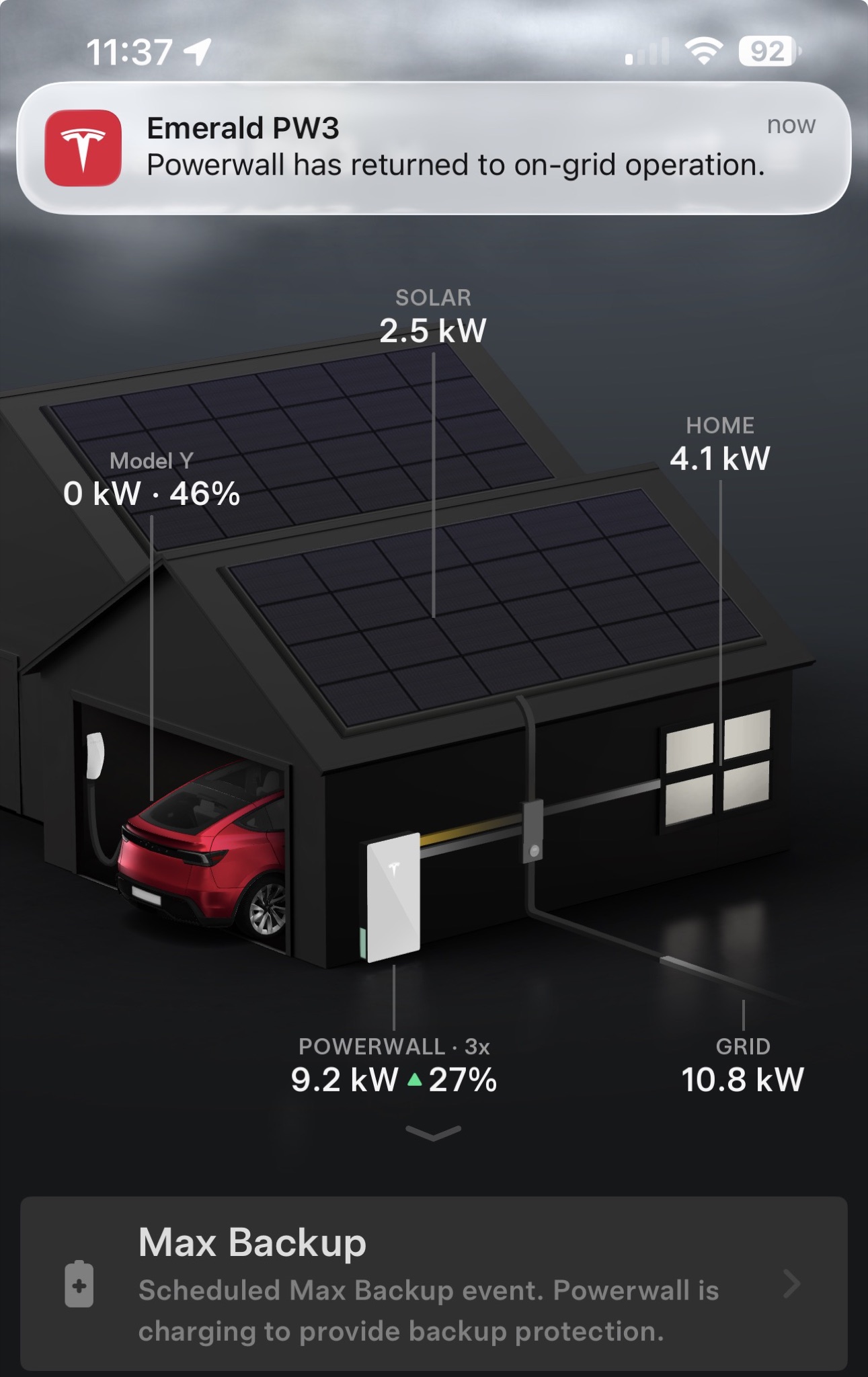
A few minutes in, the phone pinged: "Power lost while charging — Charging stopped, check power source and charging equipment." The Tesla home view confirmed it — "Grid Outage. Powerwall is providing backup power. ~3.3 backup hours remaining."
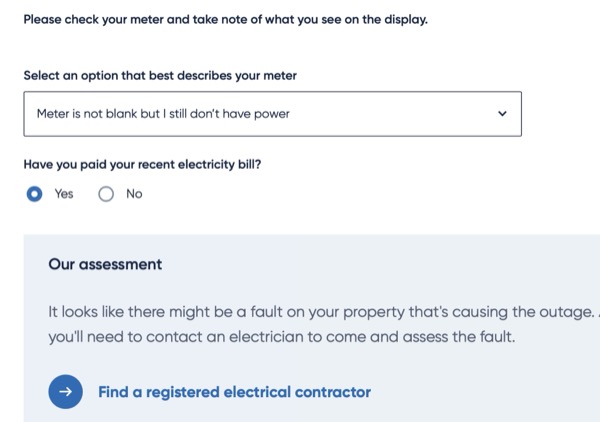
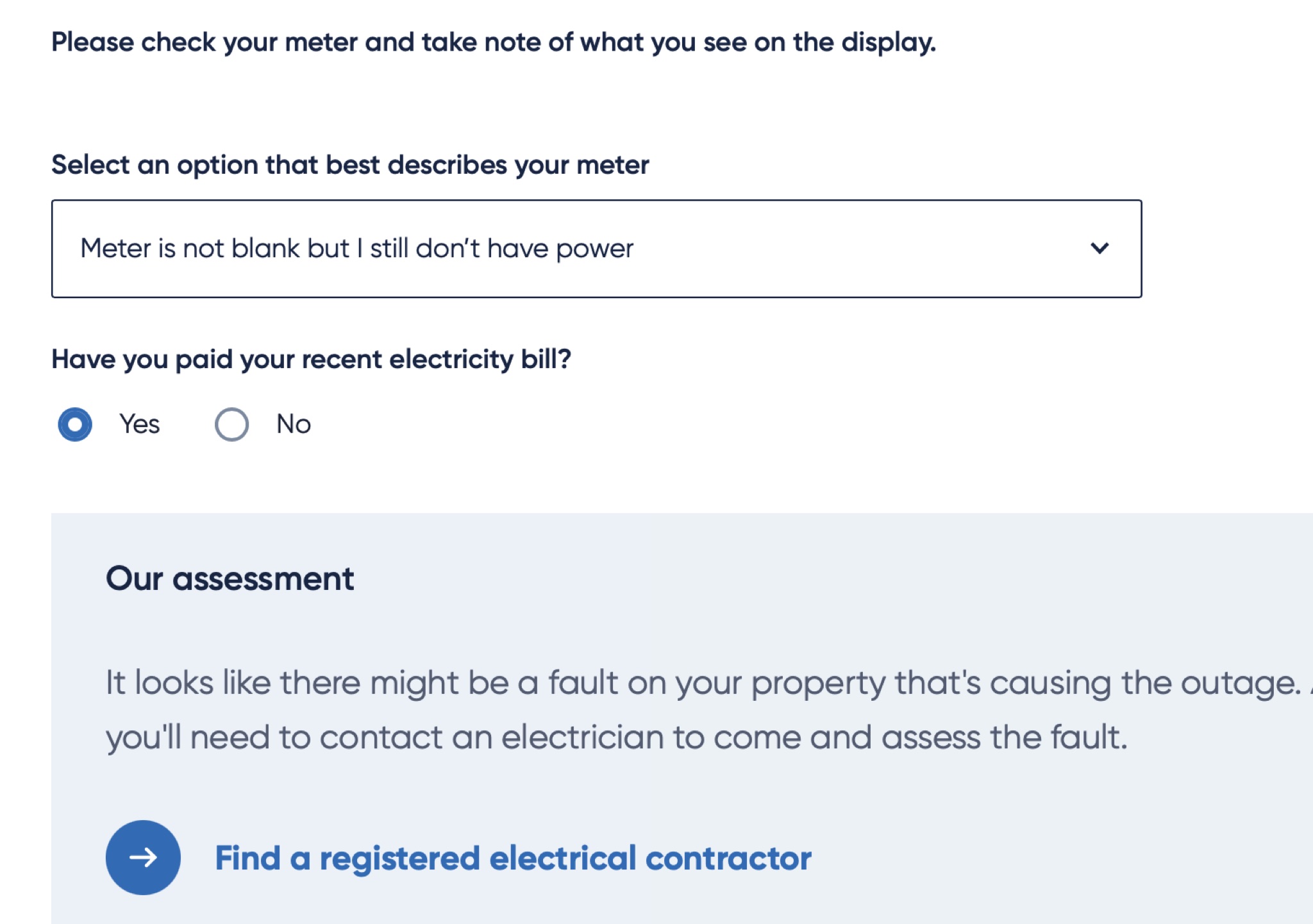
I checked our circuit board. Nothing tripped. Went online to AusNet's outage page — nothing reported anywhere near us. Their fault-finder asked if the meter display was lit and we'd paid the bill: yes, and yes. Verdict: "It looks like there might be a fault on your property. You'll need to contact an electrician."
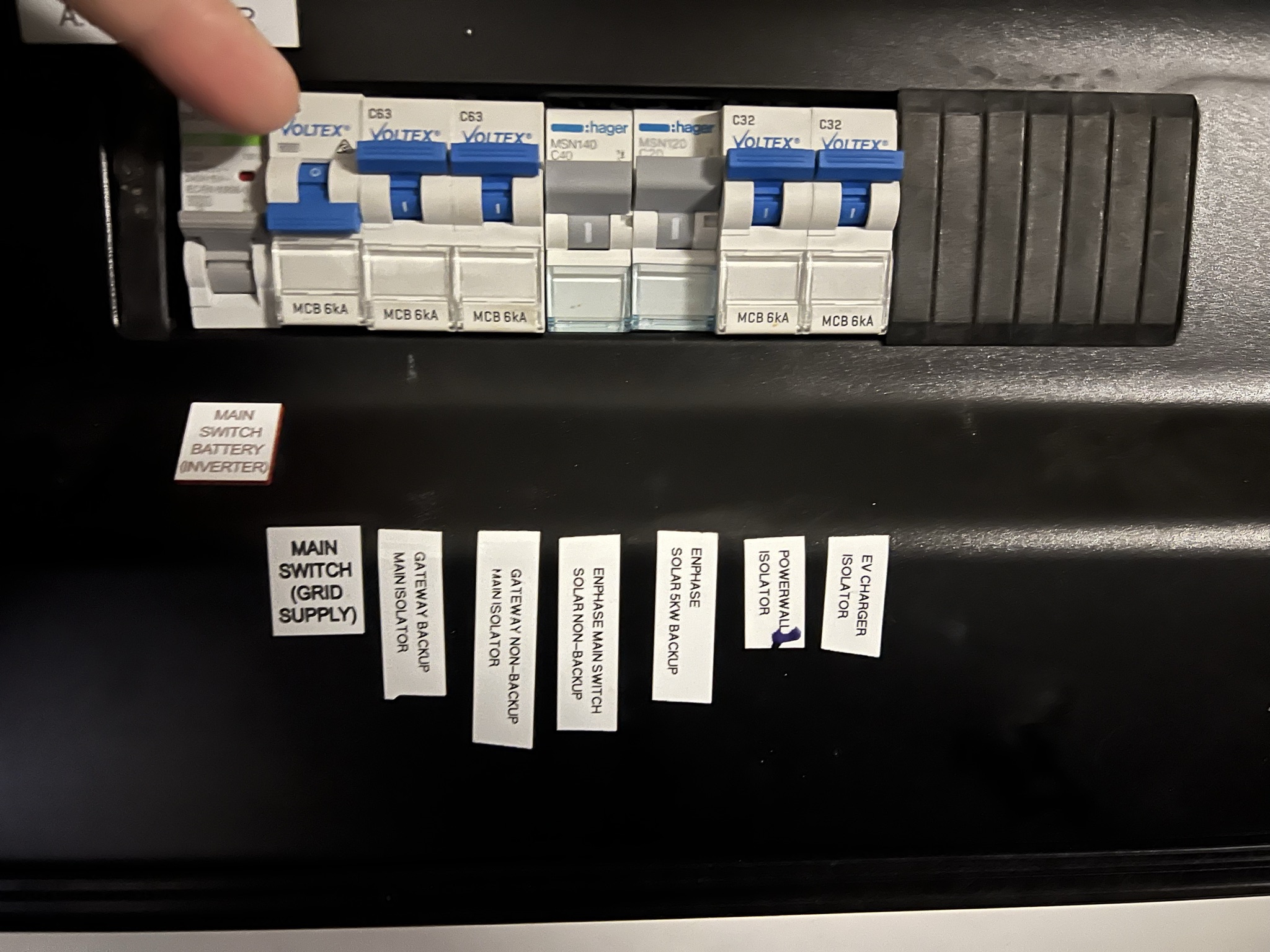
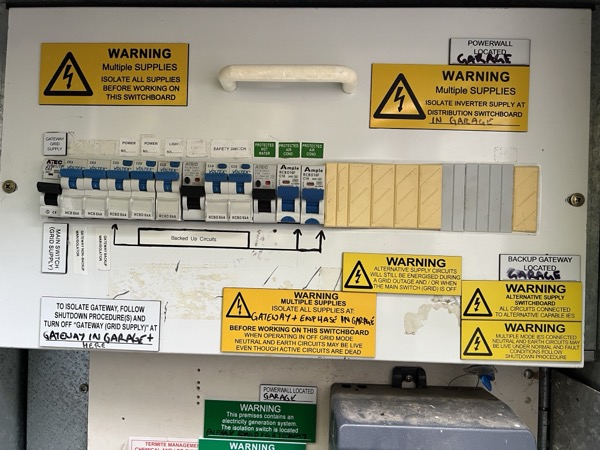
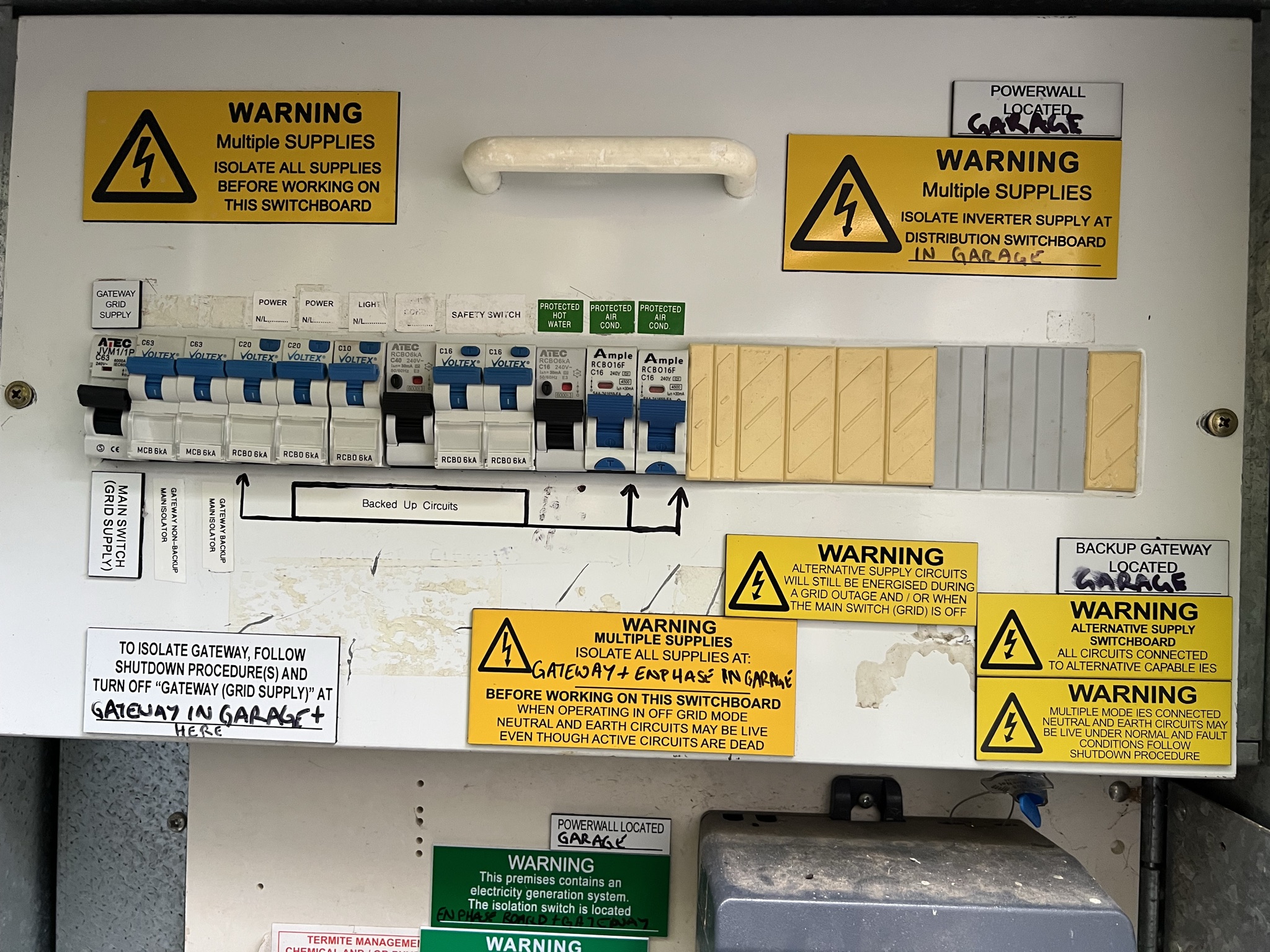
That's when I remembered the other set of breakers — the ones inside the Tesla Backup Gateway, behind the cover I rarely open. One had tripped: MAIN SWITCH (GRID SUPPLY), a 63 amp main breaker. About 15 kW at 240 V — and that turned out to be the whole story.
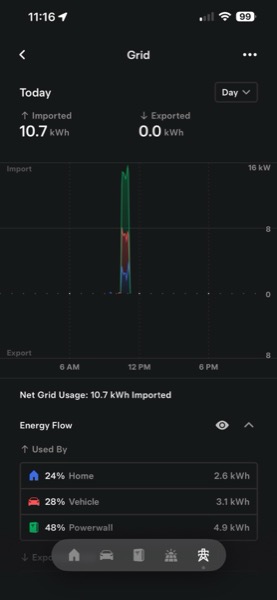
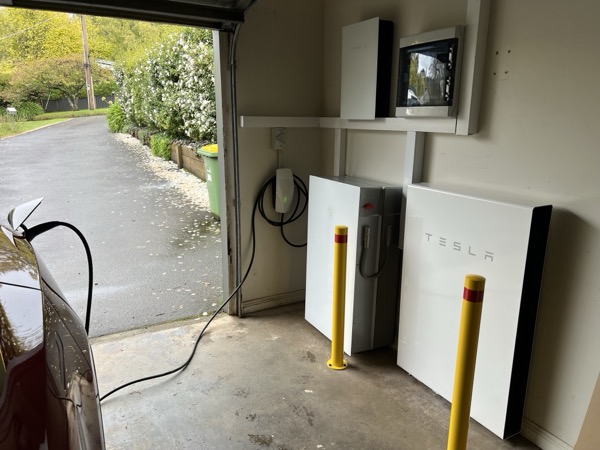
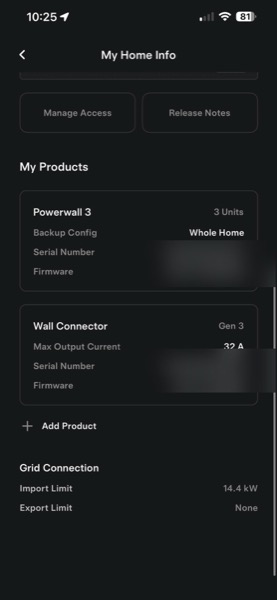
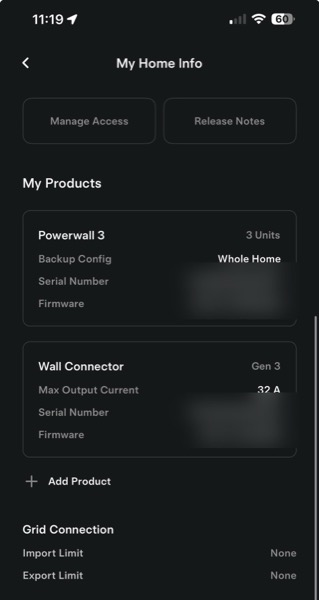
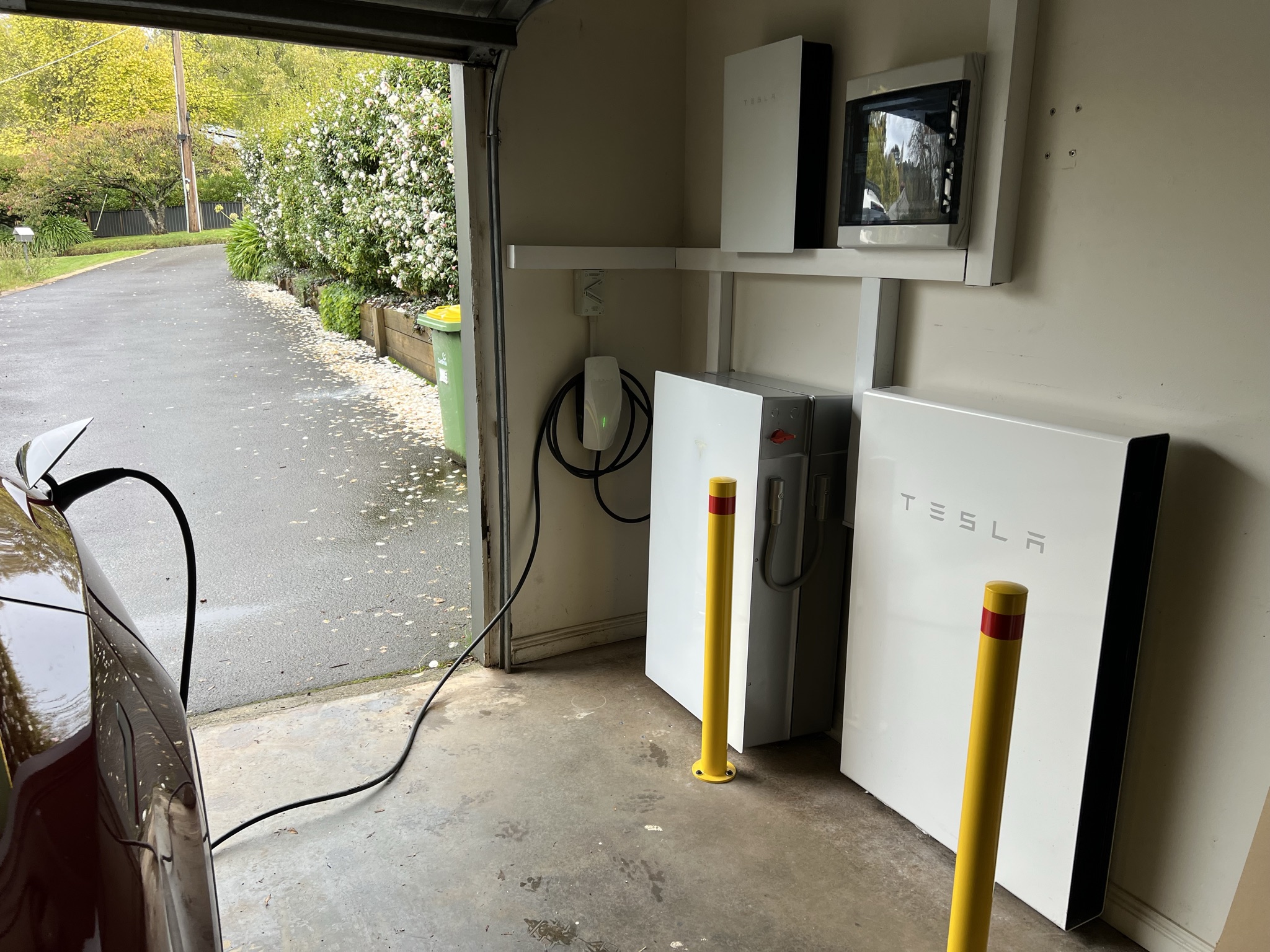
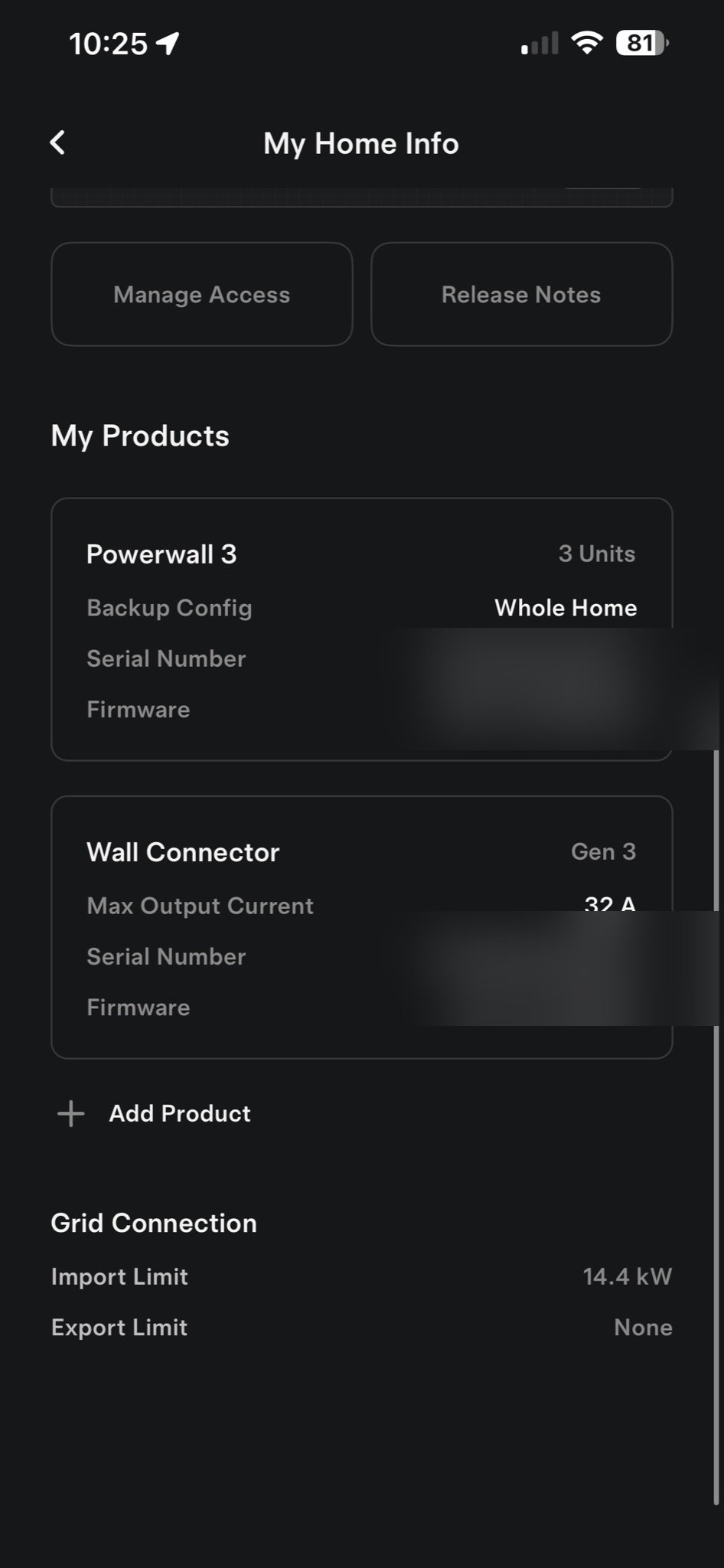
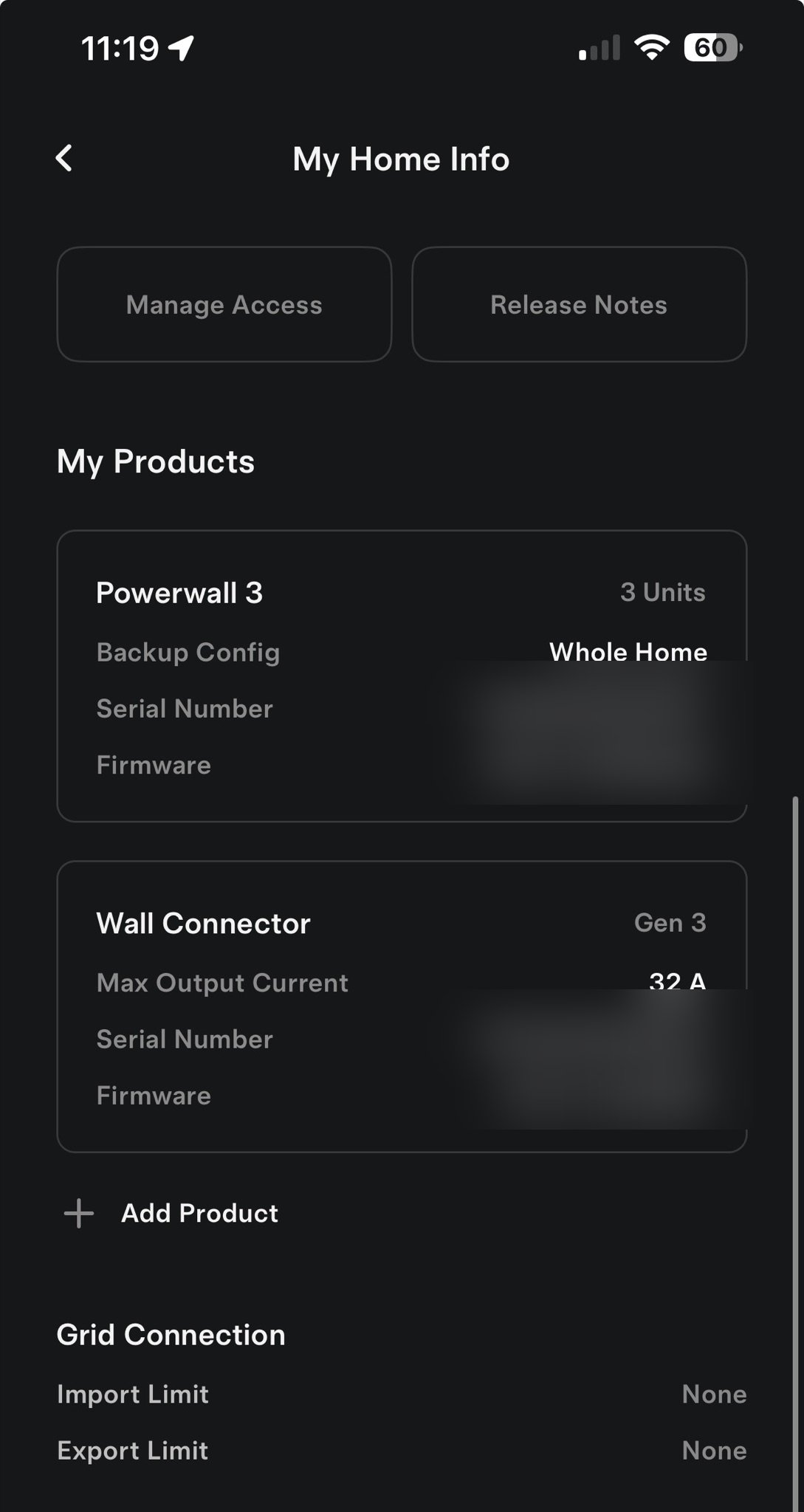
A few weeks ago, I only had one Powerwall 2, with a max draw of 5 kW. But now I have three Powerwalls, which can charge at up to 5 kW each, so 15 kW between them. The Wall Connector pulls another 7.5 kW. That's 22.5 kW trying to come in across a main feed rated for 15. Sapphire originally set a 14.4 kW software import limit to keep us safely under, but that limit also disabled "Charge on Solar" on the car. Following advice from Tesla support, I asked them to drop it; they warned it could trip; I didn't really understand the trigger at the time. Now I do.
The grid was fine. The protection did its job. The fault, this time, was me.
Question for the Tesla experts: is there a way to keep "Charge on Solar" available without an import limit that maxes out the Gateway breaker?
Related Posts
- First chapter — the day the new batteries arrived Two new Powerwall batteries, installed by lunchtime 13 Apr 2026
- The Powerwall fix I can't explain 14 May 2026
- Powerwall puzzle answered 22 May 2026
- The 100 W parasitic rumour, checked 23 May 2026
- Mapping the rest of the board Where does this circuit go? 26 Jul 2026
Report
Report
A) AMBER sucks in winter
B) would have been money better spent on a 3Phase upgrade than a second Powerwall.
C) always priority 1 to heat the house it's a 50kWh battery you have to charge pretty much everyday for 5 months.
Best done directly in the middle of the day rather than at night from a battery.
This is because it makes 20% more heating power with the same energy input when it's warmer outside 17degC vs 7degC it is now and you don't have a 20% trip loss through the battery.
Single phase is super easy to run out of.
Report
Report
Report
My main issue is during a real grid outage the car doesn’t stop charging but slows which drains the battery. Currently using a home assistant automation to te the car to stop during an outage instead.
Report
Report
Luckily my house was build with 3 phase.
Any other solutions is interim and temporary patches...
Report