
Powerwall puzzle answered
Show 0 more photos Show 3 more photos Hide additional photos
Last Thursday's late-night Powerwall fix turned out to be a firmware tweak, not a Gateway swap.
When Jacob from Sapphire Solar came back on 14 May to get our three batteries talking again, he arrived with a replacement Gateway in the van — so I'd assumed that was the fix. But the unit on the wall afterwards looked like the same one I'd been staring at all week, and neither he nor Tesla were saying much. I asked Jacob to clarify on Wednesday: it was a firmware change Tesla had been actively working on, not the hardware. They left ours in place; they just got the software right.
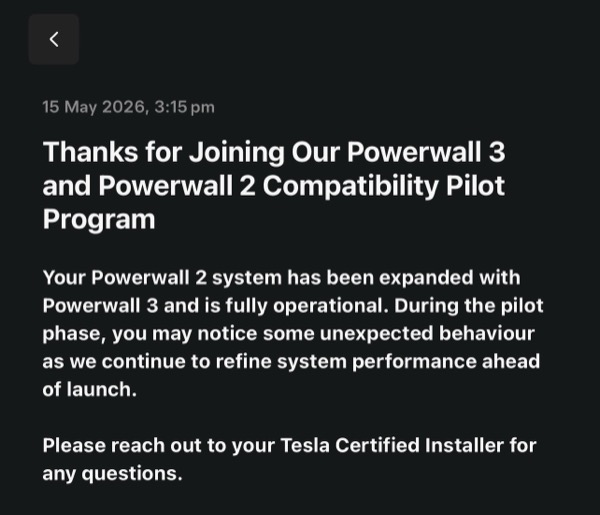
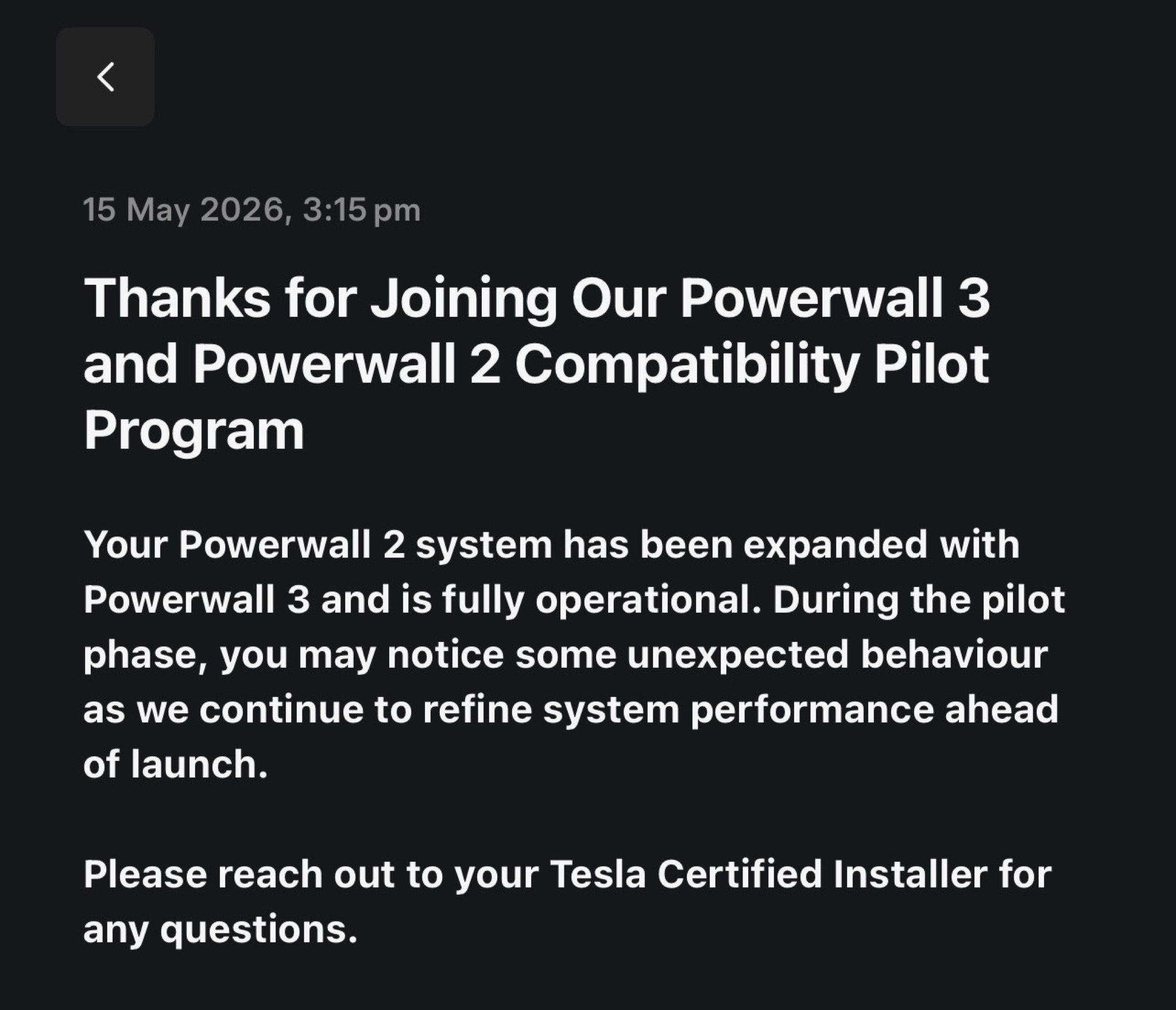
Minutes after his reply, a Tesla notification I'd missed earlier turned up in the app, dated 15 May 2026, 3:15 pm — the evening of Jacob's visit:
"Thanks for Joining Our Powerwall 3 and Powerwall 2 Compatibility Pilot Program. Your Powerwall 2 system has been expanded with Powerwall 3 and is fully operational. During the pilot phase, you may notice some unexpected behaviour as we continue to refine system performance ahead of launch."
So we're officially on the pilot — which explains why there was firmware to tweak in the first place. The two-hour wobble two weeks ago, the dead week that followed, and the fix that finally landed: all chapters of Tesla refining the same code ahead of the general release.
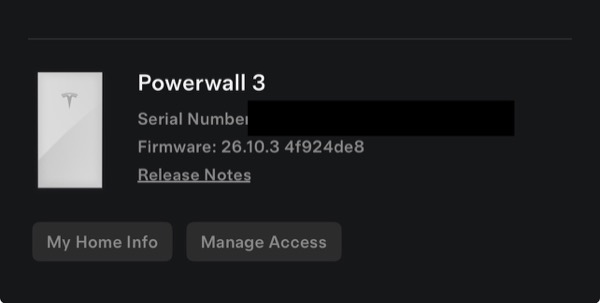
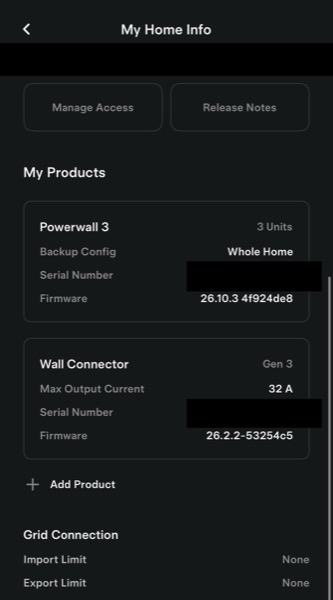
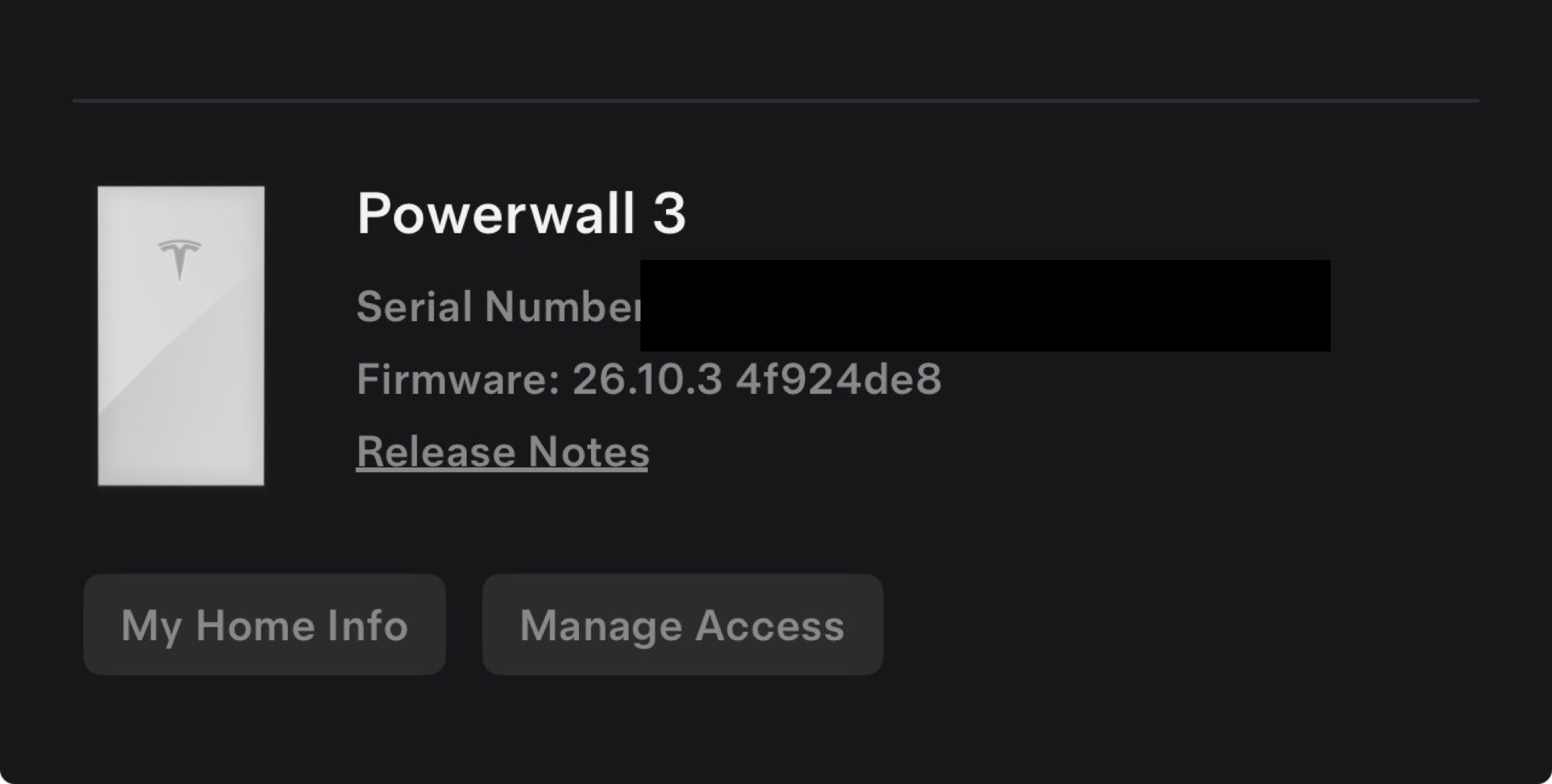
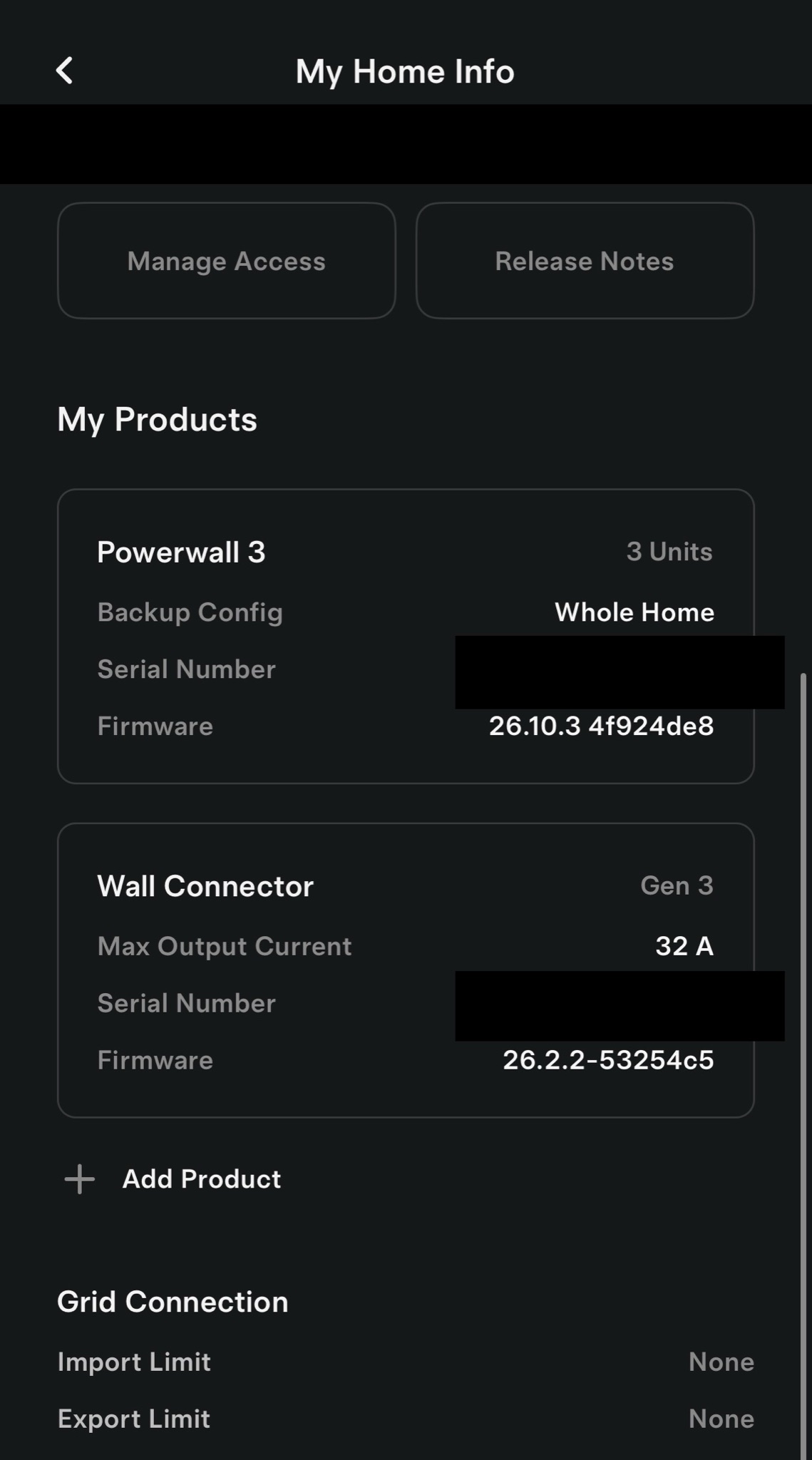
In My Products the three batteries are rolled into one "Powerwall 3 — 3 Units" entry running firmware 26.10.3 4f924de8. No separate PW2 line — once it joined the new system, Tesla's app treats the lot as a single Powerwall 3 site.
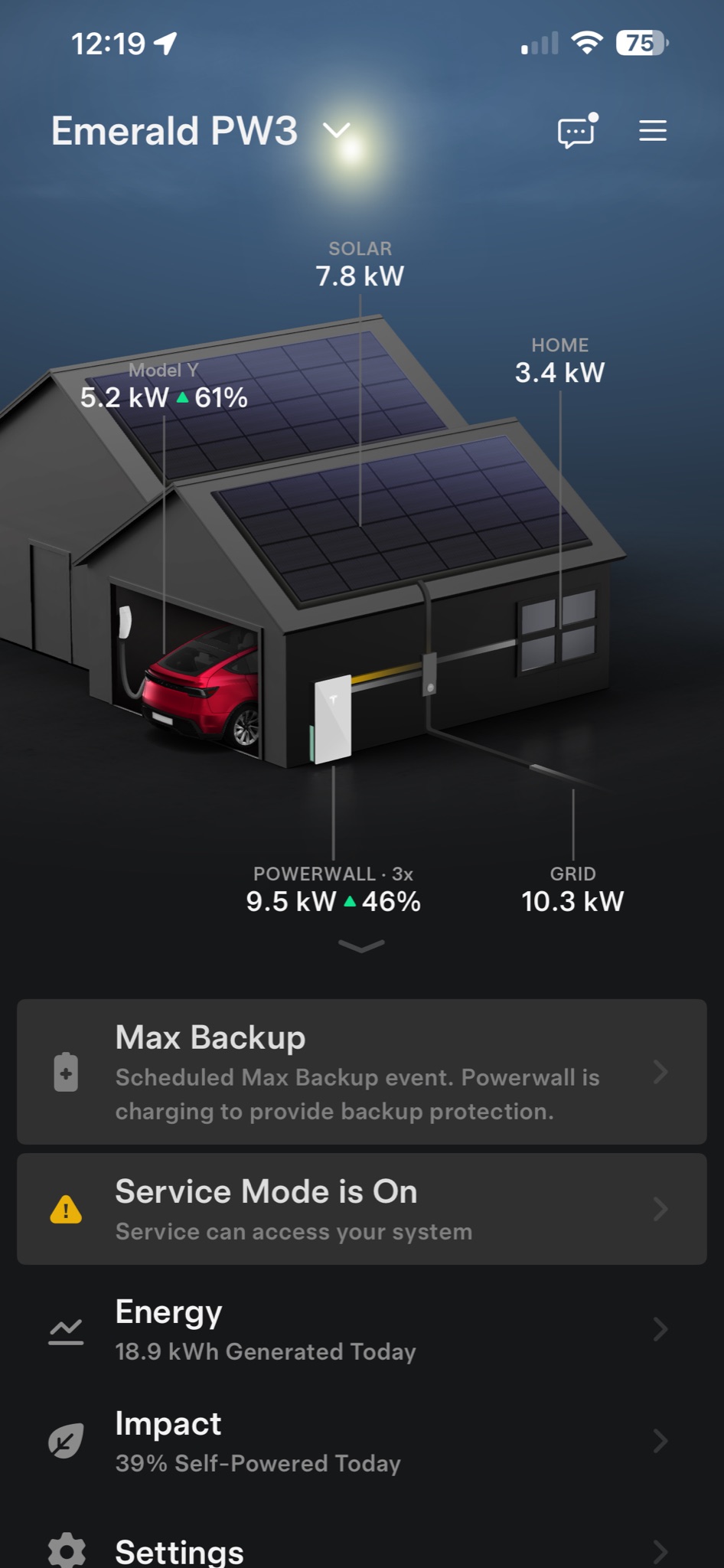
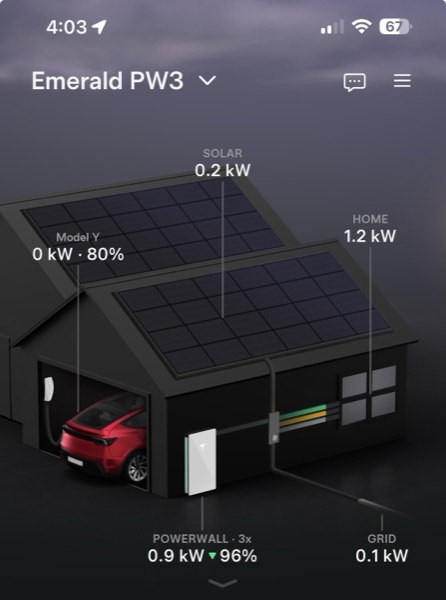
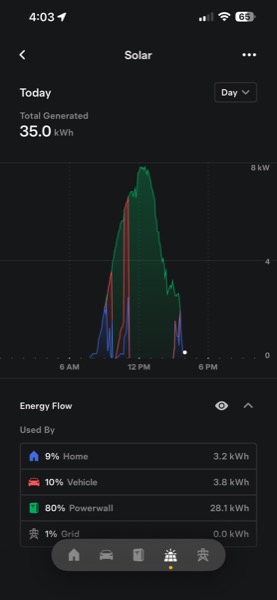
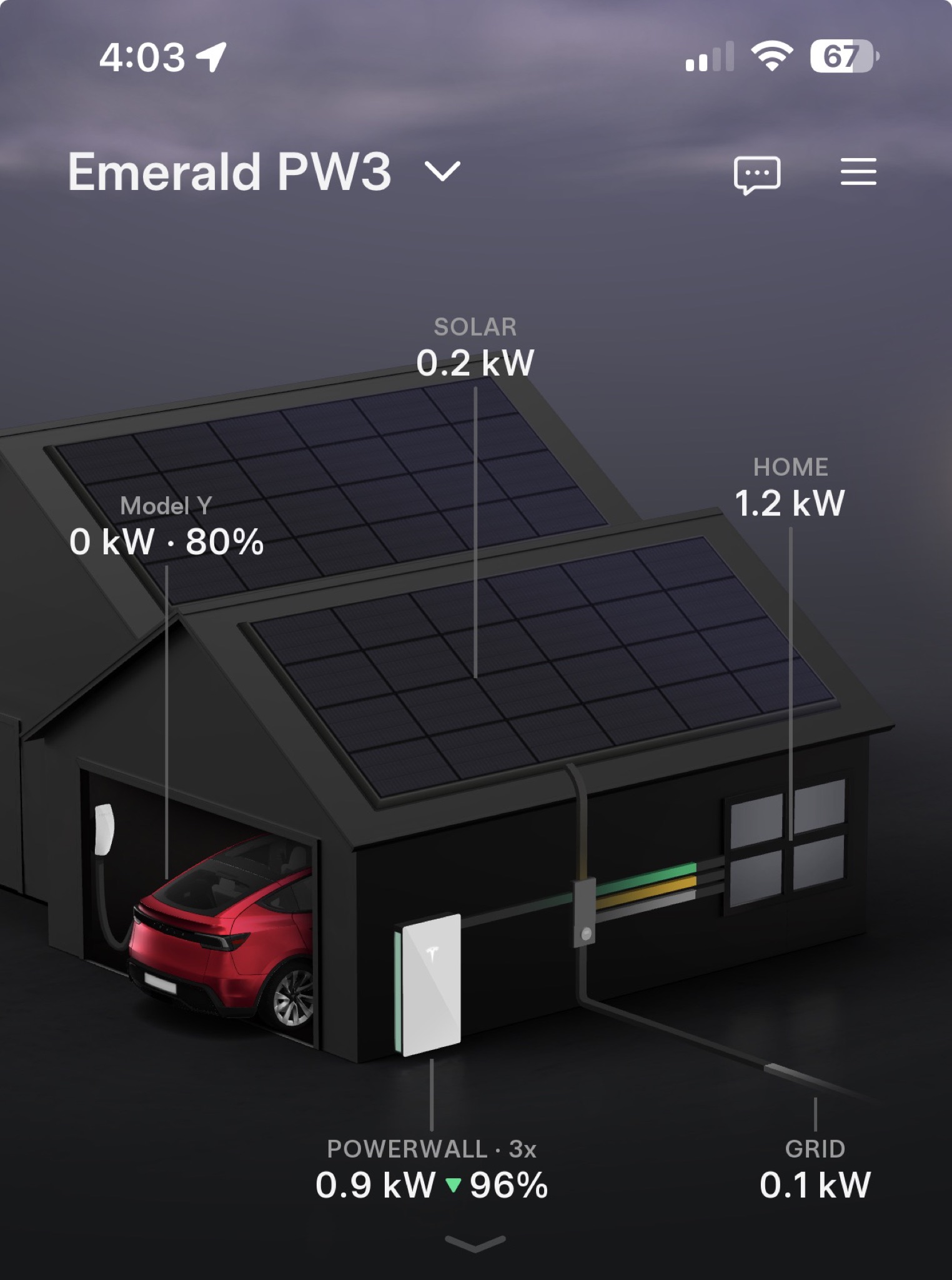
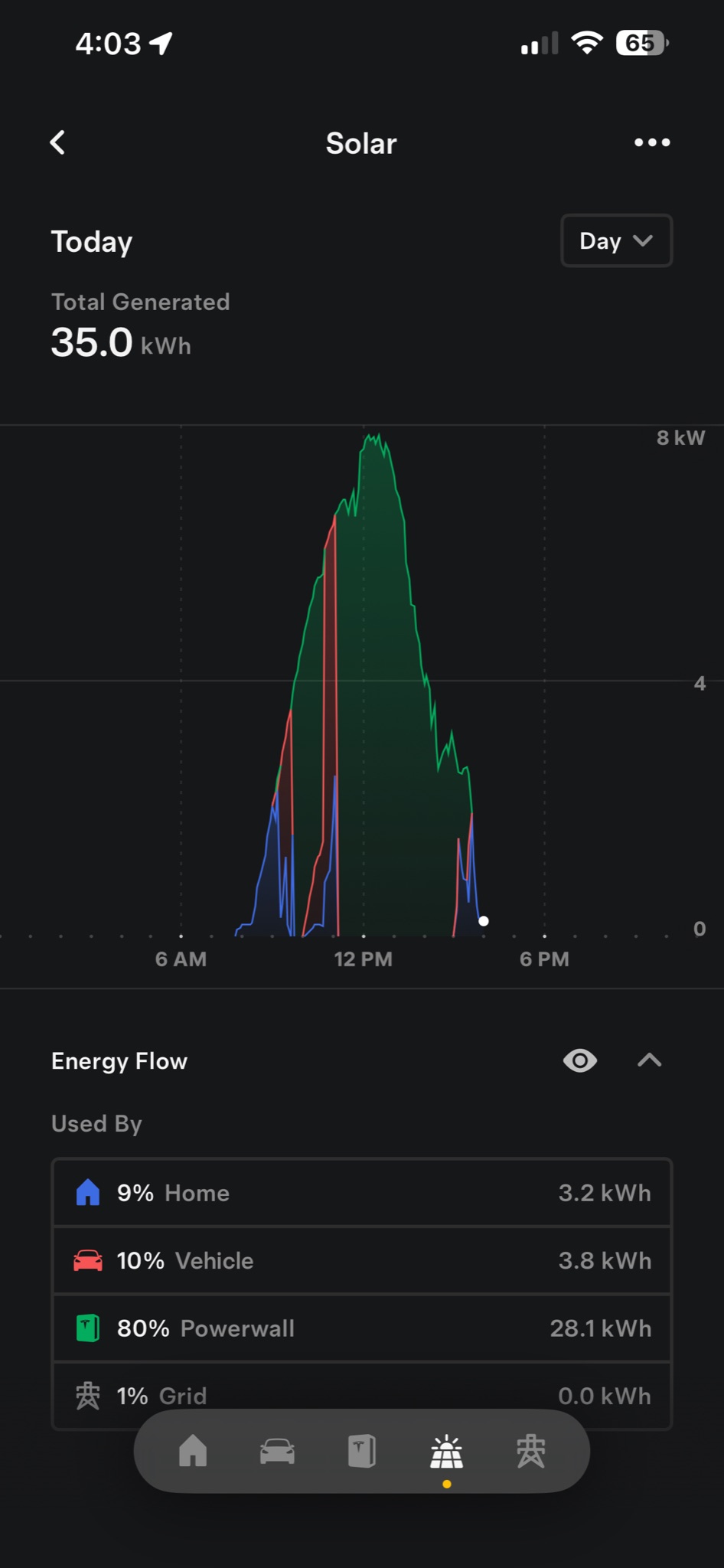
A week of normal operation since: 35 kWh of solar on a clear day, 31 kWh straight into the Model Y, the batteries cycling between 9% and 96% without me touching anything. All three pulling 9.5 kW at lunchtime today — the 15 kW we were promised on install day, finally living up to itself.
If you're also on the Tesla compatibility pilot, what's been the wobble that landed you here?
Related Posts
- Part 3 — the fix that worked but nobody could explain The Powerwall fix I can't explain 14 May 2026
- Part 2 — Sapphire's beta-firmware reconnect that lasted two hours Tesla Powerwall 2 Compatibility Beta 7 May 2026
- Part 1 — install day for the Powerwall 3 and Expansion Two new Powerwall batteries, installed by lunchtime 13 Apr 2026
- Part 5 — the 100 W parasitic rumour, checked against our data The 100 W parasitic rumour, checked 23 May 2026
- The day before — the grid outage that wasn't It wasn't the grid. It was me. 21 May 2026
Report
The biggest electrical issue isn't chemistry, it's that PW2 and PW3 are fundamentally different kinds of inverter. PW2 is AC-coupled: battery on one side, its own internal inverter converting to the house's AC on the other. Solar (if you have it) sits on a separate inverter doing its own thing. PW3 is a DC-coupled hybrid: built-in solar MPPTs, panels feed it directly in DC, and it converts to AC only when discharging. Put both on the same Gateway and you have two inverters sharing one AC bus, each capable of grid-forming, each with its own anti-islanding logic. Coordinating who is master, who is slave, and how loads get shared during a grid outage is real firmware work, not a chemistry problem.
On top of that, the chemistries are different: PW2 is NMC at about 5 kW continuous; PW3 is LFP at around 11.5 kW. Different voltage and temperature curves, different charge profiles (LFP wants to sit at 100%, NMC doesn't), and the power envelopes have to be load-shared carefully or you swamp the PW2 and starve the PW3.
Commercial incentive probably explains the priority (they'd rather sell a PW3 Expansion than make the old stuff play nice), but the difficulty itself looks genuine. Jacob from Sapphire reckons the pilot firmware sorted most of the orchestration; the general-release build in July should make it routine.
Sources:
- Tesla Powerwall 3 datasheet (AU): https://energylibrary.tesla.com/docs/Public/EnergyStorage…
- Tesla Powerwall 2 datasheet: https://energylibrary.tesla.com/docs/Public/EnergyStorage…
- Clean Energy Reviews on AC vs DC coupled battery storage: https://www.cleanenergyreviews.info/blog/ac-coupling-vs-d…
- Battery University BU-205, types of lithium-ion: https://batteryuniversity.com/article/bu-205-types-of-lit…
Report