ICE vehicles also benefit from charging points
I’ve come across a few ICE (internal combustion engine) vehicles that could benefit from charging points. Bear with me here.

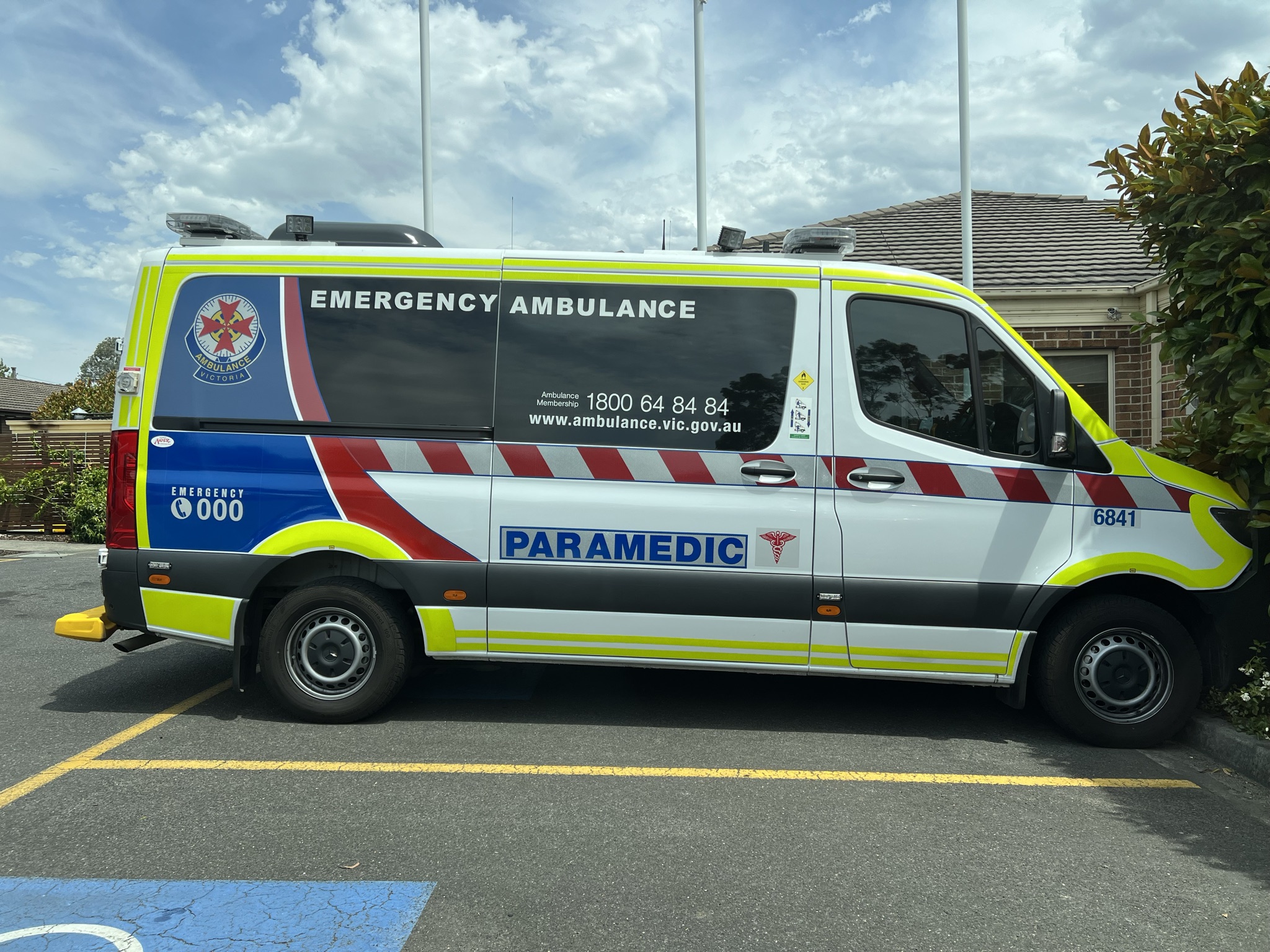
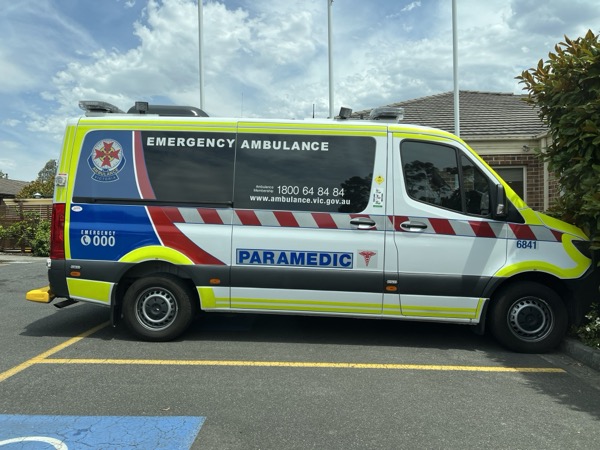
This ambulance, parked outside a nursing home, was running the engine, with no-one in it, I presume to keep the air con running, on what was a pretty hot day. Perhaps they were keeping the vehicle cool for a patient they were collecting. Fair enough. But, of course this leaks fumes (and noise) into the car park and reception, which isn’t great for health. I noticed that it has a power socket at the rear of the vehicle. I’m wondering if they could plug that into an electrical supply, if there was one at the parking spot (but wasn’t one handy here).

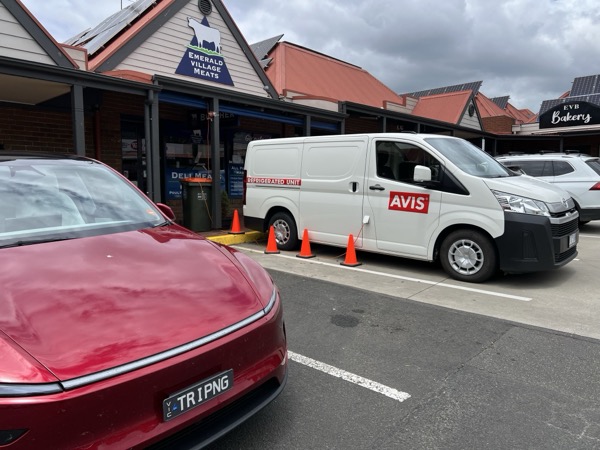
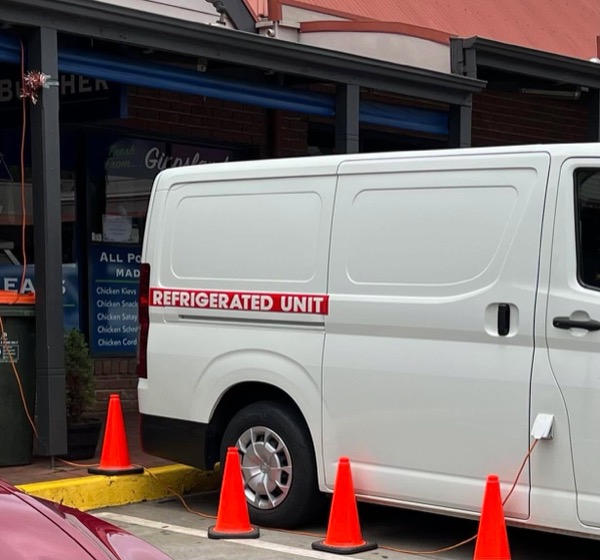
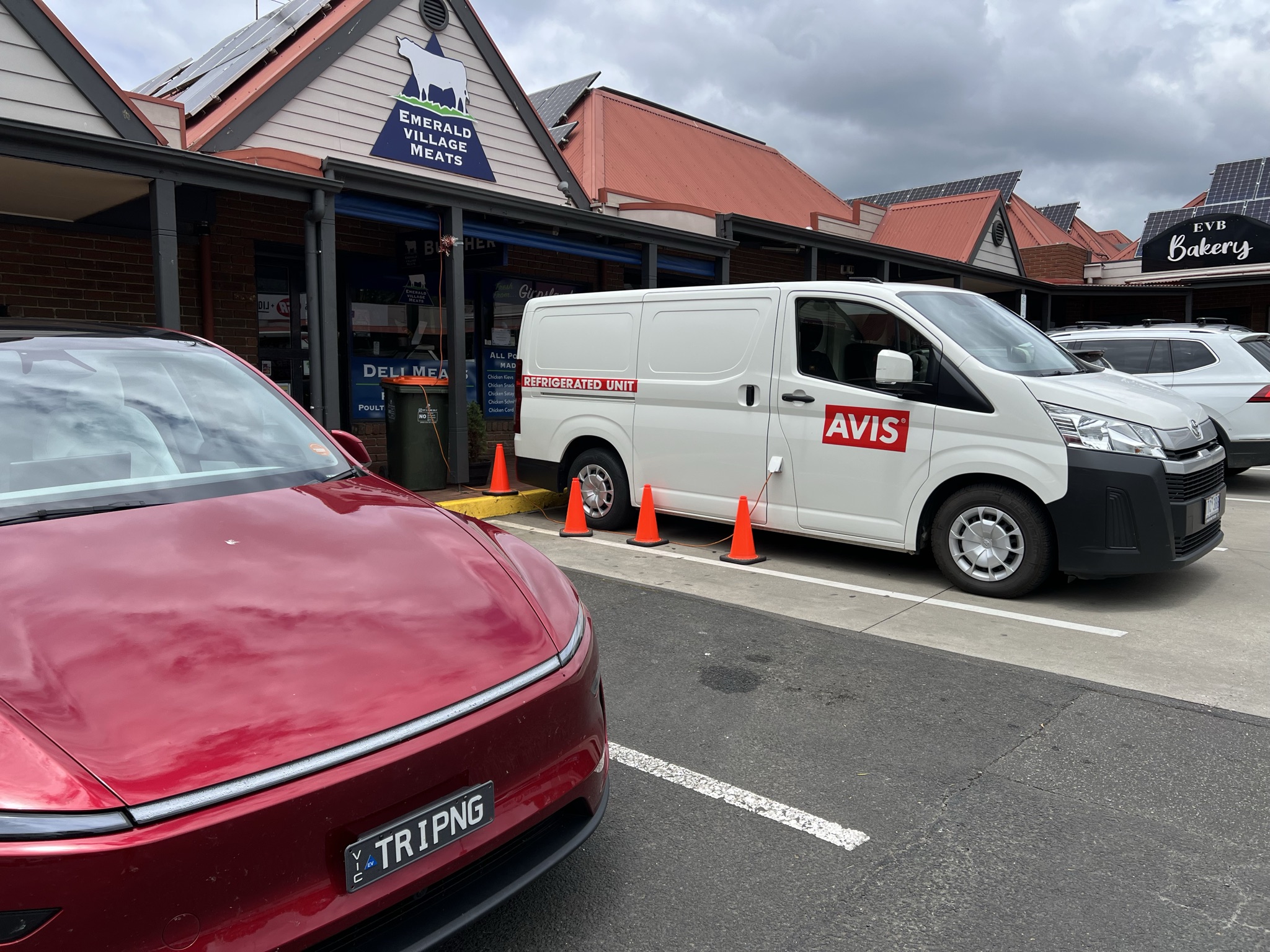
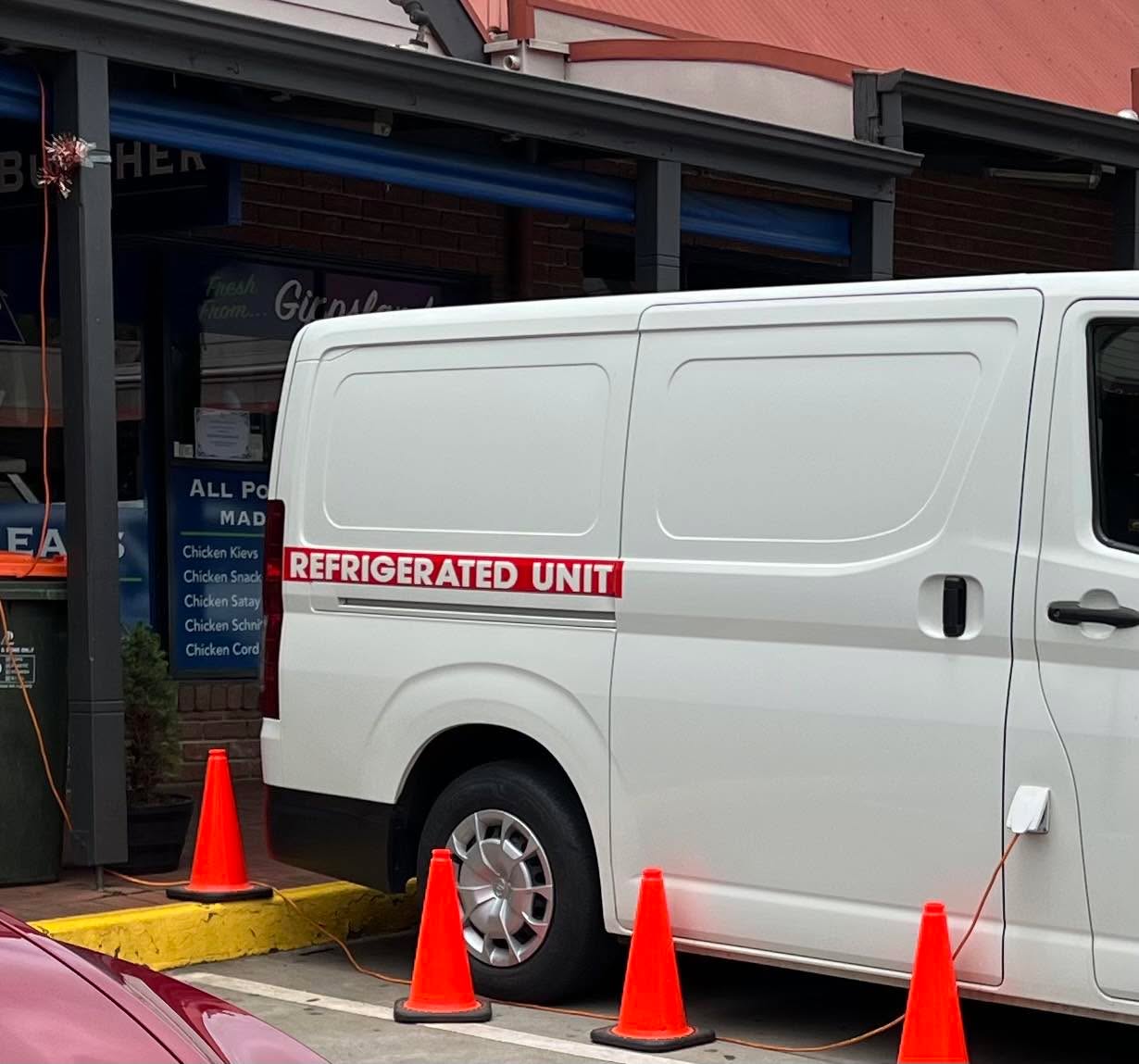
This rental van I’m guessing has refrigeration, parked outside a butchers in Emerald. They made use of the external power socket, creatively plugging in from the shop. No noise or fumes.

I wonder if it would be handy to have more accessible power points for these ICE vehicles?

Or better yet, have electric vans that can keep cool without an engine, and recharge from a power point. One day soon, maybe.

78 comments

  1. Anura Samara via Facebook ↗
    Most emergency vehicles spend a lot of time sitting still, so they would be perfect for electric. And the crazy thing is that they all have onboard computerised systems - even our fire trucks - so when they’re at the station they are plugged in.
    1

    Reply

  2. Robert Nicol via Facebook ↗
    The external plug is used to keep both batteries in vehicle charged and the engine block heaters powered. They heaters are there so it can be "driven like its stolen" from the get go.
    Lots of electronics and while the emergency lights are all LED these days, the current draw is still significant.
    23

    Reply

    1. Robert Nicol block heaters arent really a thing in Australia.
      4

      Reply

      1. Kate Lineker especially after Queensland Ambulance had one burn the vehicle and station to the ground, they were disconnected.
        12

        Reply

      2. Craig Claassen do tell. Must have happened after I retired

        Reply

      3. Robert I tried a Google search, but couldn't find it. All is the arson attack.

        This was in the Blue bonnet F series era. I remember that all of the oil heaters were unplugged, in the engine compartment.
        1

        Reply

      4. Craig Claassen I was not aware of that. I was there for the BBQ @ Cleveland. I spent 1 year on the SEVC back when they converted to LED lighting. That was awhile ago!

        Reply

      5. Kate Lineker Metropolitan fire trucks still do. With an overhead power connection system which allows driveway disconnection!
        Interested to read another post that says ambulances won’t start while plugged into shore power. It took a long while to incorporate this feature, an electrical contractor mate had a nice little earner a while ago repairing charging systems at ambo stations after they were repeatedly wrecked by driving off while plugged into shore power!
        1

        Reply

      6. Robert I remember giving feedback to someone in authority about the halogen lights on the blue bonnet f series being too directional, offering only an narrow field of vision, but they went ahead and built them anyway.

        Then they retro fitted strobe lights to correct this deficiency.

        Reply

      7. Robert Nicol via Facebook ↗
        Yes some in :management" had NFI when it came to using vehicles daily. The early Merc's came out with one spot and one flood light.

        Reply

    2. Robert Nicol Ambulances don't have engine heaters anymore , they stopped (in Victoria ) using them in the mid 90s as they caused fires.
      2

      Reply

  3. David Novak via Facebook ↗
    You would need another battery the size of an ev to keep all the led flashing lights going, plus all the medical equipment active, at a scene of either an accident or call out. So its not viable.
    2

    Reply

    1. David Novak, you said what now?? LED’s use very little power and the medical equipment all has its own battery power. It’s simply to keep the ambulance air con running.
      1

      Reply

      1. Brendan King you do realise how many led lights are on an ambulance, plus the high wattage they use. These are not your ordinary leds. These are, high intensity leds. The medical equipment in an ambulance needs constant power. The built in batteries in medical equipment dont last very long due to the massive power draw on them.

        Reply

      2. David Novak, you do realise that I operate an ambulance being a paramedic. The medical equipment DOES NOT need constant power. The monitors and other equipment all have their own battery power that simply gets changed over at branches.
        1

        Reply

  4. Graeme Willox via Facebook ↗
    Most emergency vehicles do spend a lot of time sitting still, but not at the same or predictable locations. Ambulances are plugged in at stations, but they often leave station at the beginning of the shift, and don't get back for 12 to 14 hours, or maybe even longer.

    Plugging them in at an incident location could be done. But it would require the installation of probably tens of thousands of outlets around the country. They'd need to be kept available at all times for the emergency vehicles, yet individual outlets might never ever be used.

    Then will come the question of who pays for the outlets? Who pays for the electricity? And in an emergency situation, do you want people looking for plug in points when they could be dealing with that emergency?

    I understand what you're arguing and do see the merit of it. I just don't see that as being at all practicable.
    62

    Reply

    1. Graeme Willox that might be true for ambulances, but trust me fire trucks spend most of their time at the station.
      2

      Reply

      1. Craig Dyson via Facebook ↗
        Fire Rescue Vic has an electric vehicle that has been in service since early 2025 , it’s being evaluated to see if it’s worth purchasing more
        4

        Reply

      2. Craig Dyson ACTFR has both an electric appliance and an electric hazmat support truck. The appliance has had teething issues which has really been fodder for the naysayers!

        Reply

    2. Terri Hughes via Facebook ↗
      Graeme Willox the socket you see at the back of the ambulance is to keep the batteries of the equipment of the vehicle charged when not being driven when n station once the vehicle is started it uses power that it generates has nothing to do with it being an EV
      4

      Reply

      1. Terri Hughes I realise that. I was commenting on the OP's suggestion that they could be plugged in to provide air conditioning when stationary etc.

        Reply

      2. Graeme Willox it’s a good idea however even if ambulances are plugged in the aircon does not work the engine must be running just like in a car. That is why we run them while on standby and for a multitude of other reasons.
        2

        Reply

      3. Jacob Shannon I realise that. I was trying to say that I understand why the OP suggested it, but it's not practical
        1

        Reply

      4. Terri Hughes, the “equipment,” in Victoria at least, is not plugged in inside the ambulance. A few may have syringe drivers that have internal batteries plugged in but as there is shore power power points and inverter power points they can be plugged in to either.

        The stretcher charges through inverter power as well as its spare battery. The monitor has a battery that just gets changed over when at branch as they have plenty of power to monitor a patient for some time. We can transport a patient 2 1/2 hours on the one battery and still have plenty of power to do more work. Suction has a battery pack or other units just use Venturi with the oxygen. The fridge is simply a 12v car fridge. Lifting cushions have a removable rechargeable battery at this point in time.

        The input socket on the side simply only charges the batteries.

        Reply

  5. Jason Sargeant via Facebook ↗
    I don't think the juice is worth the squeeze using the payoff principle. Much better off installing solar at ambulance branches.

    As others have said, shifts are unpredictable, huge amounts of electricity used for equipment as is. Imagine being 14 hours into a horrid shift and not being able to get back to branch as you don't have charge to get back.

    I've personally done 700kms+ in a shift over 14 hours.
    51

    Reply

    1. Jason Sargeant I’ve hit 1000km on a shift, even had to refuel while responding to a job
      31

      Reply

  6. Jarryd Sheehan via Facebook ↗
    Both of those vehicles have external power connections......
    Neither are running in to plug in their vehicle, creating a trip hazard of a cable for a resonably short stop
    1

    Reply

    1. Jarryd Sheehan Agreed. It would only be practical if there was a plug ready to use that was out of the way.

      Reply

    2. Jarryd Sheehan they don’t need to be plugged in for short stops. They can be ramped at hospitals for many hours and aren’t plugged in.
      2

      Reply

  7. Jennifer Elizabeth via Facebook ↗
    Ambulance keeps the secondary batteries charged for things like AC, Lighting, o2 systems etc.

    For the AVIS van, its just keeping the fridge motor running.
    1

    Reply

  8. Callum Bolch via Facebook ↗
    Those Ambulance Sprinters won't turn on with external AC power connected. Running the engine is required to get the AC running to a useful standard.
    We often aren't stationary for significant enough periods that an EV style charge would be beneficial
    27

    Reply

    1. Callum Bolch ramped paramedics would say otherwise.

      Reply

    2. Callum Bolch only stationary for lengthy periods of time ramping at hospitals. In the back of ambos it can get hot sitting stationary even with AC on. The machinery inside and vehicle running throws out enough heat on hot days while sitting for long lengths of time.

      Reply

  9. Caaf AU via Facebook ↗
    One of the main reason to the idling ambulance is the amount of perishables on board aka, drugs! If the emergency vehicle was parked or had an area to park under cover chances would be the vehicle would be turned off. 
    17

    Reply

    1. Caaf AU amount of perishables yes but mostly so the patient is not loaded into a hot vehicle.
      2

      Reply

    2. Caaf AU we don't have refrigerated medications on board. Its about patient and crew comfort as this can effect the patients condition and the crews performance ability
      2

      Reply

      1. Damian Williams Thanks for the update, hopefully that’ll keep the folks who are concerned better informed and mindful.

        Reply

  10. Scott Whyte via Facebook ↗
    Its been said a few times now, but I'll also say it.

    Medications that need to be refrigerated require power, power kills the battey, not just the starter, but also the Auxiliary batteries. Batteries need to be kept charged, this is done by using a DC to DC charger.

    The DC to DC charger can also be plugged into 240v for charging usually at a higher rate of charging than via the engine.

    As for the van, they have probably had a coolroom failure or purchased an over supply of product for some specific and the fridge motor in it is designed to run on 240/440v power or ICE

    Either way, sounds like you're barking up the wrong tree
    4

    Reply

  11. Mike McManus via Facebook ↗
    The external power inlet is for charging the vehicle and it equipment when on standby. The air conditioning system is operated by the vehicles engine , it does not run like a house hold system
    51

    Reply

    1. Mike McManus came to say the same
      1

      Reply

  12. Ben Wilson via Facebook ↗
    There is one major reason they leave the engine running while on a call, it is on leave it on turn it off it may not start theory and you don’t want to be in a rush and suddenly the van don’t start. Yes they need to keep AC running too.
    1

    Reply

    1. Ben Wilson, yeah no, there is no “may not start theory” it’s simply as a couple of others have said that the air con doesn’t work without the engine running. Nothing else at all.
      1

      Reply

  13. Trinity Vitetta via Facebook ↗
    EV emergency vehicles are just not viable in Australia. The tech is no where near what we would need for the distances these vehicles travel.

    Going off the eSprinter (electric version of what we use now) their max range when stock is roughly 264kms. Once you add the extreme weight of an ambulance setup youd be looking at a lot less than that. Not even considering the fridges, lights, and all other equipment that they need to run. Without a combustion engine, they dont have the capability of recharging the auxiliary battery while driving, and that battery would drain quite fast with how much power their equipment draws.
    Then if they dont have a fast charger, it takes 8-11 hours to charge the main running battery from 0-100%, yes with a fast charger it would be under an hour, but that is still probably 4+ hours a day it would be unserviceable because its run out of charge. Plus dont forget to factor in the costs to install all of these fast chargers and the power system to supply them.

    Ambulances are used by multiple shifts so they would have to double if not triple the number in the fleet to allow for charge times and teams would have to go back to their depo multiple times to swap out rigs.

    Plugging in while stopped like this isnt really a safe option most of the time. If they are going to a patient would you be happy to watch an ambo team waste 2-5 minutes unravelling a power cord to plug to rig in before they went inside. If they are stopped between calls, do you want the delay in arrival time because they have had to get out and unplug their van before they can go lights and sirens to the patient. What about when a patient is critical and needs to go to a trauma hospital, but they dont have the range to make it there so they have to take them to a different hospital which isnt equipped to handle that case.
    EVs just are not at a state which is viable for use in emergency services, or in many commercial uses honestly. They are an excellent option for your private vehicle, or in cars of people travelling for work. But vans and trucks are a while off being usable in Australia commercially. Our cities are too large and we drive too many ks for them to be viable yet
    10

    Reply

    1. Trinity Vitetta Thanks for the great insights 😊. Totally agree. Plugging in anything would only be practical if it didn’t impede operations. I was just wondering in a scenario where the ambulance is likely to be parked for an hour or more, at a regular parking bay like this one, whether it would be helpful to have some simple power cord available to plug in? To save fuel, extra heat etc.
      11

      Reply

    2. Trinity Vitettathanks. Common sense.

      Reply

  14. Silvester Peel via Facebook ↗
    The ambulance would loose time plugging and unplugging everytime they stop.
    Now if the ambulance was a desiel electric motor then the generator could keep the battery topped.
    Straight ev will never work in Australia.
    1

    Reply

  15. Helen Marshall via Facebook ↗
    Lol 😆 🤣 😂 ambulances need to stay between certain temps due to drugs on board. They are running the A/C
    2

    Reply

    1. Helen Marshall, nope. The drugs have a life even in the heat.

      Reply

  16. Libby Hunter via Facebook ↗
    This is called idle hold and yes we do it to keep the vehicles cool or warm in very cold or very warm weather. It is directly for the benefit of the pt. Especially in cool weather where coming outside can be detrimental to a respiratory distressed patient. Or warm weather where a lot of the calls are heat related. As well as paramedic wellbeing in extremely hot days. We often get back in the car after doing a lot of running around. This doesn’t happen for every case or throughout the entire year. Plugging the ambulance in won’t help much as the AC relies on the engine running, not just accessories on.
    71

    Reply

    1. Libby Hunter Hi. Thanks for the insight. Yeah, hopping into a hot vehicle is no fun.

      Oh wow: so the air con can’t run off an external power supply? I wonder why.
      11

      Reply

      1. Tesla Tripping No worries.
        Like it will run but won’t be much better than a fan. Certainly won’t combat 40 degree heat.

        Reply

      2. Tesla Tripping because it’s a vehicle and the air con only runs when the motor is running.
        2

        Reply

      3. Tesla Tripping ac compressors in nearly all road going vehicles are engine driven by a belt. If the engine isnt running, the compressor isnt turning and so the ac wont work
        1

        Reply

  17. Nick O'Brien via Facebook ↗
    I’ve heard NSW Ambulance are looking into it. Problem is they are built from the sprinter van. Which don’t come in electric. Most use the sprinter van because of the size. Would be cool to see an electric Ambulance. I saw a little while ago that NSW fire brigade were considering trialing electric trucks.
    11

    Reply

  18. Katelyn Ludviksen via Facebook ↗
    Can confirm that the ambulance will not start if plugged in
    5

    Reply

    1. Katelyn Ludviksen this exactly!

      Reply

  19. Gregg Hansford via Facebook ↗
    The power point is to charge the inverter in the vehicle I think

    Reply

    1. Greg Hansford, you don’t charge an inverter, an inverter in an ambulance converts 12v to 240v. The plug simply charges both the 12v batteries and the inverter runs off one of them.
      1

      Reply

  20. Paul Kinnear via Facebook ↗
    Aside from all the other comments spot on, have you ever checked how heavy they are?
    Adding a battery to go electric would not work.

    Reply

  21. Emma Comello via Facebook ↗
    TBH - they could make electric ambulances & this would certainly cut down on the noise & fumes, but would you want yourself or your family to be the patients who died because the ambulance had run out of battery on the way to your house after a flat out “no time to recharge” shift? Probably not
    1

    Reply

  22. Dean Stary via Facebook ↗
    Wow wow wow doesn’t the manufacturing of a single electric car amount to more green house gases in just the manufacturing process then a normal car produces over its life time ? I’m a believer in that electric cars are not going to save the planet but the theory around this is very good for someone whose going to and from work and soccer mum duties is actually a good idea but the idea that your doing your bit buying a electric car are it’s going to save the planet is wrong

    Reply

    1. Dean Stary Good question (even though it’s a tangent to what I was asking about having a power point handy for an ICE vehicle).

      You can Google “does the manufacturing of single electric car amount to more green house gases than a normal car produced over its lifetime”. All answers will tell you “no, it doesn’t”. It produces slightly more for manufacturing only, but then the EV has near zero ongoing emissions, compared to tank after tank of burnt petrol or diesel, which is breathed in by anyone near the tailpipe.

      For example, you can compare different scenarios here:
      https://electricvehiclecouncil.com.au/lifecycle-emissions…

      If running mainly from solar, it looks like the attached screenshot.
      2

      Reply

  23. Jacob Best via Facebook ↗
    You should see my garage.

    Reply

  24. Thanks to all who commented with constructive information, especially those who have worked as paramedics. I didn't expect so much response.

    Prompted by some uncertainties in answers, I tried to search for specs and purpose of the external power connection on a Sprinter ambulance. The best I could find so far was a ChatGPT generated answer that summarised different sources. Here's an extract of that:

    • Shore power inlet (240 V AC in AU / 110–240 V elsewhere)
    → Used when parked at hospital/station to run equipment & charge batteries

    4️⃣ Typical purpose (what it actually does)

    In almost all Sprinter ambulances, external power exists to:
    • 🔌 Run medical equipment without the engine running
    • 🔋 Charge house batteries (AGM or LiFePO₄)
    • ❄️ Power HVAC, suction, monitors, fridges
    • 🔕 Reduce noise & emissions at hospitals

    It is not usually meant to:
    • Jump-start the engine
    • Directly power the starter battery (unless via a DC-DC path)
    34

    Reply

    1. Tesla Tripping, I wouldn’t trust ChatGPT for a great deal of info like that because it’s wrong. The only bit correct is ambulances being plugged in at branches. They don’t get plugged in at hospitals basically because there isn’t anything to plug into it.

      There is only one part of your typical uses that’s correct and that’s to charge the main and secondary batteries and that’s simply it. Suction units are either 12v or battery powered. Monitors run off a battery and very rarely do they get plugged in in the truck, we just swap out the battery at branch when it’s required. Fridges are 12v car fridges that do not store medications. HVAC is not externally powered and requires the engine to be running for bothering normal front and roof mounted air conditioning units to operate, that also have no heating capacity so the only heating is via the everyday heater controls in the front. There is a diesel heater fitted to the rear but it is noisy as all get out when running so makes it quite useless when you have a patient as you can’t hear yourself think. Despite people laughing and disagreeing there is no medical equipment on an ambulance that doesn’t have its own internal or replaceable battery.
      6

      Reply

  25. Roc Adz via Facebook ↗
    The refrigeration van is probably there because the power is unreliable in the store.

    Reply

  26. Justin Maypiece via Facebook ↗
    Vans should honestly have the most capacity battery in the market. Especially to make any sense of doing this. However they have incredible low WLPT and make it almost not viable for this option
    1

    Reply

  27. Sagar Singh via Facebook ↗
    what noise its not like its got a dpf delete and 5” exhaust 😂🤡🤡🤡
    2

    Reply

  28. Macintyre Macca Mckenzie via Facebook ↗
    How about go back under your battery powered rock you rock spider
    1

    Reply

  29. Melinda Heatley via Facebook ↗
    The power inlet on the side is for charging while at the station. I can't speak for other states but I imagine they'd be similar with a dual battery set up. The vehicles cannot run while plugged in. It's a safety feature to stop us driving out the door and ripping the power cord out of the wall. The radios and beacons drain a lot of power and the vehicle could spend all day away from the station so it can't be reliable with a constant need to charge. It's also a consideration that these same model vehicles are used rurally. Sometimes we have to travel a really really long way to help a patient and there are very few EV facilities remotely. The other thing is the time it would take to charge. We can fill with diesel in minutes and be available for the next job. We couldn't do that if we stuck on charge somewhere.
    1

    Reply

    1. Melinda Heatley, and when the outer part of the reed switch falls off and you have to use the override and it beeps and beeps and beeps and beeps it is most annoying!!!

      Reply

      1. Brendan King can't say I've encountered that yet! But certainly sounds annoying lol.

        Reply

    2. Melinda Heatley, well I could have said worse but I’m concerned I would get booted!!!

      Reply

      1. Brendan King fair call!

        Reply

  30. Damien Parker via Facebook ↗
    See the socket on the C pillar at the back? That's a 230V shore power input to run the stuff inside without needing the vehicle running.

    Reply

  31. Carly Tomlin via Facebook ↗
    It’s either for the heat or for the cold depending on the circumstances and the patient. For a trauma patient, it doesn’t matter if it’s not that cold outside, we blast the heating in the back because one of the components of trauma that kills people is being even slightly too cold. We basically want to slow roast them in the back of our truck to keep them alive. Amongst other things of course. Or, if we are going to a certain type of drug/medication overdose, we need the ambulance super cold because certain conditions that happen from medication errors or overdoses make a person extremely hot and this is super dangerous for their internal homeostasis, the brain literally cannot survive high temps for very long. It will end up as mashed potato essentially. So, plugging the car in ain’t gonna help the way you’re thinking it will. The car must be in idle hold for the heating and cooling to work. And to swap the entire fleet of ambulances to electric vehicles would be well into the billions of dollars for Victoria. Let alone having to find the most suitable electric VAN that can be fitted out. Tax payer dollars for the next 200 years will be funding this project and solely this project. So I understand what you’re saying, but the chances of us changing our practice or getting new vehicles are pretty slim to none. They being said, we do all ensure that we aren’t leaving cars running in enclosed spaces. Where this ambulance is in your photo, is not considered a space that we wouldn’t let it run.
    1

    Reply

  32. Peter Stone via Facebook ↗
    100% it would make sense to be able to plug them in to run AC, systems, keep batteries charged and engine heaters on.

    Reply

Leave a comment