
How to charge a non Tesla EV from excess solar?
Show 2 more photos Show 7 more photos Hide additional photos
That’s it. That’s the whole question. Detail below for anyone interested.
A friend asked me a simple question this week, and I have been chasing the answer ever since.
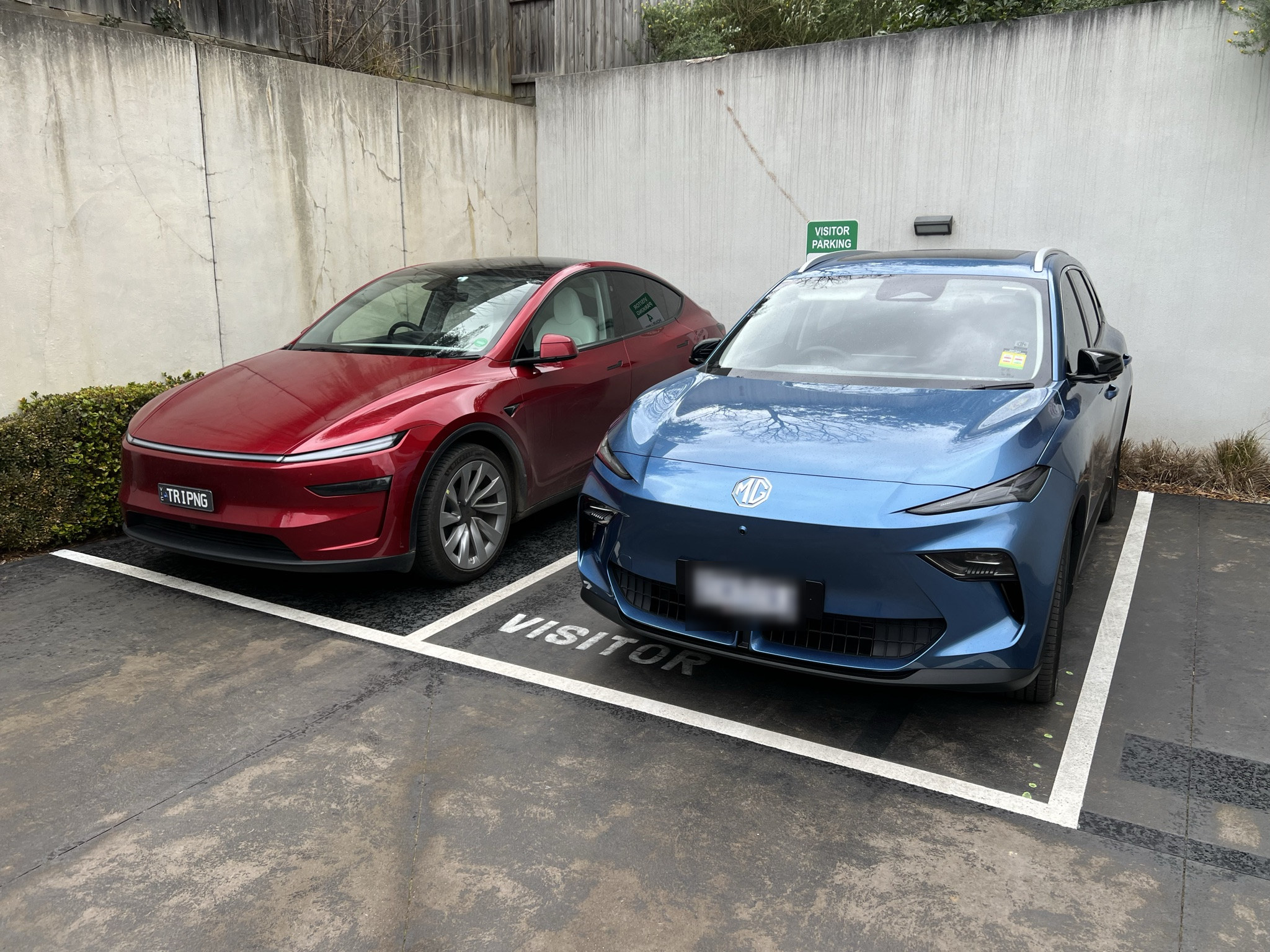
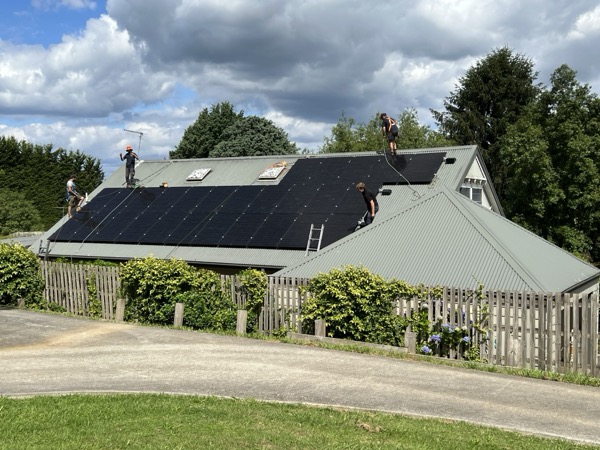
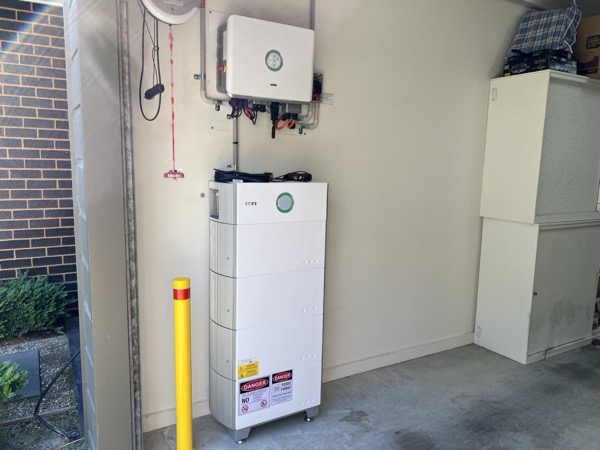
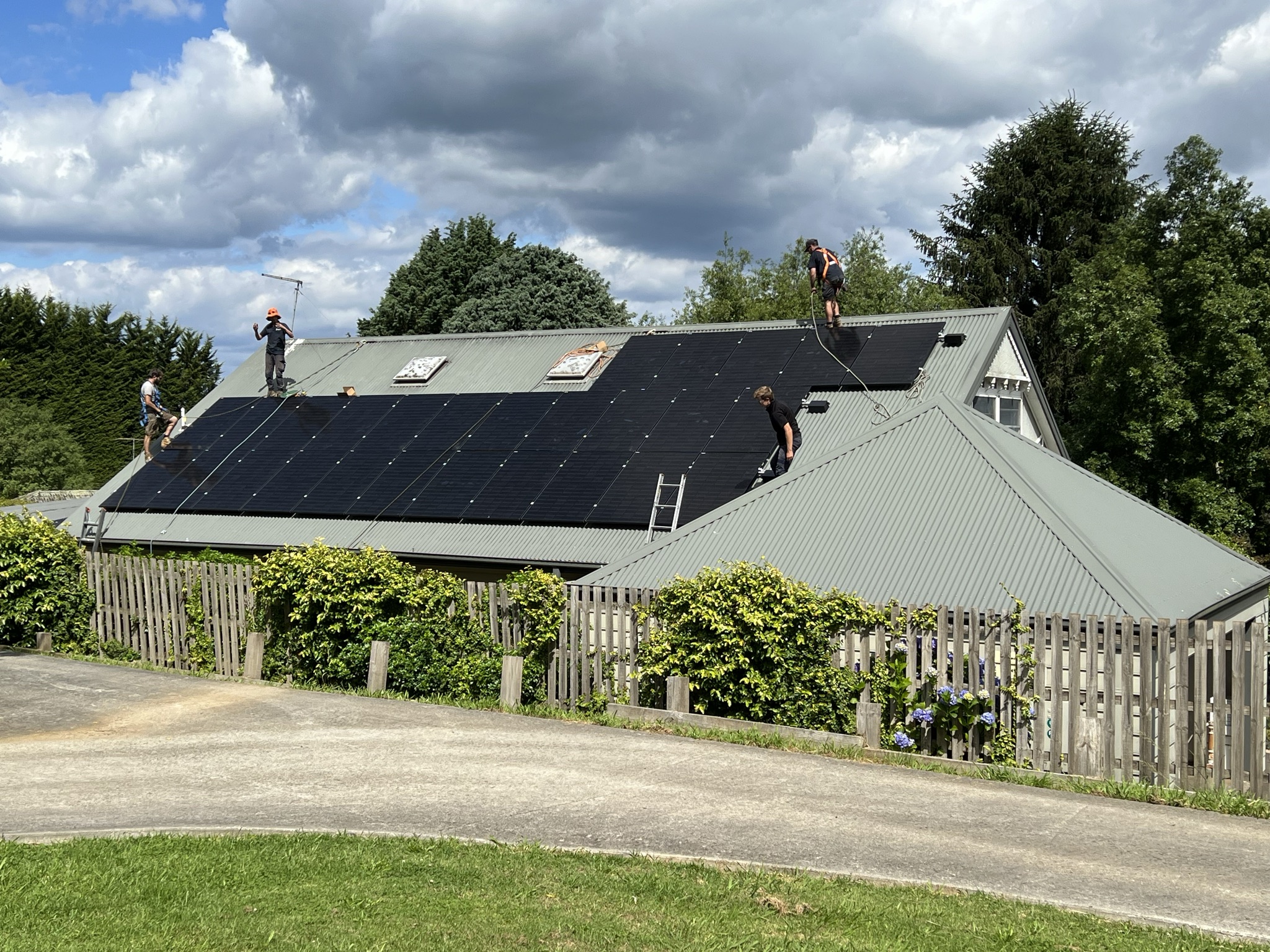
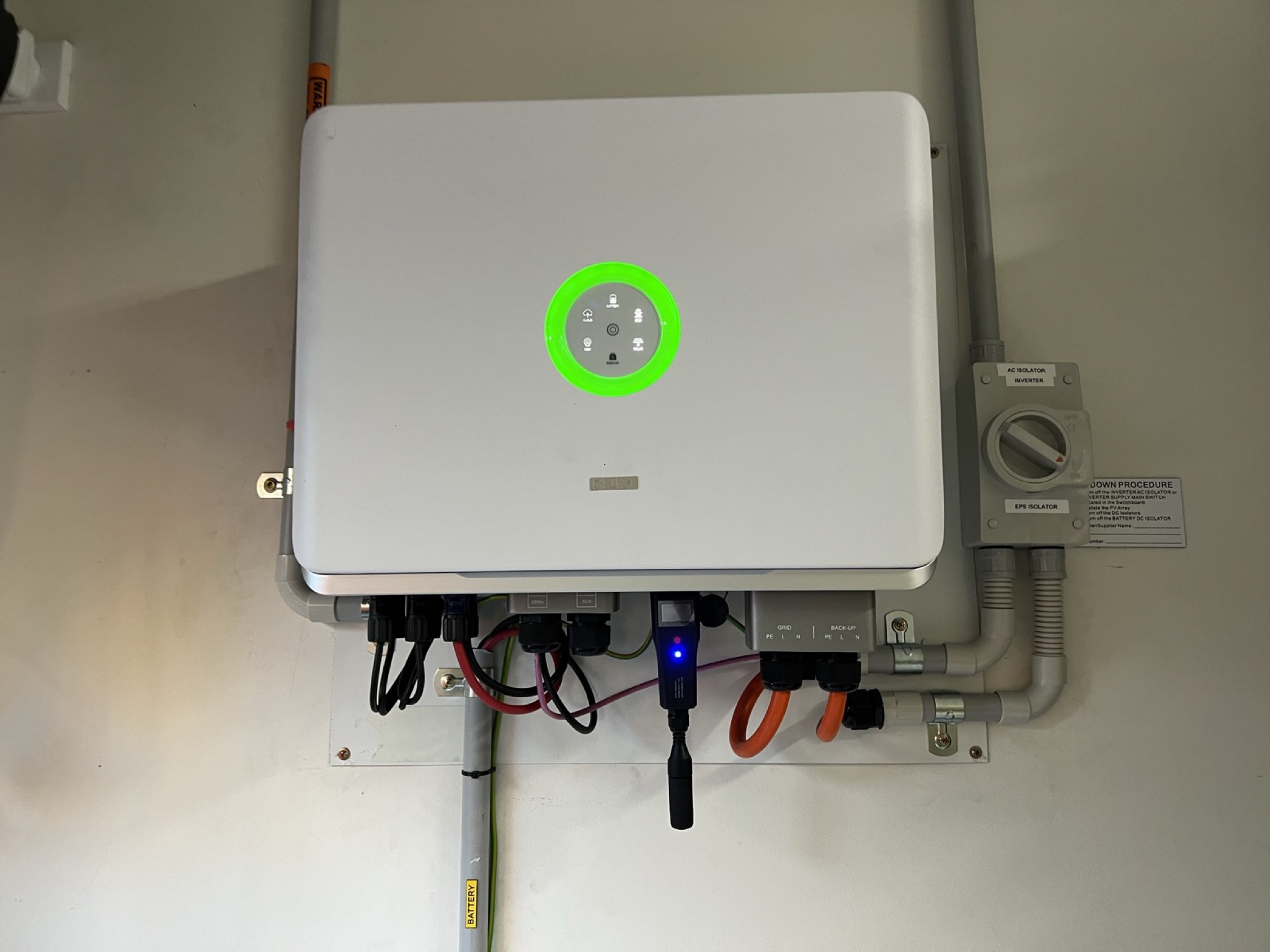
John picked up his first EV a month ago, an MGS5, and he and Anne already had solar and a battery on the house. His question: when the battery is full and the sun is still shining, all that solar is going to waste. How does he get it into the car instead?
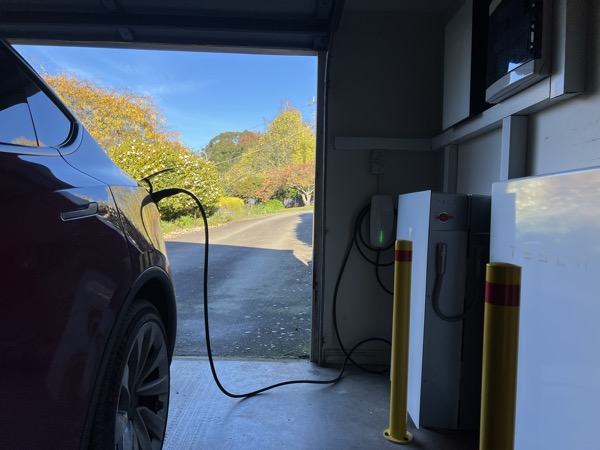
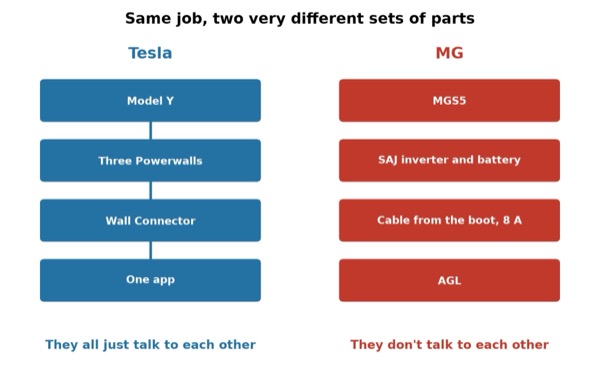
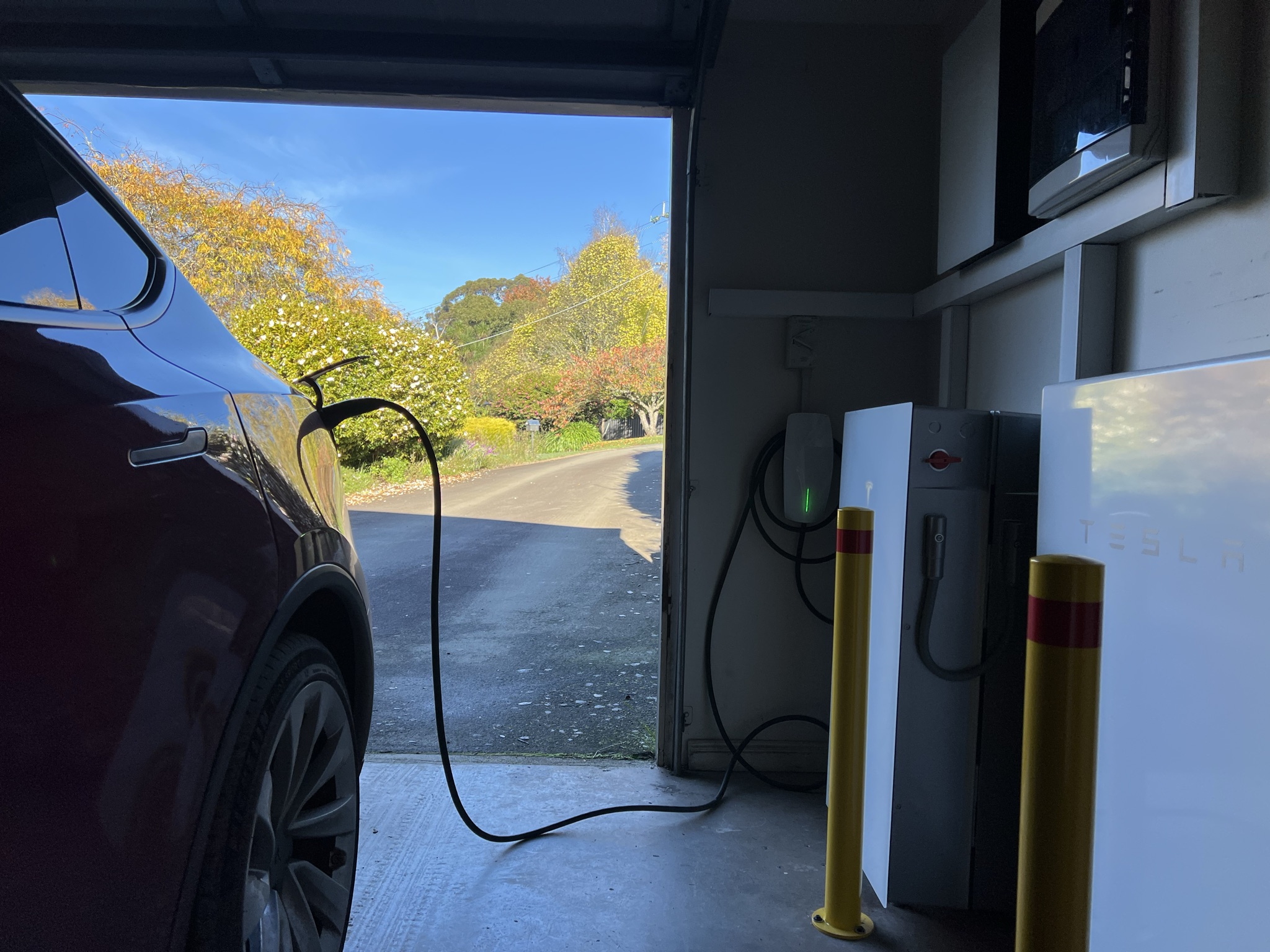
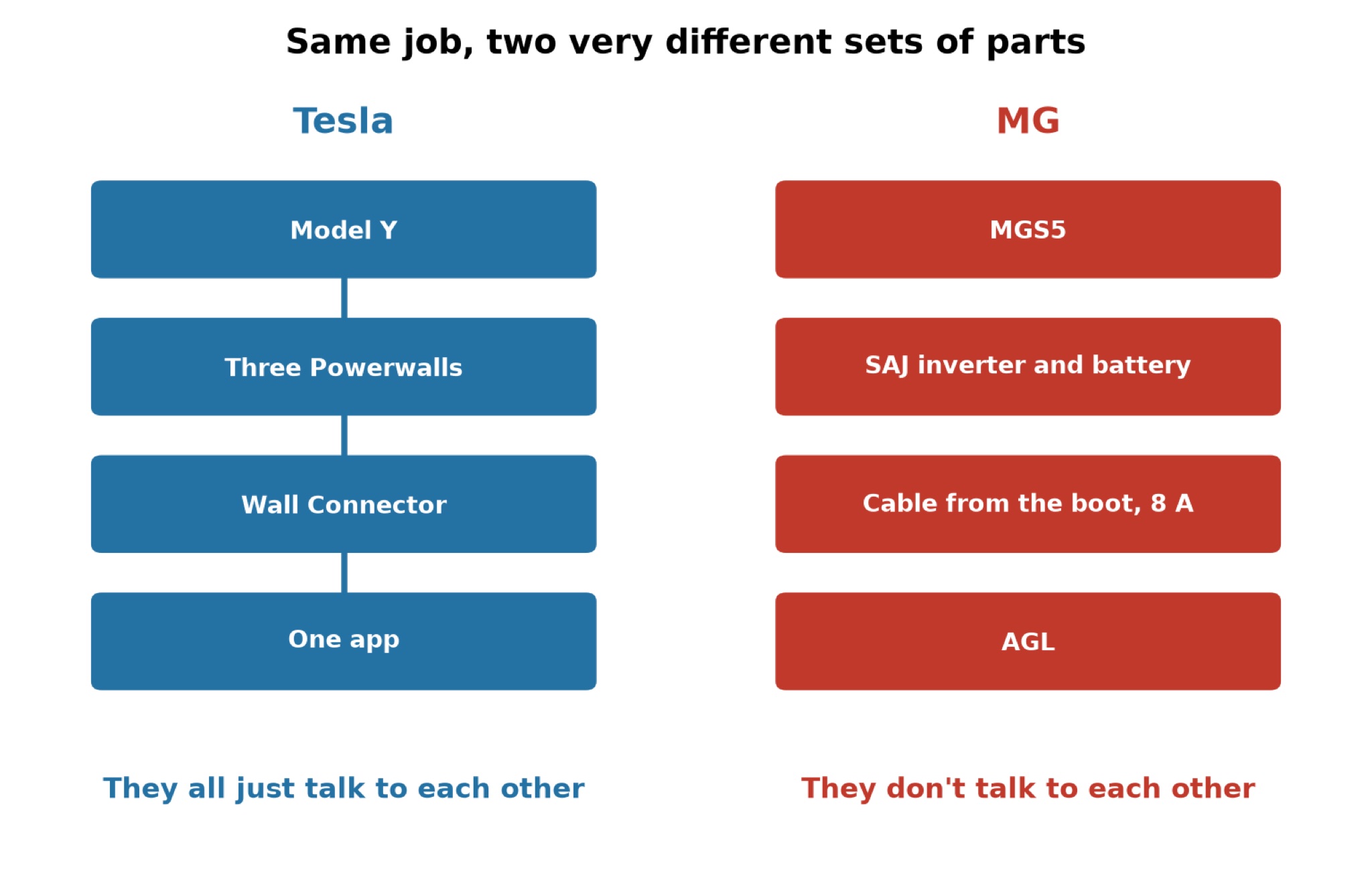
I take our own setup for granted. The car, the Powerwalls and the wall charger all come from Tesla. They all just talk to each other, so charging on solar is a switch in one app. The Amber app adds more on top of that — Ready-By has the car at the charge I ask for, by the time I ask for it, at the lowest price it can find.
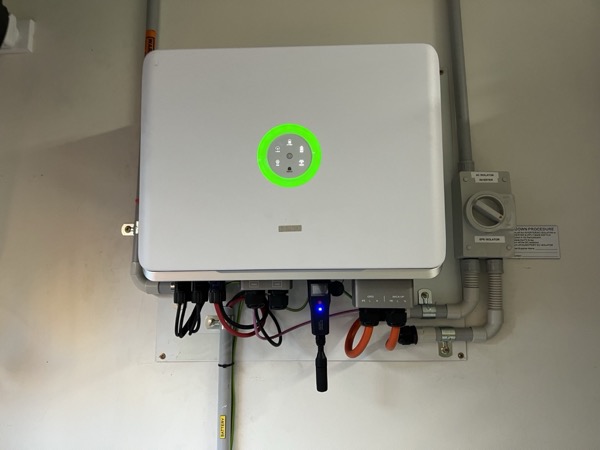
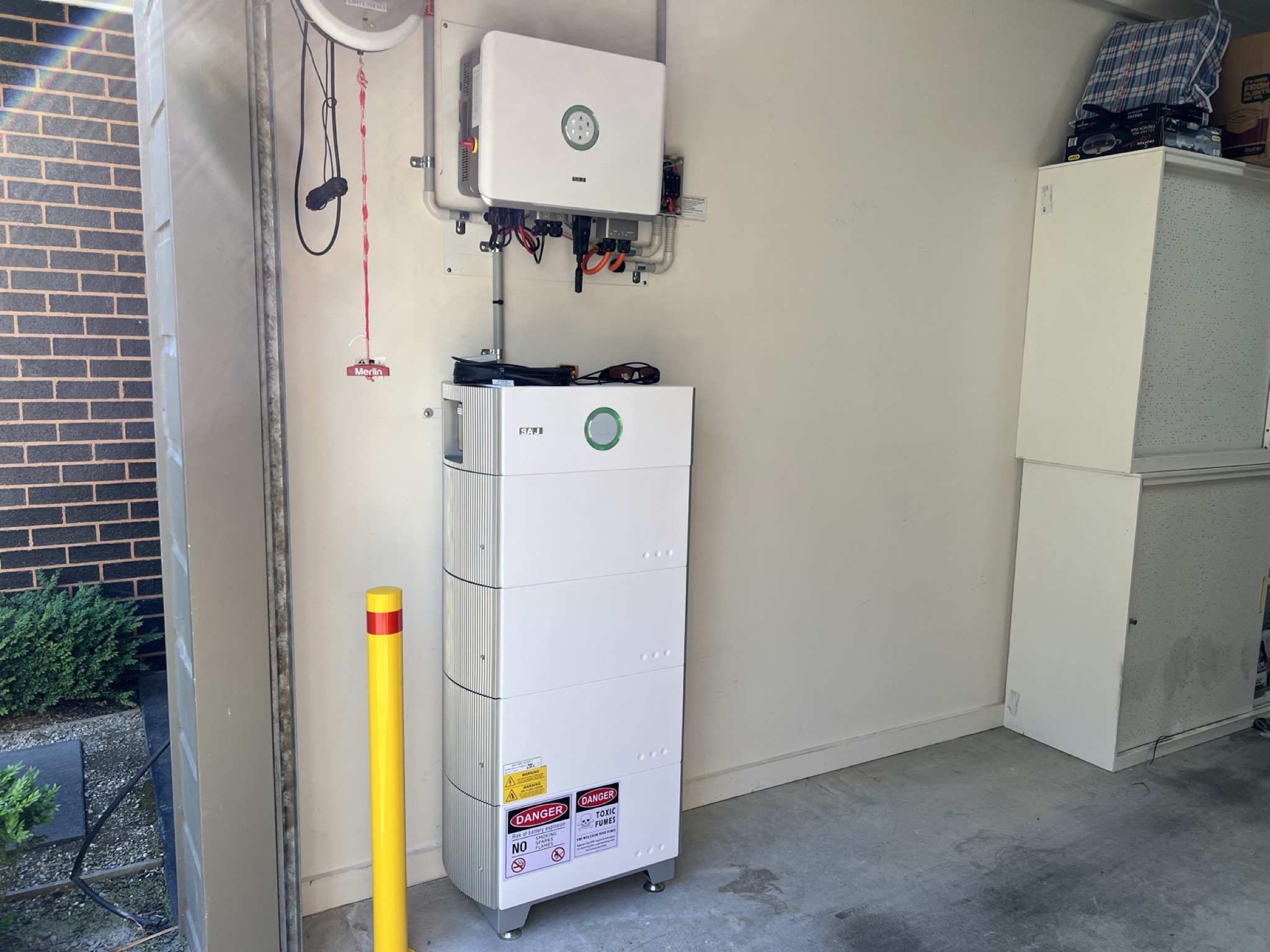
John has an MG, a SAJ inverter and battery, and the charging cable that came in the boot. They don't talk to each other.
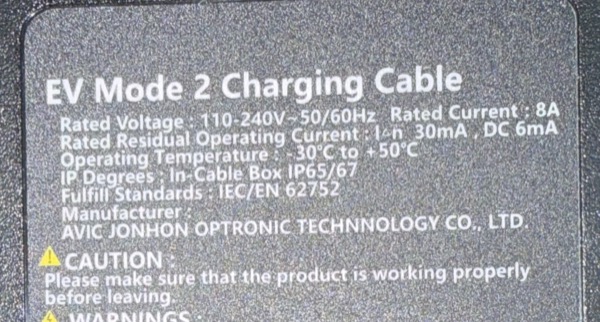
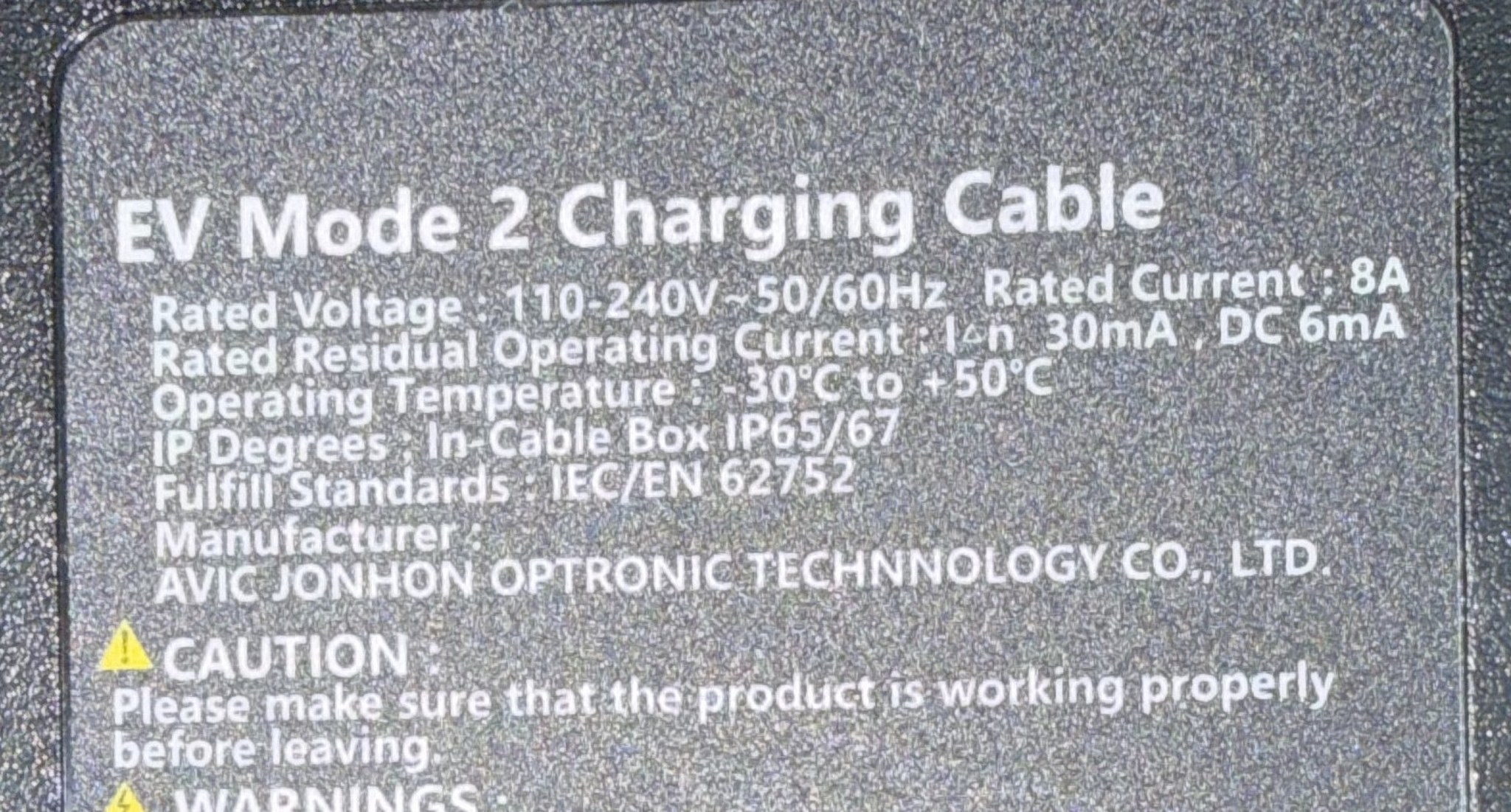
The cable is 8 amps
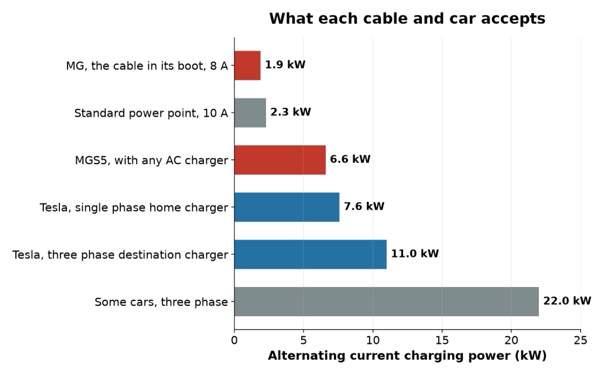
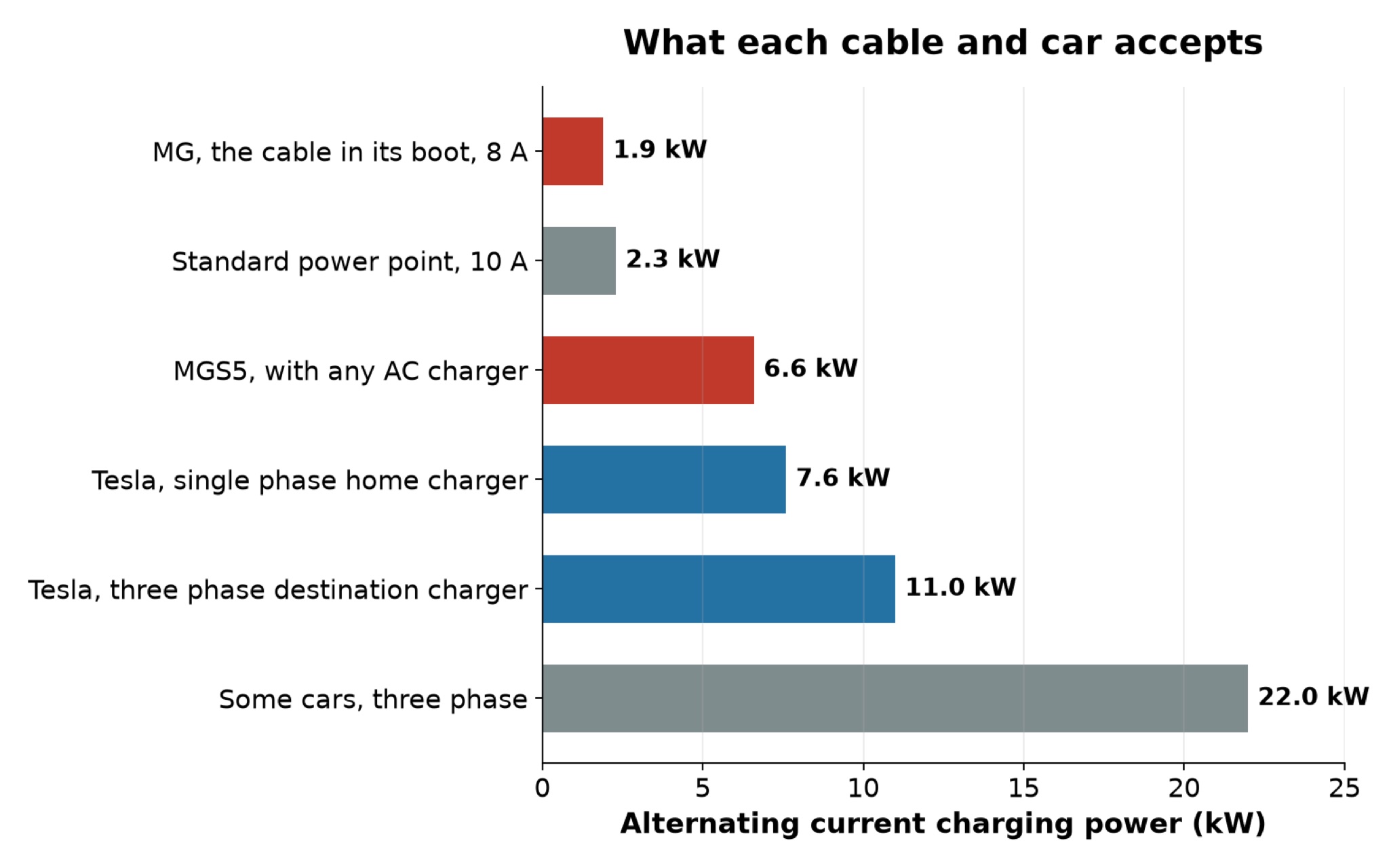
The MG cable only does 8 A, not the full 10 A a standard power point allows and the Tesla mobile charger delivers.
The car stops at 6.6 kW
Even with the fastest AC charger and cable, the MG will only accept 6.6 kW. The Tesla takes 7.6 kW from a single phase home charger, and 11 kW from a destination charger where there is three phase. Some other cars go to 22 kW on three phase.
Following the sun is the hard part
A charger has to sense the surplus solar before it can exploit it. Charge HQ, the app most non-Tesla owners used for exactly this, shut down on September 7. Amber's version handles Teslas only so far, and John is with AGL.
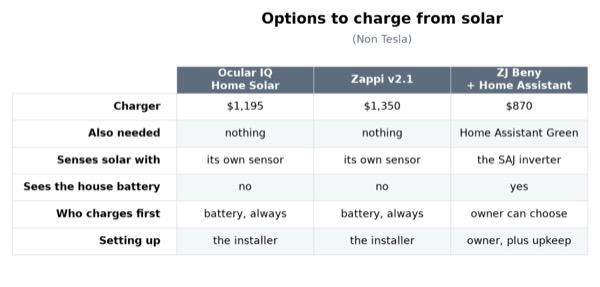
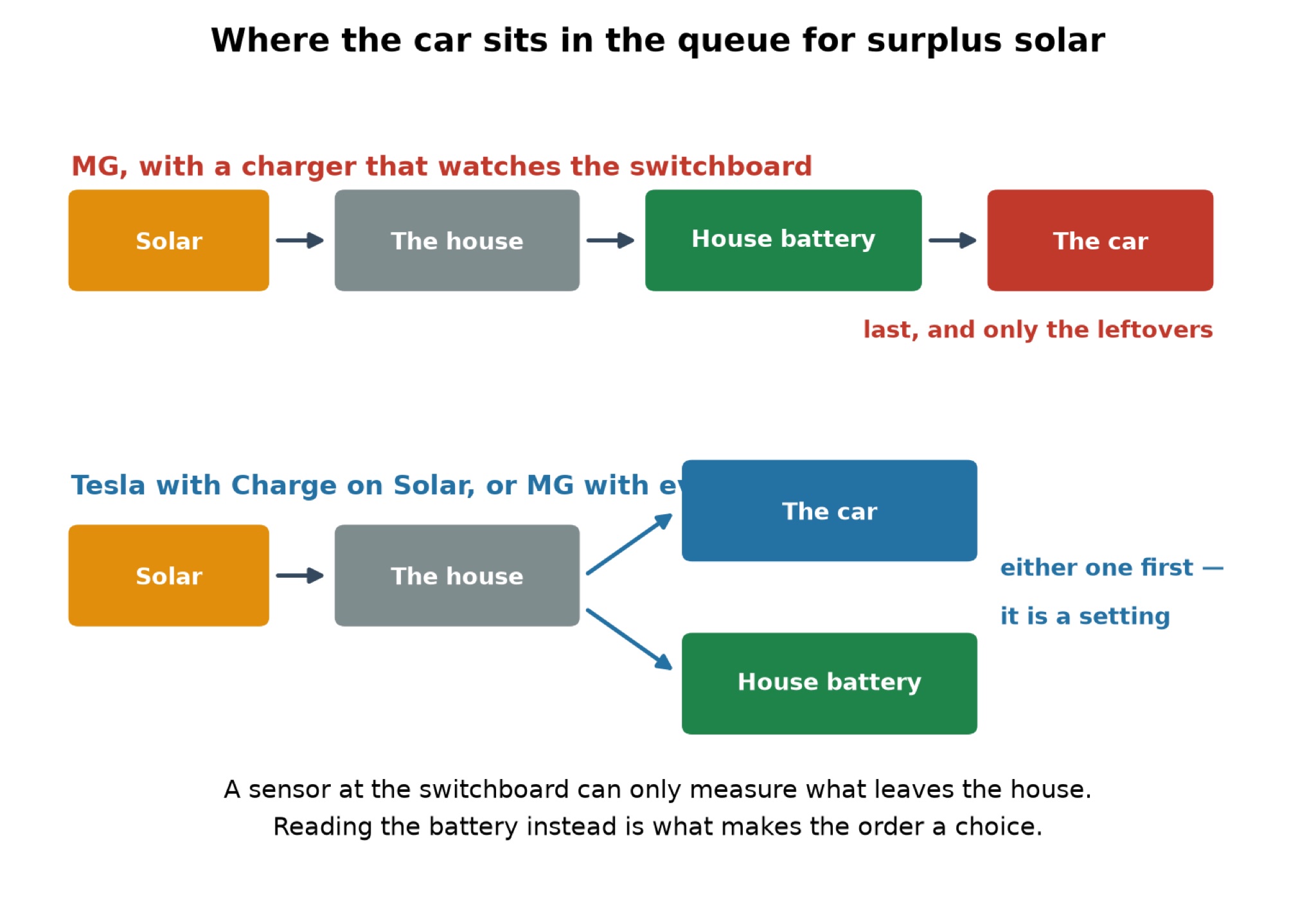
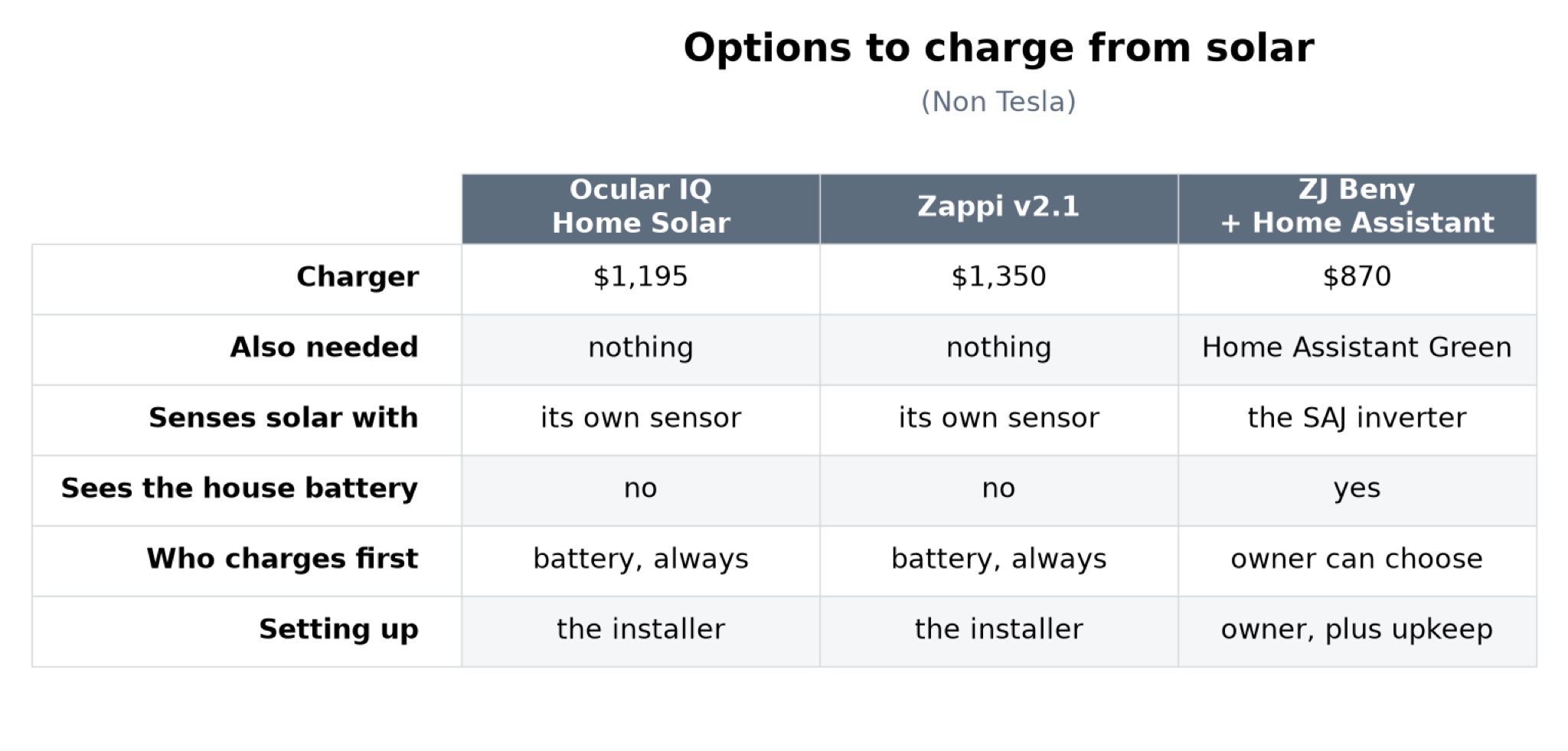
So, the charger needs its own sensor at the switchboard — an Ocular IQ Home Solar at $1,195, or a Zappi at $1,350, installation on top of both.
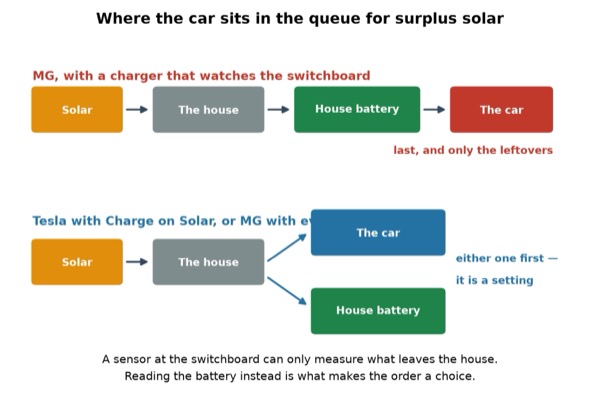
But the battery charges first
Those sensors only measure what is being exported, and cannot see the house battery. So the battery fills first and the car gets what is left. No setting on the charger changes that.
Anne and Dave, another couple we know, live with exactly that. They have an MG as well, on a Zappi charger and a Sungrow inverter with a house battery. The Zappi's Eco+ setting feeds the house and the battery first and only then the car, and it will not drain the battery into the car. Through spring, summer and autumn they charged the car entirely on surplus solar that way. In winter they stopped waiting for the sun and used cheap overnight rates instead.
There is a free way round it, though a blunt force one. Stop the battery charging for a few hours and the surplus tries to go to the grid instead, and the charger sees it and takes it. SAJ can do this: cap the upper charging threshold under SOC Protection. The catch is that it is a schedule, not a decision, so on a day the car is out that solar leaves the house for a couple of cents.
Only one thing I found makes the order automatic. evcc is free open-source software that reads SAJ inverters directly, including the battery, so it knows how full the battery is. It runs as an add-on on a Home Assistant Green, a small box that plugs in at home and monitors appliances over wifi. With a ZJ Beny charger at $870, you could say charge the car first, or fill the battery to 80% and then the car.
So, for most people the Ocular is the cheapest solution, and the house battery goes first. The Zappi costs $155 more and is the one more installers here have put in. evcc is for someone who wants to choose the order themselves, and you have to be a pretty devoted tech geek to set up Home Assistant and evcc.
Anyone here charging a non-Tesla from surplus solar? Which charger did you get, and does it wait for the house battery to fill before it starts? I'm listening...
Related Posts
- John and Anne's first EV, an MGS5 picked up in August Picked up their first EV, didn't make it home 9 Aug 2026
- Amber's Ready-By, which does our overnight charging for us Amber's new Ready-By EV charging 22 May 2026
Links
- Charge HQ — the solar-charging app that shut down on 7 September 2026 Charge HQ
- Ocular IQ Home Solar, 7 kW, $1,195 plus installation Ocular IQ Home Solar
- myenergi Zappi v2.1, 7 kW, $1,350 plus installation Zappi
- evcc — free open-source charge control that reads SAJ inverters evcc
- ZJ Beny 7 kW OCPP charger, $870 plus installation ZJ Beny 7 kW
- Home Assistant Green — about $150 to $280 in Australia, depending on the retailer Home Assistant Green
Report
Report
Report
I don’t have a fancy charger with all the smarts. I have a Depow portable charger, plugged in to a standard household 15 amp power point.
I watch the Solarman app on my phone.
It tells me present household consumption and amount of solar currently being generated.
When it’s sunny and there is clearly excess solar, I refer to my trusty (and probably not 100% accurate) home made chart that shows how much spare solar kw = amps.
So, I then just set the incoming amps using the Tesla app (charging), to match what’s surplus, and that’s it. I adjust up and down a few times a day from 5-15 amps depending on how bright it is and the exact level of surplus.
Yes, it’s labour intensive, requires keeping an eye on the sun and the clouds, regular changes in amp settings, but it works just fine and cost me only about $160 for the charger.
Won’t be for everybody, but simple and cheap.
Frankn
Report
Report
They have published this helpful list of alternatives now:
https://chargehq.net/kb/alternatives-to-charge-hq
On that same page is a link to a page of hardware alternatives.
Report
Report
Report
Report
https://smartevchargers.co.nz/shop/wall-mount-ev-chargers…
Report
Report