Where does the shower steam actually go?
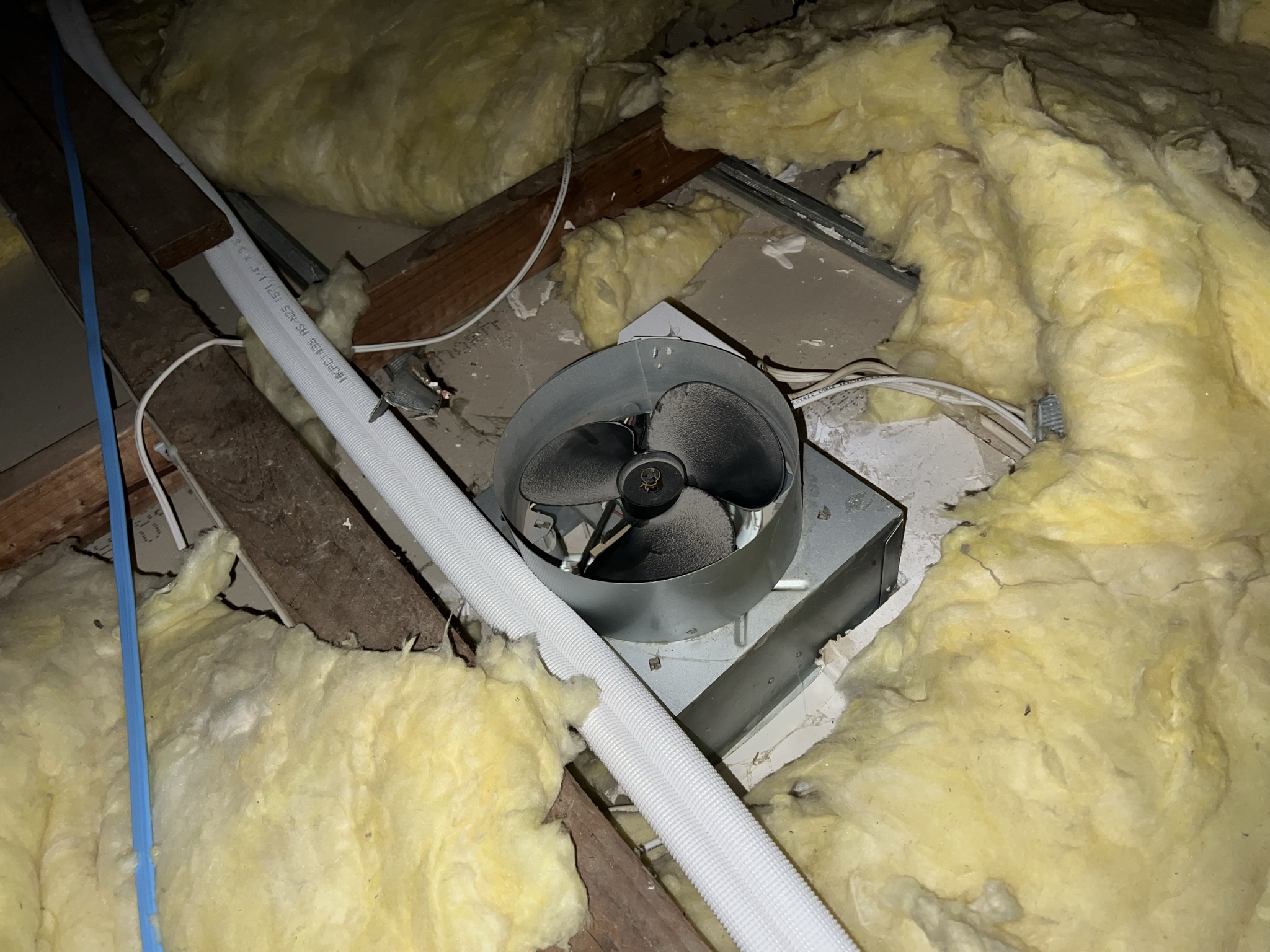
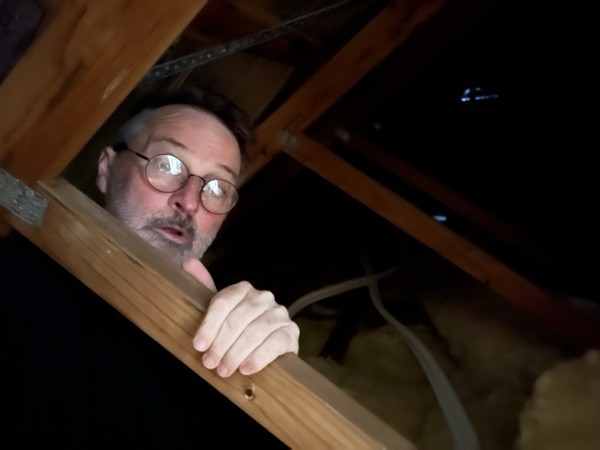
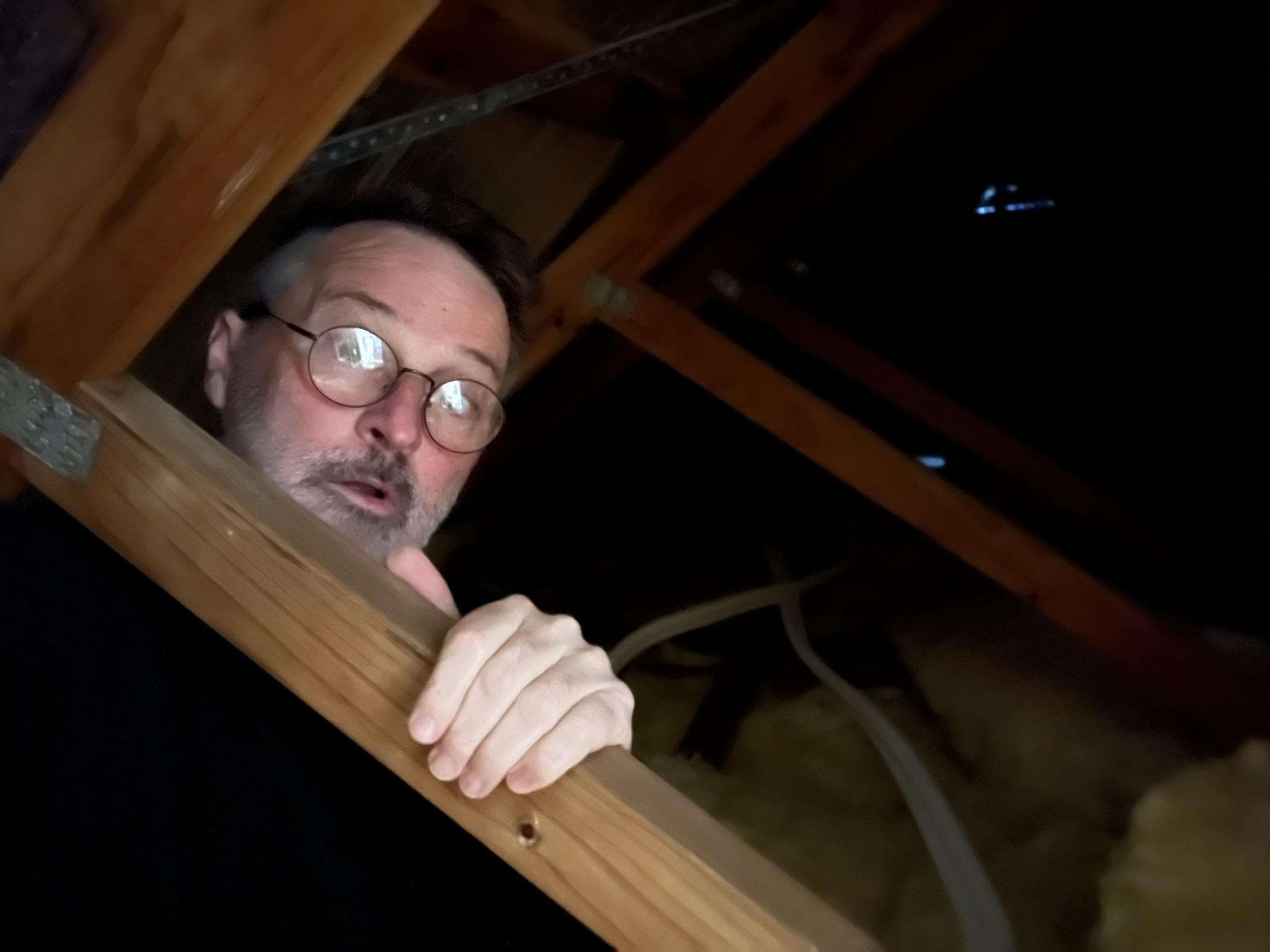
We run the ensuite fan for every shower, and I have wondered where it blows. Last week I took a torch up through the manhole to find out.

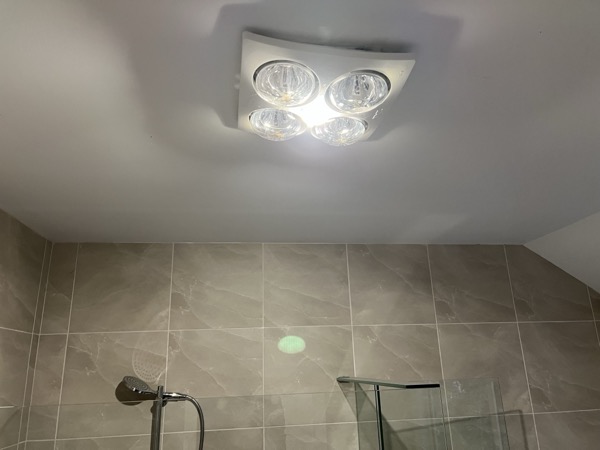
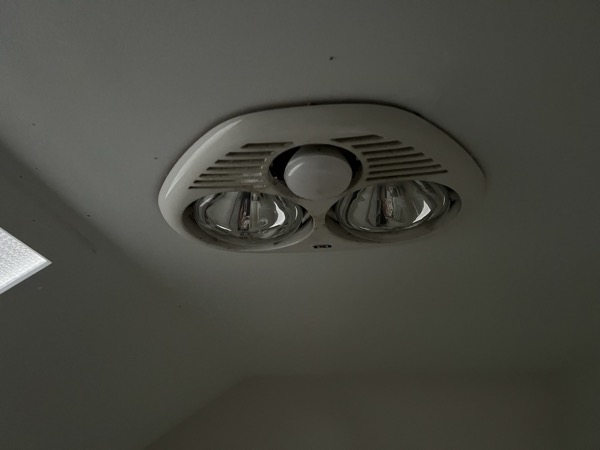
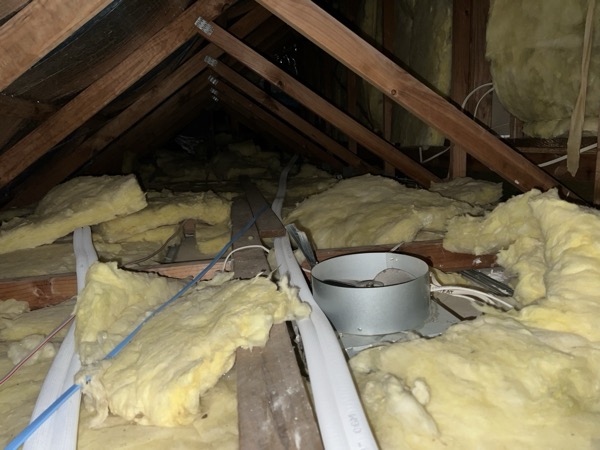
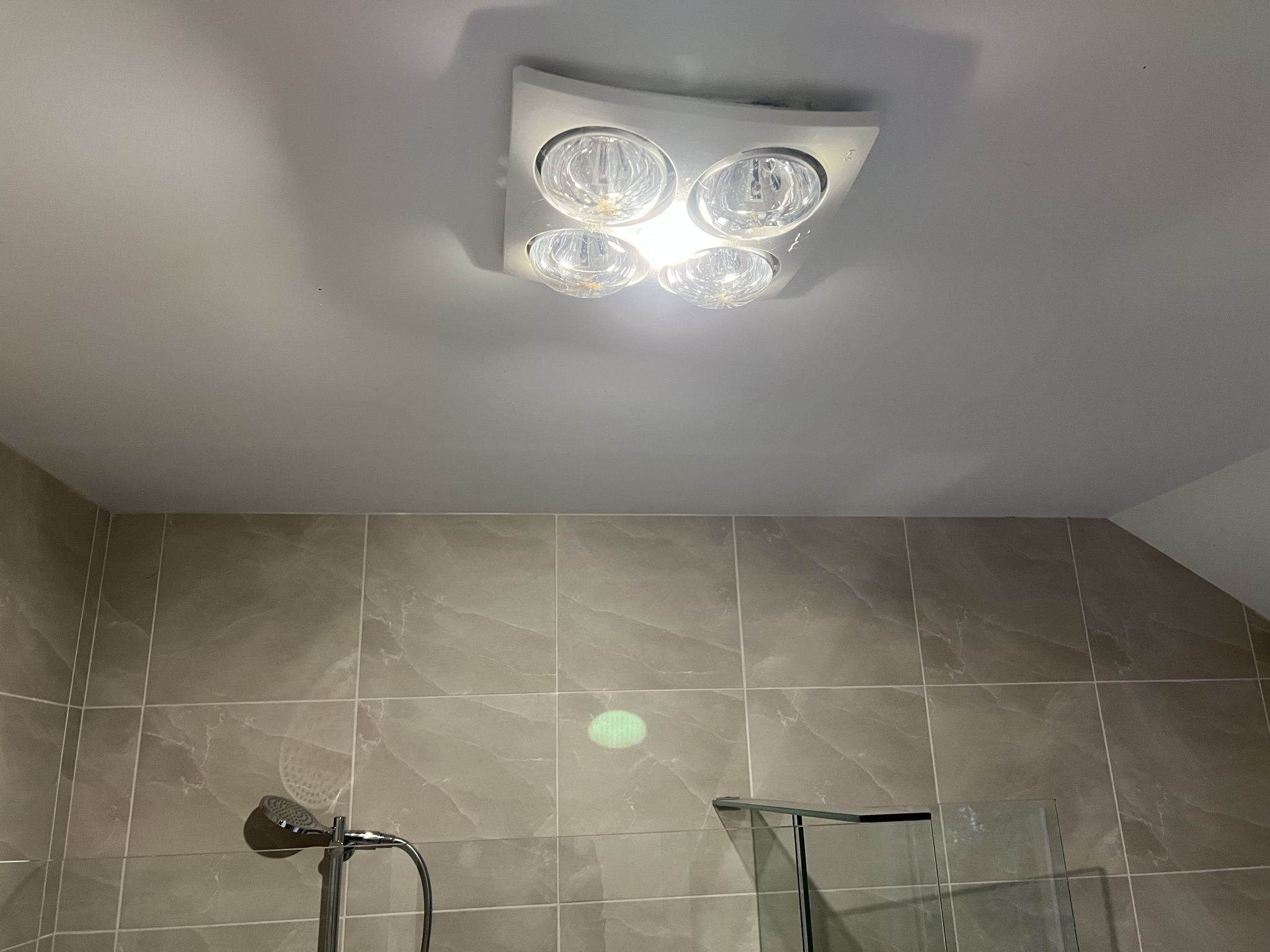
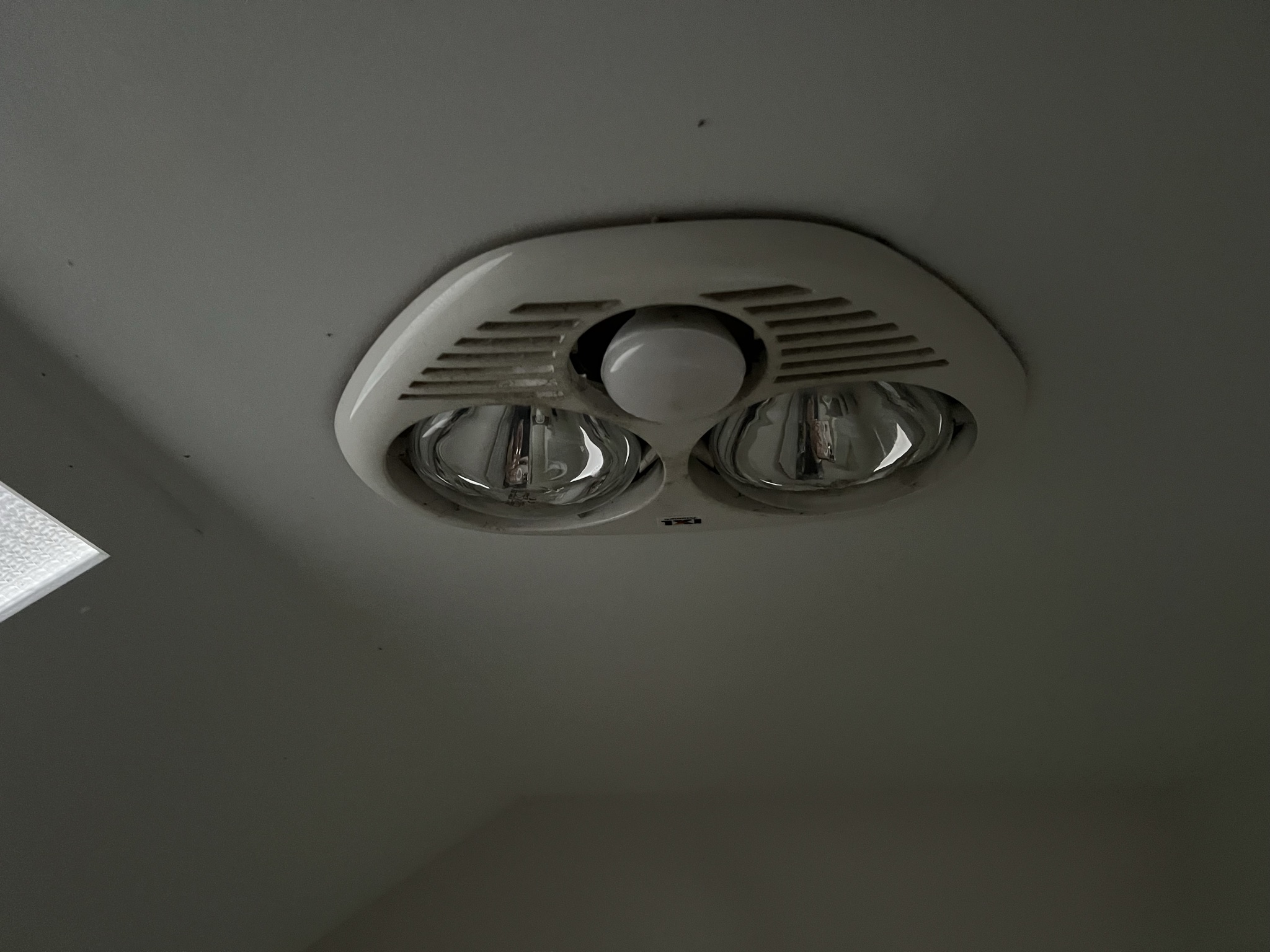
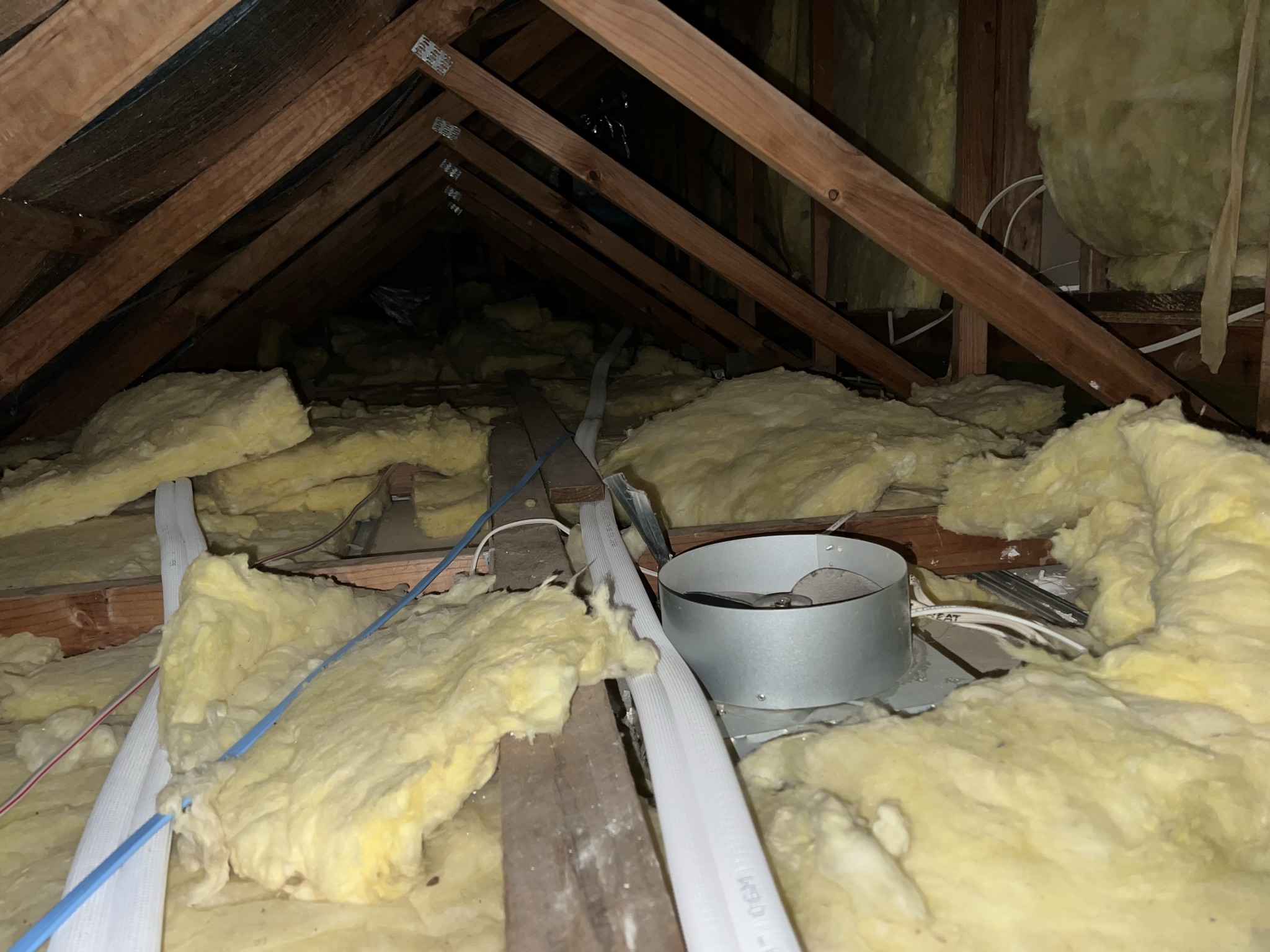
It does not go outside. There is no duct at all. The fan is part of the combined heat lamp, light and exhaust unit in the ceiling, and it discharges straight up into the roof space. So does the one in the loft bathroom, an older unit doing the same thing, but I think into a tighter roof space.

Up there it is timber, insulation and still air, and in winter it is colder than any room below. Every shower we have taken in this house has sent its steam to the coldest, least ventilated part of the building, several times a day, for years.

Fixing it properly is not simply a matter of running a pipe out to the eave. The cheap axial fan fitted in most Australian ceilings moves plenty of air with nothing attached to it, and far less once it has to push through a duct — so the fan has to be able to shift air through the pipe as well.

The Australian Government's YourHome guide is blunt about the principle: vent bathroom, laundry and kitchen exhaust directly outdoors. Ours do not.

What I do not know is how much this has cost us. I could see no mould on the underside of the roof while I was up there, which is the good news, and you can judge that from the photos as well as I can.

Is it worth getting both of them ducted outside? For now the ensuite window does more than the fan does.

Coming up

Machine versus open window: which one earns its electricity.

The leak we found under the vanity.

Saving the bed slats.

Related Posts

Links

Share via

141 comments

  1. Our house is a 2012 build and all the bathrooms are like this. Wouldn't surprise me if it is still current practice
    4

    Reply Report

  2. This of course was common practice up until about 15 or so years ago… Probably a bigger problem since it became a thing to basically seal the roof space as distinct from it being able to just vent out through the gaps in tiles etc…
    91

    Reply Report

    1. Craig Butterworth mine is tile with sarking and then empty space with insulation on gyprock. Not air tight but definitely not good airflow.

      No mound in Canberra climate and was still practice in 2012
      2

      Reply Report

    2. Craig Butterworth wasn't common practice 15 years ago depends on your state and the states building code. Most large project builders here 15 years ago never vented only was done for range hoods.

      Reply Report

  3. Not like that.
    Should be vented external to the house.
    That looks perfect for growing mould.
    31

    Reply Report

    1. Bill Davies no, whilst not great for thermal efficiency and no longer legal, houses vented like this at no more likely to have any mould in the roof than ones without fans vented into the roof space. Fun fact, they are actually far less likely to have mould in the bathroom as well due to the fact they aren’t sealed off.
      3

      Reply Report

    2. Bill Davies with a tiled roof there is so much air moving around then the steam is quickly dissipated.
      4

      Reply Report

  4. The regulation stipulating that bathroom fans must vent to the atmosphere is relatively new (5-6 years, feel free to correct me) millions of homes have fans vented directly to ceiling spaces, and unless the space they are vented into is very small with no air flow, in the hundreds of roof spaces I’ve seen, it has never appeared to have created a problem.
    128111

    Reply Report

    1. Patrick Sportelli yeah, our house was built about 10 years ago, the downstairs bathrooms/toilet spaces vent outside rather than the small space between floors, and the upstairs bathrooms vent into the (quite well sealed!) ceiling space…
      3

      Reply Report

      1. Craig Butterworth ground floor bathrooms with only floor space above have been ducted externally for a long time, however now all bathrooms etc must be ducted externally. The issue with this is that the ducting efficiency of the fans is terrible, there are some high volume fans but they sound like a plane engine😂
        4

        Reply Report

      2. Patrick Sportelli ones with DC motors tend to do a fair job and are relatively quieter. Ducting does tax a motor more. Perhaps an inline motor wired closer to the exit through wall/roof - would be less noisy too.
        1

        Reply Report

      3. PK Saxena The in-line units are quieter, but not great at air movement.
        2

        Reply Report

      4. Patrick Sportelli you need a better inline fan. Plenty of them do 500m3/h or more when attached inline.
        1

        Reply Report

      5. Danny Manno yes but they are very noisy.

        Reply Report

      6. Craig Butterworth double story is different the roof between floors is never an option because it is not open to the atmosphere but a single storey tile roof is all open to the atmosphere

        Reply Report

    2. Patrick Sportelli my neighbours over the back - new house no vents. Black soot coming out from under the ridge cap is not black soot but mould
      12

      Reply Report

      1. Karl Jensen Thats a serious concern, they need to find the cause of that. Is it a tin or tiled roof?
        I can honestly say I have never seen mould in a ceiling caused by bathroom fans.
        Having said that, they have always been older homes where the roof space has lots of natural ventilation.
        2

        Reply Report

      2. Patrick Sportelli start checking out ridge lines tin roofs, now you know you will see it alot.

        Conditioned space ends at the ceiling. Exhaust warm air full of moisture , it condenses on the cold tin, grows mould as the tin warms air rises picks up the water and the mould carries it out the top, spills over mould grows in the nice warm air full of water in the sun...
        Mould, mould and more mould
        2

        Reply Report

      3. Karl Jensen they are everywhere near where I live
        2

        Reply Report

    3. Patrick Sportelli ive been a sparky for 50 years .i can guarantee that venting direct to.a normal.pitched roof space is far more effective than any amount of ducting
      8

      Reply Report

    4. Patrick Sportelli there is and has not been any national regulation, it varies among Local government health local laws, specific state regulations if any, building code reference to AS1668.2 mechanical ventilation guidelines. If you haven’t experienced mould and damp issues by now it’s ok, but better if you can duct it external in case that happens in future. Roof spaces are rarely so airtight that moisture cannot eventually escape and or there is enough attic void absorption to handle small amount of bathroom moisture laden air.
      2

      Reply Report

  5. The amount of steam your bathroom produces compared to the roof space is why they don’t cause mould issues, this style do allow airflow to and from the roof space unless you put a air dam or trunking in.
    8

    Reply Report

  6. Tiles? Looks like can't see any light.
    In any case those fixtures can go.
    Very dated now big hole = loosing heaps of heat all the time like a big chimney.
    Stick your head over it in the roof space with fan off see what I mean
    3

    Reply Report

  7. A lot of old houses had tiles. So vented out that way. Iron roof. Well they usually had large ceiling cavities.
    1

    Reply Report

  8. It’s fine with a terracotta tile roof they are meant to have airflow, if your roof is sealed vent to the outside
    1

    Reply Report

    1. Richard Baptiste a roof is never that sealed you havent got air flow. Correct depending on state laws, again every state has its own building code but if an issue arises the NCC always comes to play and yes vented to atmosphere.
      1

      Reply Report

  9. As a domestic sparky with over 20 years experience ducting exhaust fans into the roof space over the atmosphere far overweight’s the issues it causes exhaust fans. The only fans that should be used in conjunction with ducting are inline ducted fans if anything. Back draft shutters get stuck, motors burn out. I’ve seen no indication of excess steam damage in any roof space I have been in unless it has been a built in bulkhead. External walls need moisture gaps due to moisture being sucked through bricks, those gaps all lead into the roof space. It’s a joke…
    50

    Reply Report

    1. Oh and venting Rangehoods to the atmosphere, all that does is lead flies right to your Rangehood filters. Only noticed slight oil residue on insulation after 30-40 year old homes. Real slight..
      71

      Reply Report

      1. Danny Rowe cheap and nasty rangehood with no back shutters or filters, sounds typical of aussie builds, cheap and nasty.

        Reply Report

    2. Danny Rowe Thanks for the insights!

      Reply Report

      1. Tesla Tripping as Danny Rowe and others have said, no problem. Especially in tiled unsarked rooves. But in all rooves i have seen no moisture problems unless a very smal roof area. A typical house is no problem and I have done domestic 50 + years
        4

        Reply Report

      2. Peter Wherry hats off to you sir! Keeps ya nimble hey 🤣

        Reply Report

      3. Thanks. i actually enjoy a roof crawl as it keeps fitness. And weirdly i don't mind summer for a short time as I'm into saunas. You're well on the way too I see. Cheers

        Reply Report

    3. Danny Rowe I had ceiling damage in adjacent room until I mounted a "whilybird" vent above the bathroom fsn.
      1

      Reply Report

    4. Danny Rowe i fully agree being a sparky for 30 years

      Reply Report

  10. As someone said earlier, the requirement for extractor fans to vent outside via ducting rather than into the roof cavity came in around 5 or 6 years ago. We were renovating a property then and having to put in ducting for 2 bathrooms and a windowless laundry was further complicated because the eaves weren’t suitable. We ended up venting out a fair distance away.

    Also, the first combination bathroom fans and lights we bought were hopeless even though they were supposedly designed to be used with venting. All up I think we spent around $1,000 mainly on decent fans.
    1

    Reply Report

  11. The extraction fan is normal, the mess mistaken for insulation not so much.
    21

    Reply Report

  12. What if you have very long hot showers which produce a lot of steam into a tiled roof, surely mould would start to grow somewhere in the roof space? Or would the temperature the roof space gets to during the day kill it off?
    1

    Reply Report

  13. Code now requires (for new builds) for bathroom, kitchen exhausts to be vented externally ( ie through the roof, eaves or external wall. I have recently moved into a house built in the late 90s with none externally vented. First priority is kitchen exhaust from rangehood.
    1

    Reply Report

    1. Robert Trainor Wow. Yes, we’re very glad that our kitchen rangehood is externally vented.

      Reply Report

      1. Tesla Tripping not to put too fine a point on it but where the oil/grease from cooking has condensed in the roof it's not very pleasant (rodents) and a fire trap too. Can't wait until I can get a proper fire rated exhaust up and outside.
        1

        Reply Report

  14. If a tile roof has no foil, it really doesn't need ducting to outside. Metal roof does, especially where it gets cold.
    18

    Reply Report

    1. Jeff Pethybridge yes. A tiled roof without sarking is considered to be ventilated. Edit: And even it is sarked it could easily be ventilated with a vent or vents like the good old Whirly Bird type.
      3

      Reply Report

    2. Jeff Pethybridge my thoughts too and mine are like that. Although it's probably better to vent directly outside there's so much air movement and draughts in roof space of a tile roofed house the moisture will escape fairly quickly
      1

      Reply Report

    3. The relevant standard does not make that distinction.
      1

      Reply Report

    4. Jeff Pethybridge none in my metal roof and does not need at all. 2000 build and cleanest roof space in Australia

      Reply Report

  15. Install a couple of whirlybirds to the roof to vent the ceiling cavity.
    2

    Reply Report

  16. Your roof is more ventilated than you think.
    Given how poorly insulated your ceiling is, I’d fix that as a priority first.
    Yes, ducting to outdoors is better, and should be considered for sure. A whirly bird or two can also assist.
    1

    Reply Report

  17. Where ever it likes , just creating work for others !
    1

    Reply Report

  18. Normal to vent into roof. I've never seen any issues with mine. I just clean the fan blade every so often.
    1

    Reply Report

  19. Tesla Tripping via Facebook ↗
    Tesla Tripping Ducting is an appalling thing if it is that concertina stuff - actually designed to stop air flow dead (because no one would do it by accident).
    1

    Reply Report

  20. Yes that’s pretty much the same either way most homes though in QLD all new builds have to be ducted outside. Ours are including the range hood.
    1

    Reply Report

  21. I don't know the science behind it, but in the 28 years of working in roofs, in my early years as an electrical apprentice. Even my own house, I have never seen any form of damage from moisture from these exhaust fans.

    They are fine, it's nothing to worry about.

    However, my rangehood is ducted up to the whirly wind.
    4411

    Reply Report

    1. Jim Propert the problem is that over that 28 years the building industry has demanded we make out roof cavity membrane more and more air tight. About 10 years ago, while using simple reflective foil it was found that massive levels of condensation formed in the cavity which changed the method to using blanket (this just hid the issue). Now we have vapour permeable which still does not allow steam through.
      Personally I think we are still in the "limbo 1/2 way" solution to building and dealing with nothing humidty & temperature but we are getting there
      1

      Reply Report

      1. Tony Batty Luck websearch BCA report on mould and moisture issues that have become more of a problem as per what you mention due to increased building energy reduction standard, increasing level of mould and roof structural affects, takes about 20-30 yrs to occur vs never or 100 yrs.

        Reply Report

    2. Jim Propert fancy ducted type. Old ones spew it straight back into the kitchen

      Reply Report

    3. Jim Propert I saw someone else say their roof batten was rotted through from the condensation? Or is that them exaggerating?

      Reply Report

  22. I've been working in roof spaces and installing various versions of bathroom fans for 35 years plus as an electrician. Not an issue - the steam dissipates harmlessly into the large roof cavity.
    191

    Reply Report

  23. I’m shocked 😳 (not really unfortunately!) to see how careless previous tradies have been with your ceiling insulation.

    Our ceiling was the same, and when I was younger (and still had joints that actually move) I fixed it all, making it do a much better job.

    Our bathroom exhaust fans (x2) are the same. I’ve never seen any issue, as the roof space is naturally quite well ventilated with gaps around the edge etc.

    We’re in SEQ though with a somewhat different climate. Summer heat is our problem, not winter cold. What helped with that REALLY DRAMATICALLY was in 2012 when we ripped the old dark 1970 tiles off and fitted “Surfmist” colorbond, complete with good blanket insulation under the colorbond.
    That made an absolutely MASSIVE difference to our Summer cooling.
    2

    Reply Report

    1. David Nye Yes I agree. And up until recently, some councils were banning white (and Surfmist) coloured roofs on new builds because it might "upset" the neighbours. Pathetic, I think...
      1

      Reply Report

      1. Councils are quite often absolute morons.

        Meanwhile I’m upset with the two huge houses built recently directly behind us as they BOTH have almost black roofs, and of course massive A/Cs to try to cool them. The very noticeable extra local heat they both add to our local environment from the roof and large three phase A/C is horrible.

        Reply Report

  24. Does a ‘whirlybird’ on your roof help expel this air to the outside
    3

    Reply Report

    1. Katherine Eaton yes, but you only need a static vent. A whirlybird doesn’t move more air than the same size hole in the roof.
      1

      Reply Report

  25. I wish I saw this post before buying a new roof cowl and ducting, I've been procrastinating from installing it. I have tiled roof with no sarking. Seems to be okay over the many years.

    Reply Report

  26. building product business owner here and we see this fan situation in most Melbourne homes as it only recently became a requirement to vent externally. I'd be way more concerned with the state of your insulation ....imagine the $$ in heating and cooling leaving the building :(

    Reply Report

  27. not an issue really, not as much as the amount of dust that these fans blow into the house on windy days. If someone could come up with a fix for that it would sell like hot cakes

    Reply Report

  28. I have been in my home for 12 years it was a new build and it shocks me that the exhaust vans vent into the roof. How was this not a standard requirement.
    1

    Reply Report

  29. Tiled roof with no sarking = usually no problem, more than enough "gaps" for natural ventilation.

    Colourbond or tiled with sarking = duct it outside with proper inline fan to have enough grunt to push the air out.
    6

    Reply Report

  30. We added a couple of items to our house, which was built in the early 80s. We have a tile roof with sarking under the tiles.

    We added a solar powered roof ventilator, it has a solar panel on the top side which runs a small fan in sunlight hours.

    All our bathroom fans we have vented to eaves/verandah ceiling or through the roof tiles. We have one old fan in our hallway loo that vents into the roof space - but it only extracts filthy smells (LoL) not steam.

    A product we got recently from Bunnings (but it may have been discontinued on Clearance) is a low profile roof vent - it has a wide flashing and the vent part looks like a tortoise shell. It's vented on the downslope side and includes strong mesh grille to prevent insect entry and possibly bushfire embers. It sits very low to the roof tiles and looks unobtrusive. On bbq rangehoods venting through the verandah roof tiles we used stainless flues and cowls, hoping that any grease would vent to air not so much on the roof.

    In our newer fans, we used the stiff corrugated aluminium ducts. The floppy silver foil type ducts included with budget fans have much worse airflow characteristics.

    It is easy to get fan units with side ducted air outlets. Many fans give stats of airflow on the box and in general a larger duct gives better airflow - so choose 150mm or 125mm duct versions over a 100mm duct version.

    Reply Report

  31. Be aware, those fans are NOT isolated when you turn off the switches. They are always live so that the fan can stay on until the globes are cold.
    1

    Reply Report

    1. Steve Bird not correct.

      Reply Report

      1. Beatle Bayly he is correct mate, alot of the heat/fan/light combos have a permanent active at them
        2

        Reply Report

  32. Very common practice for a long time
    1

    Reply Report

  33. Mine vents towards 2 whirlybirds, wondering if this is causing issues with my painted ceilings in a couple of rooms or if it's just poor prep when it was repainted (old ceilings, old house)

    Reply Report

  34. Meanwhile the electrical cable is ran over the truss...

    Reply Report

  35. What is even worse is that many older houses vent all the kitchen exhaust fan with greasy fumes etc. straight into the roofspace as well.... ☹

    Reply Report

  36. Non-issue.

    Reply Report

  37. Not a serious issue!
    You would find that most homes around the world just dump the air into the ceiling cavity. Standard fans can't push the air through ducting and require mods. Thus, straight into the roof cavity.
    1

    Reply Report

  38. Mate, you're overthinking this...
    I'd be more worried about placing the insulation properly.

    Reply Report

  39. This was fine up until a few years ago as long as the roof was tiled with no sarking. The idea was that the steam could exit through the normal gaps between the tiles.
    Now they need a duct to an outside vent.

    Reply Report

  40. Isn’t there air movement in just about every roof (ventilated)?

    Reply Report

  41. Totally fine in a larger roof space

    Reply Report

  42. What roof do you have ? Tiles or colorbond ?

    Reply Report

  43. Li Ke via Facebook ↗
    I think anxious people are driving housing unaffordability...

    Reply Report

  44. Depends on the roof you have, most house don’t need it, cavity is fine.

    Reply Report

  45. This was the standard practice and never caused a problem. This is one of those expensive rules that need to be stripped back out of the building code as is the requirement for a run on timer.
    1

    Reply Report

  46. U probably have more benefits putting a whirlybird near the roof instead of exhausting to the roof. That way U can vent hot roof air and also any moisture

    Reply Report

  47. if it is a single story tile roof then the roof is open to the atmosphere with lots of gaps between the tiles but still u can get condensation in the winter

    Reply Report

  48. It's been an Australian Standard for over 25 yrs now for those things to be deducted outside via the shortest path which usually is though the roof.

    Reply Report

  49. The difference is having a sealed roof system or an open roof system. If it vents into roof space and the edges of the roof all the way around are open or vented then it should be fine as long as it follows correct building. It's also meant for short showers not long

    Reply Report

  50. Like all ever it goes into the ceiling space.
    New places now they duct tiny little one that fill with dust and dirt, clog and do nothing later

    Reply Report

  51. I’ve had no issues with the same fan in our place for 20 years, but suggest a roof vent to keep roof space cooler and provide better ventilation if any concerns (cooler in summer, I’m in QLD) Ducting to the soffit might work but it’s something that would then need regular cleaning.
    1

    Reply Report

  52. 🤦‍♂️ supposed to be vented out of the roof...
    Anyone who says it fine entering the roof space is an idiot. It is "moisture"..!!!! Insulation, wood, electrical: mould & rot 🤷‍♂️

    Reply Report

  53. It goes into the roof like the other houses have for over 60 years.. with NO PROBLEMS

    Reply Report

  54. If your worried mount a whirly bird on your roof to exhaust the steam or stale air in your roof cavity

    Reply Report

  55. Poorly lagged ac pipes do more damage

    Reply Report

  56. Older roof spaces weren't airtight so this usually didnt create much of a problem. Main issue would be if a new roof were put on that was airtight but fans not ducted.
    2

    Reply Report

  57. Is this an only fans situation we are wanting to be venting about?

    Reply Report

  58. Jokes on you… my house has no sarking or similar so plenty of gaps between tiles for air flow haha

    Plus we have 3 whirlybirds…

    Reply Report

  59. is the roof tiled if it is there's gaps for africa in those
    1

    Reply Report

  60. Worse still the cooking exhaust that goes no where

    Reply Report

  61. Il come fix it for you. $1000000

    Reply Report

  62. It's not steam. The amount of water, once condensed enough, would probably be a spoonful.

    Reply Report

  63. Tile roofs have adequate ventilation if it’s tin put a whirlybird in
    Ducted fans are poor ventilators so you will require two

    Reply Report

  64. tiled roof is not air tight anyway

    Reply Report

  65. It goes into black mould without ducting

    Reply Report

  66. Jump into My Efficient Electric Home (MEEH) this is answered there many times over

    Reply Report

  67. They actually work much much better if not vented to the outside air the open cieling space is huge and is not sealed so there is enough air circulation to dissapate any steam from the unit quite easily .pushing the air through a 150nmm duct against outside air pressure is actually only barely adequate without a decent inline fan with backdraft shutters on the outlet .if you have mould in your cieling its more likely to be caused by codesation from your uninsulated roof and the warm air introduced from your fan is actually doing more good than harm.having said all that it is now mandatory to mechanically vent fans to the outside atmosphere with most building authorities

    Reply Report

  68. I think you’ll find most fans are installed by a sparky who don’t/can’t hold a plumbing roofing license and therefore cannot run duct through a roof penetration. If you want it ducted out of the roof space you need to engage a plumber to do so.

    Reply Report

  69. Quick knock down the house and re build it if thats your concern with an old house.

    Reply Report

  70. Damon Cammock

    Reply Report

  71. Supposed to be vented to atmosphere maybe albo gonna tax that as well

    Reply Report

  72. Wirly bird vents

    Reply Report

  73. The sun heats that ceiling everyday and the moisture evaporates pretty quickly. I wouldn’t worry about it. If there was mould then I wouldn’t be concerned
    1

    Reply Report

  74. Do you have a whirly bird on your roof?
    1

    Reply Report

    1. Justin Bara No. But there seems to be lots of venting gap through the eaves.

      Reply Report

  75. I wouldn't worry about it too much tbh.oirs is similar and I can't detect any damage . I've changed a few roof fan/heat lamps

    Reply Report

  76. I also suggest looking at getting a dome over the shower to get the steam to condense and drip down to the shower drain. Has the added advantage of keeping the steam heat in a confined area

    Reply Report

  77. Xl tastics, looks like what you have, do not work with a vent. The fan is not strong enough to push the air through. I wanted caps put on my exhaust fans, help stop dust and insects from entering the house through those vents. They put them on my standard exhaust fans, part of the bush fire protection.
    While you may feel there is nowhere for the steam to go in your roof space, there are many gaps in the tile work and between the wall frame and roof trusses. Allows venting, cooling in summer. I had a house built in 1991 and again in 2018. Both had the same exhaust fan types. Both were insulated in the roof and wall space. The newer one has sisilation in the roof due to the proximity to open grass land during construction. Bush fire protection. The newer house is colder than the older one.. not sure why. It’s supposed to be higher rated insulation. I think it’s more to do with the wind out windows..
    now my rangehood, being a new home.. you would think the installers would know how to set up a rangehood to vent properly. I had an upgrade and I was really dissatisfied that it didnt seem to work well. I went to have it replaced. We had to remove ALL the upper cabinets to get the rangehood out. What we found was a nightmare.. they had left the motor fixed for upper venting but fitted flexi ducting for side extraction. It had kinked severely restricting the air flow to the side vent. No wonder it didn’t work.. there was also insufficient insulation and for some reason a bigger than needed hole in the plaster, allowing god only know what to enter the house.
    I went the extra mile and had new cabinets installed with the new rangehood ovens and cooktop, I made the switch to all electric..

    Reply Report

  78. hotter than hell and dry in every ceiling ive ever been in, plenty of air movement too, 47 years in the trade so far. never seen any moisture damage

    Reply Report

  79. Lolololol, somebody doesn't understand grandfathering 😂

    Reply Report

  80. Should be vented out to atmosphere.
    1

    Reply Report

  81. Thats a code fail like for 30 yrs here.

    Reply Report

  82. A few whirlys in the roof should help. I have done a few where all things were built to speck and yet bathrooms always damp. Two in the roof, and problem solved. Good all year round. And now in colours to match your tiles.
    1

    Reply Report

  83. not a problem mate, all older houses are like that.

    Reply Report

  84. If it’s a tiled roof that void is already ‘venting’ to the exterior …. Thousands of ‘venting gaps’ in the roof

    Reply Report

  85. Mate... try to erase all those thoughts and look at it like this. There are three family members lined up for a shower and... allow for a 10-15 min changeover time. When the last one is done do you roof inspection and please report your findings.

    Reply Report

  86. Up though the roof

    Reply Report

  87. How much steam are you creating? 😅 It's such a huge roofspace and volume of air. It isn't an air tight space either, so the steam would dissipate easily to the outside environment

    Reply Report

  88. From my experience of having many showers , I don't care where it goes

    Reply Report

  89. We had a relatively expensive bathroom exhaust fan installed a few years ago. It was ducted and the ducting was its downfall. The steam was drawn into the ducting and then when the extraction fan stopped sucking air all the moisture dripped back down into the unit. This water then corroded the heater light and made it inoperable. Non-ducted fans never had this problem.
    1

    Reply Report

  90. Chuck a whirly or two on your roof.

    Reply Report

  91. Only a requirement on new homes
    1

    Reply Report

  92. Roof

    Reply Report

  93. I don't want to alarm you but there seems to be a man hiding in your roof.
    1

    Reply Report

    1. Aaron O'Sullivan LOL. Guilty!

      Reply Report

  94. Everyone does this

    Reply Report

  95. Better than nothing

    Reply Report

  96. Be more worried about the shit Aircon install

    Reply Report

  97. Ja Ck via Facebook ↗
    It would take centuries for a cavemen to understand.

    Reply Report

  98. Yeah, my house is over 30 years old with these same exhaust fans - no evidence of any mould of moisture damage in the roof-space. The only downside I've notice is on a summer evening, in my en suite if I close the toilet window and turn on the fan, but not in the adjoining bathroom, it pulls hot air from the roof space into the bathroom. Reversed/ solved by switching on the bathroom fan too

    Reply Report

Leave a comment